
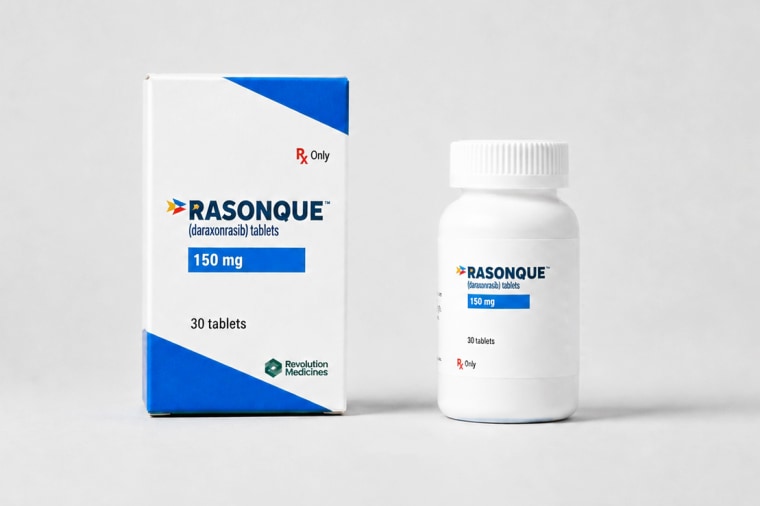
The Food and Drug Administration has approved a new drug for the treatment of pancreatic cancer. This development is expected to significantly impact the treatment of this highly lethal disease. The medication, named Rasonque or daraxonrasib, is developed by Revolution Medicines. It is intended for patients with advanced pancreatic cancer who have already undergone previous treatments like chemotherapy.
A clinical trial involving 500 participants showed promising results. Patients who received Rasonque in combination with standard chemotherapy lived an average of 13.2 months, effectively doubling the average lifespan compared to those receiving chemotherapy alone.
Dr. Rachna Shroff, leading the division of hematology and oncology at the University of Arizona Cancer Center, expressed her emotional reaction to the trial results. “It’s a significant advancement for those of us treating pancreatic cancer,” she stated, noting the unprecedented nature of the findings.
The drug, however, does present certain side effects. Patients may experience a blistering rash, sores in the mouth and throat, vomiting, and diarrhea. Former Sen. Ben Sasse of Nebraska, who participated in the clinical trial, compared the rash to a “nuclear” effect.
Rasonque specifically targets a mutation in the KRAS gene, present in nearly all cases of pancreatic cancer. This gene plays a crucial role in cell growth regulation. The mutation causes it to remain in the “on” position, leading to uncontrolled cell growth. While scientists have long recognized the potential of targeting this mutation, previous attempts were unsuccessful until this breakthrough.
Channing Der, a pharmacologist at the University of North Carolina, highlighted the importance of this approval. “Pancreatic cancer is the third leading cause of cancer death in the U.S. and the deadliest of all cancers,” he said, noting that this approval marks a significant step forward.
Over 67,000 individuals in the U.S. are projected to receive a pancreatic cancer diagnosis this year, according to the American Cancer Society. The disease presents substantial treatment challenges. It lacks screening mechanisms, and early symptoms are often vague, leading to late-stage diagnoses. The five-year survival rate for the most common form, pancreatic adenocarcinoma, is a mere 8%.
Revolution Medicines has already provided Rasonque to more than 2,000 patients through an expanded access program initiated in May. However, the company has yet to disclose the cost of the drug.