
Understanding the Gen Z ‘Cockroach’ Movement
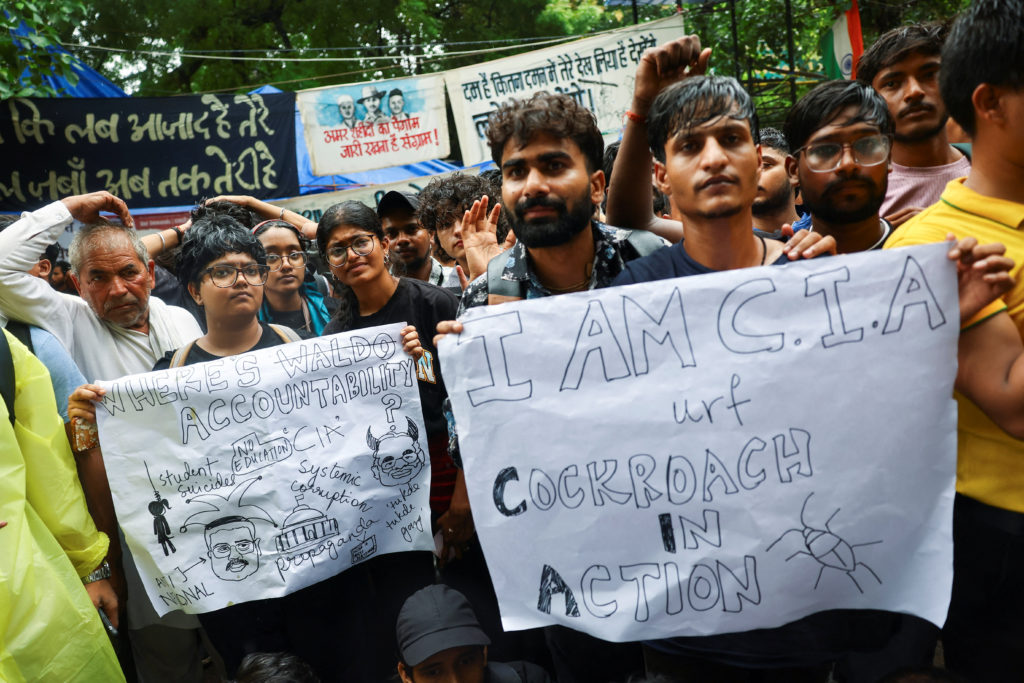
Tens of thousands of young Indians have surprisingly embraced the term ‘cockroaches’ following a comparison made by India’s chief justice during a court hearing. This comparison was directed at unemployed youth, sparking widespread protest across the country. The movement serves as a bold challenge from Generation Z to Prime Minister Narendra Modi and has rapidly expanded despite government opposition.
Origin of the Movement
The movement was triggered by an insult. During a court hearing, India’s unemployed youth were referred to as ‘cockroaches’ by the chief justice. This label was quickly adopted by the students themselves. A Boston University graduate student, Abhijeet Dipke, posted on social media, suggesting unity among the ‘cockroaches.’ This idea quickly evolved into the ‘Cockroach Janata Party’ (CJP), a satirical response to Modi’s ruling BJP. It gained considerable traction, with the CJP Instagram page reaching over 25 million followers.
Demands of the Protesters
The protests began due to outrage over leaked national entrance exam results, which were voided by India’s Ministry of Education after questions were disclosed in advance. This decision affected around two million students who had already taken the exam, causing widespread discontent. India’s competitive entrance exams are crucial for social mobility, and suspicions of leaks and corruption led to feelings of injustice and despair.
Activists have connected the exam leak to numerous tragic student deaths. In response, the protesters demand several changes: removal of the education minister, stricter penalties for exam leak culprits, and financial compensation if exams are invalidated. Further demands include increased female representation in parliament, a more independent media, and accountability for election officials.
Government and Police Reactions
Recent protests saw confrontations between CJP demonstrators and police as they approached the parliament. Law enforcement has been accused of using undue force, counterproductive to their goal of quelling the movement. Protester Sona Bisht asserted that Gen Z would not back down, emphasizing the importance of educational reforms and securing future opportunities.
The demonstrations are further fueled by active social media engagement and public support. People have sent meals and supplies to the demonstrators through delivery apps, underscoring nationwide solidarity.
Political Responses and Media Coverage
Opposition leaders such as Rahul Gandhi have supported the protests, criticizing government actions and pointing out failures toward youth. Meanwhile, government loyalists and some media outlets have labeled protesters as anarchist, suggesting foreign influence. This narrative has grown tiresome and frustrating for many, according to Rohit Chopra, a communication professor studying South Asia dynamics.
Prime Minister Modi recently addressed the situation, announcing expedited judicial measures concerning the exam leak scandal. However, he refrained from dismissing the education minister, a core demand of the protesters.
Significance of the Protests
These protests distinguish themselves from prior movements by directly questioning Modi’s leadership. The brutality witnessed during protests is tied directly to the Prime Minister’s actions. Various expressions of dissent have circulated, whether through rap or poetry, specifically criticizing Modi.
The protests have permanently impacted Modi’s reputation. Regardless of their immediate outcomes, such as ministerial resignations or new reforms, the perception of Modi’s infallibility has been challenged.
A free press remains vital for democratic integrity. Supporting reliable journalism fosters informed and respectful discourse.