
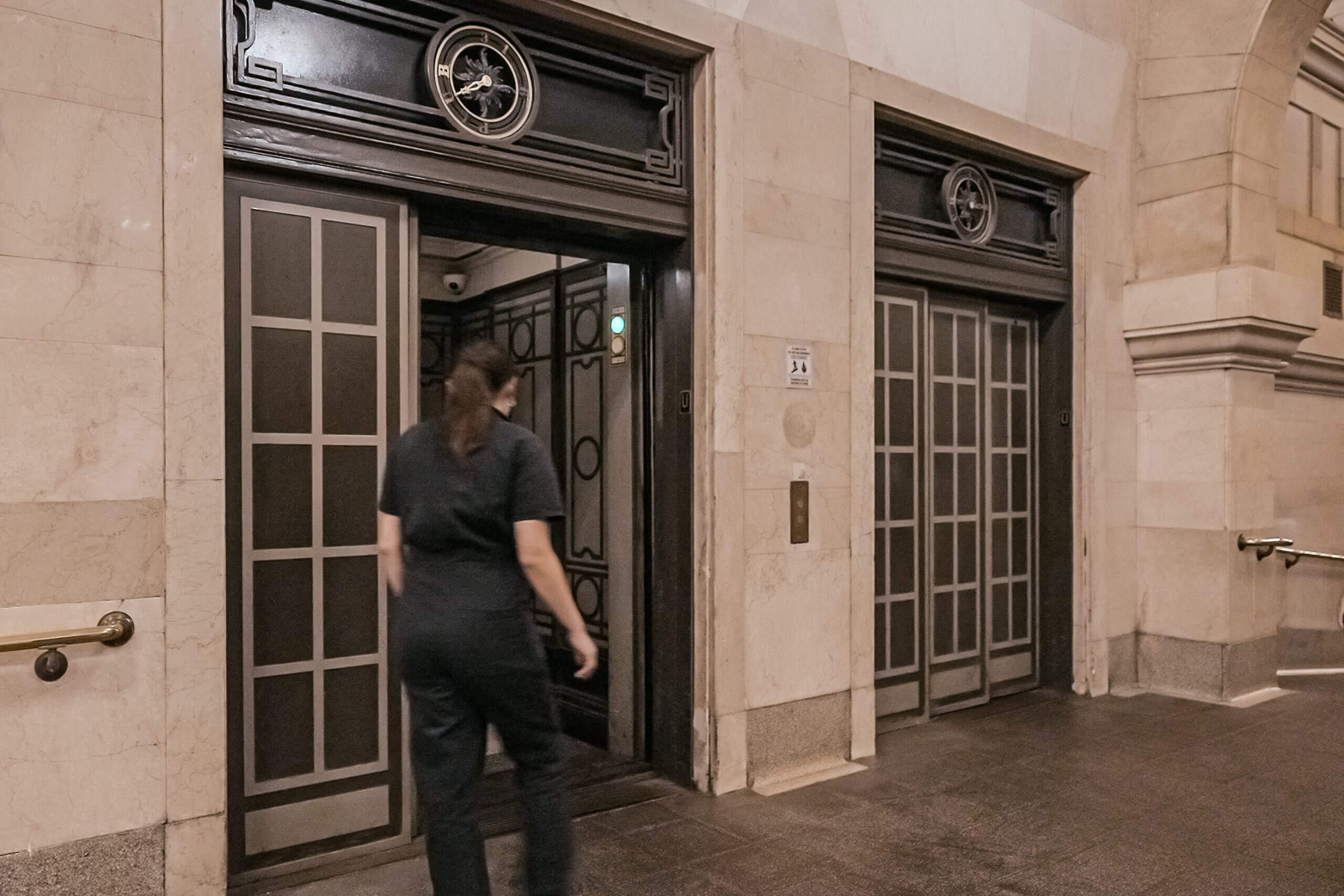
For many, Grand Central Terminal serves as a gateway to and from work or as an initial stop for those visiting New York City. However, the terminal also houses a lesser-known attraction: a tennis club. This club is discreetly located behind one of the station’s notable arched windows, four floors above the hustle and bustle of train activity.
The Vanderbilt Tennis Club, open from 6 a.m. to 2 a.m., offers not just one full-sized court but also two practice courts. The cost to play ranges from $100 to over $400 per hour, based on the time of day. With limited indoor space in Manhattan and new sessions starting soon, the club is fully booked until December. Last Friday, patrons from commuters to retirees and kids filled the court, reflecting the diversity of New York.
While some tennis enthusiasts headed to Queens to watch the U.S. Open, others stayed just four stories above to refine their skills. By 7 a.m., as Grand Central remained serene, early players took the court. The Terminal’s historic Oyster Bar, set to open at 11 a.m., was still quiet. Up on the fourth floor, workers from the Metropolitan Transportation Authority began their day.
“I think it is one of the coolest New York things there is,” remarked Brian, a player with U.S. Open tickets that evening. He and his colleague Charlotte, both wishing to maintain their anonymity, came to enjoy a match before heading to work nearby.
When Charlotte easily won their game, other coworkers took their turn on the court. They worked at a financial firm close to Park Avenue. Kurt, another player, expressed his surprise, saying he had misunderstood the location, thinking it was simply nearby, not directly above Grand Central.
By mid-morning, seasoned players such as Arthur Zabarkus arrived. Zabarkus, a long-time player since the court’s early days pre-renovation, originally began playing to avoid going out with a particular friend. He jokingly recalled telling his friend he was learning tennis to avoid dining out and picking up the bill.
The courts have attracted professionals as well. Recently, Austrian player Lilli Tagger practiced there when rain disrupted events at Flushing Meadows. The courts have been part of Grand Central since the 1960s, evolving from an art gallery to CBS studios, and then an athletic club before the current club assumed management in 2011.
Dadi Zvulun manages the club. Originally from Jerusalem, he found his way into the U.S. tennis scene almost by chance. With minimal resources, he began his career here and eventually took over operations. He describes every day as unique and engaging, saying everything about the experience feels special.
Zvulun has interacted with both everyday players and renowned athletes, including Mats Wilander, a seven-time Grand Slam champion. Regulars are a part of the tight-knit community that has formed around the court. Occasionally events such as marriage proposals have taken place on the court, adding to its unique charm.
While the day at the club continued at a lively pace, tourists on organized trips were also arriving for lessons. They came as part of the Rose Gold Rally Trips, experiencing the city’s tennis culture while also visiting matches. Leeanne Seely, a co-founder from Dallas, expressed her sense of wonder at the club’s atmosphere.
As the evening approached, the crowds at Grand Central shifted. Commuters returned home, and those who attended the U.S. Open in Flushing Meadows made their way back. By night, the Vanderbilt Club housed a different crowd of players.
A former college player, Leena Banchong, arrived to coach lessons. She had considered playing herself but decided coaching was more practical. Banchong commented on her initial surprise at the court’s fees, which led her to take on a coaching role.
Late-night players, such as Penny and her husband, appreciated playing at off-peak hours due to the lower costs. They found the court’s vintage look resonant of New York’s character.
As the night progressed into early morning and the activities at Grand Central subsided, the club quieted. Still, before long, the usual rhythms of city life would resume, with trains bustling, passengers converging, and the sound of tennis echoing in the station above.