
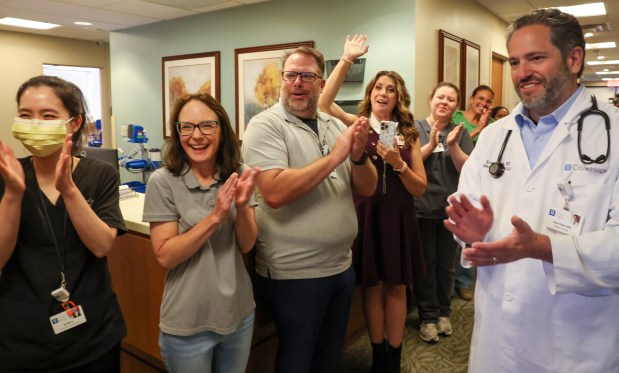
Rachelle Gardner, battling pancreatic cancer, learned of an experimental drug that promised to extend her life. When she received her first dose at the City of Hope Cancer Center Chicago, she expressed optimism, saying, “To good health and getting rid of that cancer bug!”
Gardner, a Milwaukee teacher for the visually impaired, is among many patients receiving this breakthrough medication called daraxonrasib. While it doesn’t cure pancreatic cancer, it offers patients vital additional time.
Impact and Trial Results
Pancreatic cancer is notoriously difficult to treat. Once it spreads, survival often spans only months. However, in a recent trial, patients receiving daraxonrasib lived approximately 13 months compared to six months for those on chemotherapy.
Dr. Evan Pisick of City of Hope Cancer Center Chicago calls it the most significant advancement in decades, pointing out, “It’s the first targeted therapy available, beyond chemotherapy.”
The drug, not yet FDA-approved, is accessible through an expanded access program for patients with metastatic pancreatic cancer who’ve tried other treatments, courtesy of Revolution Medicines.
Access and Availability
Gardner is joined by several others at City of Hope receiving the medication. Facilities like Advocate Health Care, OSF HealthCare, and University of Chicago Medicine have also begun treatment under the program.
Dr. Ardaman Shergill, a lead investigator at UChicago Medicine, highlights the unprecedented extension of life offered by daraxonrasib. Patients report improved energy, appetite, and reduced pain compared to chemotherapy.
Patient Experiences
Mary Louise McAdams from Bronzeville, diagnosed with pancreatic cancer in 2024, is another beneficiary. Initially given a limited prognosis, she decided to try daraxonrasib. “I hope I can prolong my life… as long as I’m functional,” she shared.
Gardner’s journey began with a rash that led to a Stage 1 pancreatic cancer diagnosis in 2023. Though chemotherapy and surgery initially checked the disease, it returned by 2025. This year, she learned her existing treatment would no longer suffice.
Her resolve was bolstered by the prospect of daraxonrasib. “I’m not going to let cancer beat me,” she stated.
The Importance of Research
Robert Stone, CEO of City of Hope, emphasizes the role of clinical research in such advancements. “Discovery happens fast, and sometimes trials and access programs offer the best treatment options,” he remarked.
Gardner is now hopeful for the future. She aims to spend more time with loved ones, teaching, and enjoying life experiences. “There’s hope out there,” Gardner affirmed.