
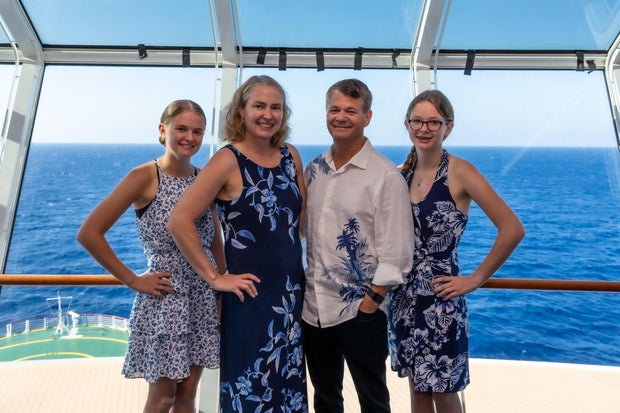
Dr. Sara Whittingham, an Air Force veteran and mother of two, initially dismissed her forgetfulness and occasional tremors as signs of a busy life and age. After moving from Utah to Ohio amidst the COVID-19 pandemic, she brushed off symptoms like stiffness and shaking. Her husband first noticed her arm shaking during a movie night in November 2020. Concerned, she searched for answers online and found numerous articles about Parkinson’s disease.
Feeling dismayed, she consulted a neurologist at Cleveland Clinic, where she worked, who confirmed her Parkinson’s diagnosis. She described it as a gut punch that disrupted her vision for the future. Parkinson’s disease affects the nervous system, often starting with mild symptoms that intensify over time. The Mayo Clinic notes that symptoms like tremors can progress, impacting quality of life significantly.
Whittingham learned about research linking exercise to slowed disease progression and joined a study led by Dr. Jay Alberts. The study suggested cycling with a cadence of 75 rotations per minute for 30-40 minutes, three times a week, could slow Parkinson’s progression. This “exercise prescription for Parkinson’s” gave her a renewed sense of control. Dr. Ben Walter, her neurologist, noted exercise’s potential to strengthen brain health and maintain body flexibility.
The study became transformative for Whittingham. Inspired by her husband’s participation in a half triathlon, she started swimming and later surprised everyone, including herself, by competing and excelling in the event. Her journey continued as she participated in the Ironman World Championship in 2023, a personal triumph beyond her expectations.
Whittingham later joined a study in 2025 that examined the effects of community exercise environments on those with Parkinson’s. She observed how shared enthusiasm among participants motivated her and others. Outside the study, Whittingham continued to race and even participated in the U.S. Paralympic Team trials in 2024.
As an advocate, she became involved in policy discussions and joined an advisory council for the National Institutes of Health’s National Plan to End Parkinson’s. She is also writing a book about her journey, aiming to encourage others. Whittingham believes the brain’s adaptability can help people set ambitious goals, even if achieving them is not the primary aim. Instead, finding purpose and taking small steps forward can provide strength and focus.