
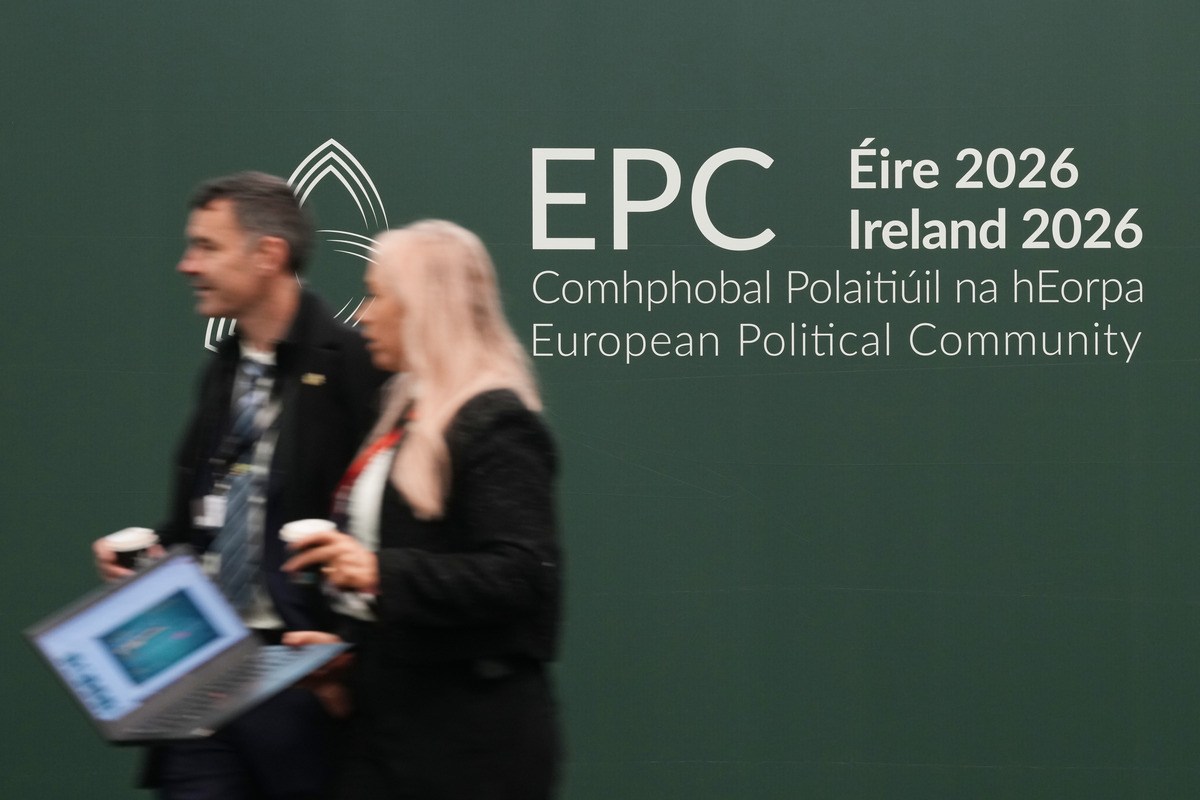
Dozens of European leaders will convene in Ireland on Thursday amidst rising incidents labeled as hybrid attacks aimed at destabilizing Western countries. A total of 48 heads of state and government have been invited to the European Political Community (EPC) meeting. The primary focus will be on securing and defending a democratic Europe. The EPC was formed in 2022, driven by France and Germany, following Russia’s extensive invasion of Ukraine.
The European Council will hold an informal meeting on Friday. A key topic is expected to be a possible peace deal for Ukraine amid fresh U.S.-brokered discussions this week in the UAE. Ukrainian President Volodymyr Zelensky arrived in Dublin on Wednesday.
President Donald Trump’s envoys, Steve Witkoff and Jared Kushner, arrived in Moscow early on Thursday to engage with Russian President Vladimir Putin. Discussions will also cover the increasing hybrid attacks reportedly carried out by Russia and Iran, as observed by U.S. and European officials.
Hybrid warfare involves actions that fall short of open fighting, such as cyberattacks, information campaigns, or targeting vital infrastructure like power grids. Hybrid attacks can include espionage or sabotage operations.
Examples of such incidents include European media outlets receiving hoax bomb threats, resulting in a week filled with bomb scares. Six countries reported hacking incidents affecting supermarket fridges, and French officials indicated cyberattacks on blood banks. European nations, especially those near Russia or Ukraine, have seen numerous drone and missile airspace incursions. Officials suggest Moscow is probing NATO responses, attempting to destabilize the alliance and weaken support for Ukraine.
While assigning responsibility for hybrid warfare is challenging, European authorities are increasingly identifying those they believe accountable. This includes suspected Kremlin agents and alleged Iranian operatives, though no state has been formally accused of recent bomb hoaxes across Europe.
The EU focuses on economic and political collaboration rather than overt defense planning, which is largely the responsibility of NATO. Although the UK and the US are not EU member states, many European nations are NATO members. U.S. Air Force General Alexus Grynkewich, NATO’s top commander in Europe, noted a rise in Russian hybrid activities. He mentioned an increase in state-directed sabotage, highlighting growing Russian boldness in these operations.
Danish intelligence reported Moscow is intensifying cyberattacks and sabotage efforts in Europe and warned of an escalation in hybrid warfare tactics. European Commission President Ursula von der Leyen echoed these concerns, emphasizing the need for heightened EU preparedness.
Von der Leyen proposed a European Security Council and suggested the EU should develop its counter-hybrid playbook, modeled on NATO’s security guarantees. The Dublin meetings may advance these proposals, potentially leading to new initiatives.
European Union nations have historically struggled with unified coordination, providing opportunities for exploitation by adversaries like Russia.
A report by security firm Osavul indicated that nations on NATO’s eastern flank, such as Poland and the Baltic states, experienced a disproportionate number of Russian-linked hybrid incidents.
Thursday’s summit guest list includes all 27 EU members, Canada, Ukraine, and the UK. Temporary road restrictions are in place, and Northern Irish police are assisting Irish authorities. Currently, Ireland holds the rotating EU presidency. Irish leader Micheál Martin expressed that the summit will address economic, political, and security challenges collectively.
France recently accused Iran of a mid-October cyberattack on supermarket refrigerators, leading to a diplomatic summons for the Iranian ambassador. Estonia blamed Russia for a facility fire in Tallinn in September, and Germany attributed a drone attack on Leipzig airport in August to Moscow.
The EU intends to discuss Ukraine and ongoing peace negotiations during Friday’s informal meeting. Russian media reported that U.S. envoys would meet with Putin before heading to Dublin for talks with Zelensky. Concerns arise from the possibility of Europe being sidelined in the creation of a Ukraine peace deal, potentially pressuring Kyiv into concessions.
Last month, European unity appeared fractured following direct talks by Finnish and Norwegian leaders with Putin. This led to backlash among some European leaders, with Danish Prime Minister Mette Frederiksen expressing skepticism about such engagements.
Christoph Meyer, a professor at King’s College London, noted the challenge of determining who represents Europe in negotiations is an ongoing issue. European leaders often favor the status quo over the risks associated with strategic changes.