
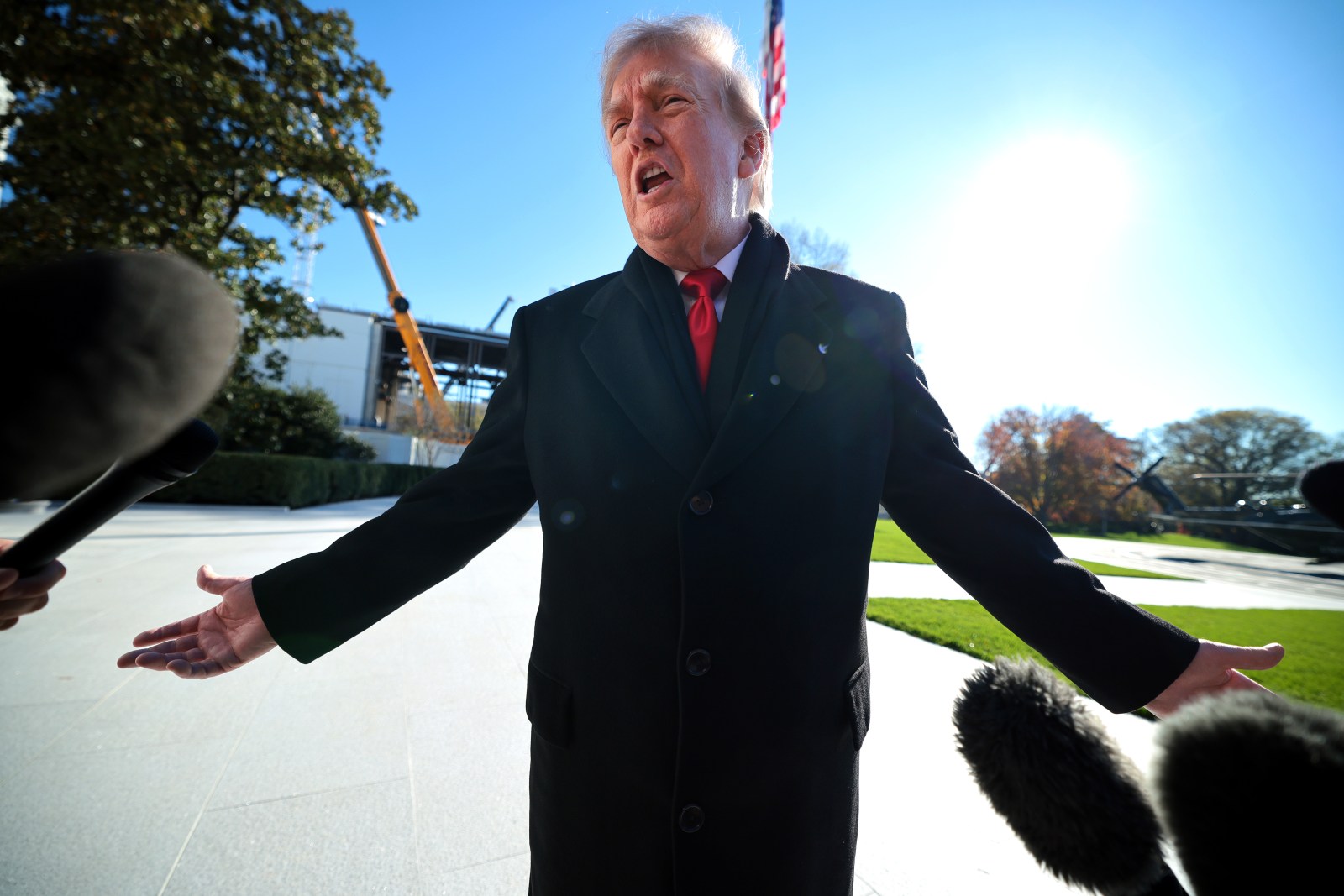
President Donald Trump’s financial disclosures in September revealed numerous stock and bond transactions, notably including investments in companies such as Nvidia and SpaceX, which are impacted by his administration’s decisions. This raises new questions about potential conflicts of interest.
Details of the Financial Disclosure
The disclosure, made public on Thursday, indicates Trump’s purchase of Nvidia shares valued up to $380,000 weeks before a scandal involving the company’s CEO, Jensen Huang. Additionally, it reports transactions with L3Harris, a defense contractor engaged with federal aviation communications, which came under scrutiny following an aviation ground stop.
The financial report chronicles 751 transactions involving various financial securities. Some disclosures appear to be filed after the deadline mandated by federal law.
The White House asserts that Trump’s investments are overseen by independent financial bodies, with no influence from Trump or his family on specific securities decisions.
A former ethics lawyer under President George W. Bush, Richard Painter, highlighted two ethical issues: potential conflicts of interest in policy decisions impacting stock values and the risk of using nonpublic information for trading.
Virginia Canter from Democracy Defenders Fund echoed these concerns, stressing the unique public trust role of the president, which encompasses access to sensitive market information.
The report does not explicitly indicate any direct involvement from Trump in the trades or any benefit from government decisions.
Focus on Nvidia Stock Trades
Reviewing Trump’s Nvidia transactions reveals purchases and sales in September. On September 2, Trump bought significant Nvidia shares coinciding with Nvidia’s agreement to acquire Hugging Face AI platform, a deal announced publicly the next day. The timing of the trade relative to the acquisition agreement remains unclear.
These transactions gain further attention due to Trump’s association with Nvidia’s Huang, who recently resigned amidst allegations involving espionage concerns.
Trump expressed surprise over the allegations against Huang, describing him positively. Concurrent regulatory actions by Trump’s administration, targeting Nvidia’s market opportunities in China, add additional layers of interest surrounding these trades.
Implications of L3Harris Transactions
Trump’s September sales of L3Harris shares occurred prior to a nationwide aviation disruption linked to L3Harris infrastructure work.
The FAA has reported network traffic issues causing disruptions, which are still under investigation. Trump’s trades happened over two months before the incident, with no direct connection confirmed between the stock transactions and the aviation issue.
L3Harris, among other companies in Trump’s portfolio, relies on federal contracts and government decisions.
Additional Significant Investments
Trump’s investment activities also included transactions involving SpaceX, along with Palantir and Intel shares. SpaceX possesses substantial federal contracts requiring government endorsement.
Beyond individual stocks, Trump was actively reducing holdings in companies like McDonald’s, while purchasing municipal bonds and an exchange-traded fund.
White House’s Defense
White House spokesperson Davis Ingle reiterated that Trump lacks any direct control over portfolio investments. The investments are part of broader strategies replicating known market indexes.
Painter noted, however, that having third-party managers does not eliminate potential conflicts of interest, particularly regarding nonpublic information usage.
Compliance with the STOCK Act
The timing of Trump’s disclosure raises compliance questions under the STOCK Act, which mandates reporting of securities transactions within a specific timeframe.
The filing date surpasses the required deadlines, prompting questions about whether the public received timely disclosure of potentially relevant investments.
While late-reporting penalties exist, their application to a president remains unclear. Painter suggests that enforcement of the deadline might not yield significant repercussions.
Call for Enhanced Restriction on Stock Trading
Public discourse persists on whether legislators should trade individual company shares. Painter advocates for prohibiting presidential and Congressional stock trading to address inherent conflicts.
Canter extends the divestment call to include Trump’s broader business interests, emphasizing public confidence in executive decision-making.
Ultimately, while Trump’s reliance on external financial advisers delineates he has no direct trade involvement, ethical questions regarding the impact of his investments on policy decisions remain.