
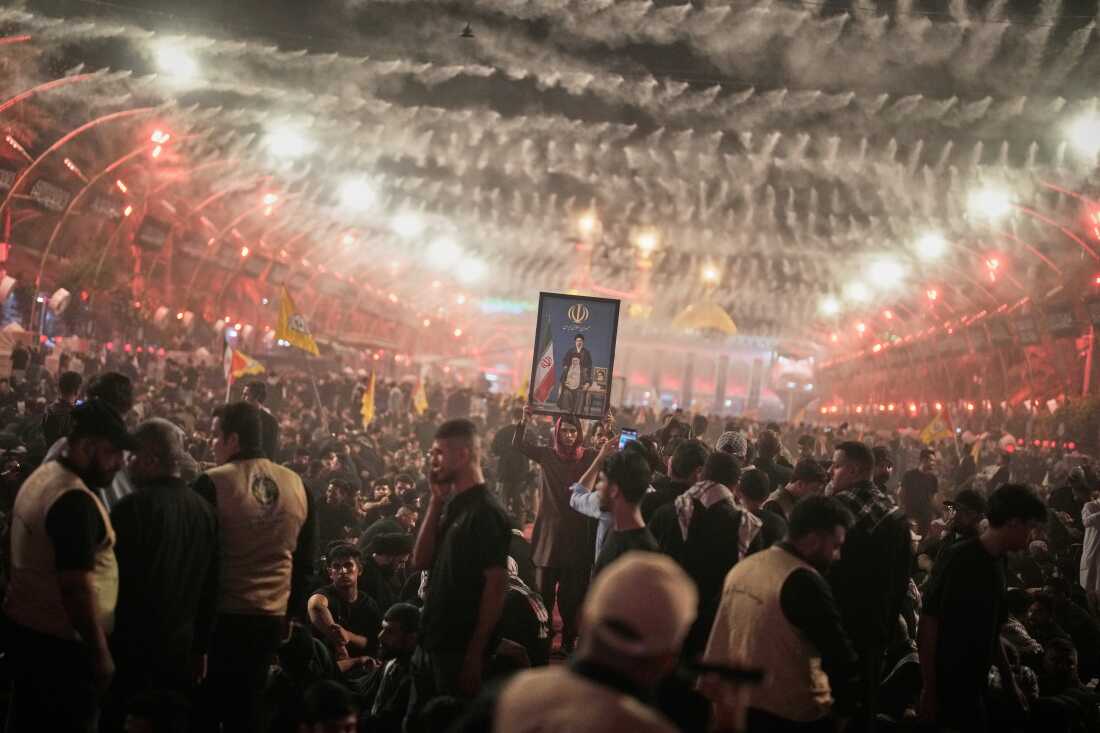
A mourner carried a portrait of Iran’s Supreme Leader Ayatollah Mojtaba Khamenei and his late father, Ayatollah Ali Khamenei, during a funeral procession in Karbala, Iraq, on July 8, 2026. This significant event was overshadowed by escalating military actions in the Persian Gulf region.
The United States launched a new wave of airstrikes against Iran early Thursday. In response, Tehran targeted Bahrain, Kuwait, and Qatar, jeopardizing an interim peace deal aimed at ending the conflict in the Persian Gulf. This escalation followed recent Iranian attacks on ships in the Strait of Hormuz, which President Donald Trump cited as reasons for the end of an already fragile ceasefire.
U.S. and Iranian Military Actions
The U.S. targeted various Iranian military sites and port facilities, as Iran had attacked several merchant ships near Oman. Thursday’s attacks were more extensive, triggering alerts in Bahrain, where the U.S. Navy’s 5th Fleet is headquartered. No immediate reports of damage emerged from the affected Gulf countries, though Kuwait’s military engaged in countermeasures to intercept potential threats. Iran’s Revolutionary Guard claimed responsibility for the retaliatory strikes.
According to U.S. Central Command, approximately 90 targets across Iran were hit, aiming to reduce Iran’s threat to navigation freedom in the strait. The region is crucial as a fifth of the world’s oil and natural gas trade passed through it before hostilities began on February 28 with U.S. and Israeli actions.
Iranian state media confirmed explosions in several areas, including Bushehr, known for its nuclear facilities, and southern ports such as Chabahar and Bandar Abbas. Fatalities occurred in Khuzestan province, where three people died, and Iranshahr, where a firefighter perished. These incidents followed nine deaths from Wednesday’s attacks.
Strategic and Political Implications
The recent U.S. strikes marked a shift, with reports of targeted infrastructure, including bridges. State media noted a railway bridge in Golestan province was hit. The Revolutionary Guard reported damage to bridges on the route to Mashhad, the planned burial site for Ayatollah Ali Khamenei.
President Trump, after attending a NATO summit in Turkey, issued warnings via social media. He indicated the potential for more severe actions should Iran continue its hostile activities. Previously asserting that military actions would be swift, he hinted at further aggressive strategies, involving Iran’s key infrastructure.
These developments occurred after Iran indicated its right, under an interim ceasefire deal, to manage Strait traffic. Iranian officials, including Parliament Speaker Mohammad Bagher Qalibaf, remained defiant against U.S. threats. On the social media platform X, Qalibaf expressed Iran’s resolve against perceived American aggression.
Potential for Renewed Conflict
Tensions threaten to reignite the conflict, casting doubt on peace efforts and impacting oil markets, with prices rising following Trump’s remarks. The collapse of the ceasefire could widen hostilities, disrupting energy shipments through a vital passage. While negotiations are still officially on the table, skepticism about their success persists.
Iranian Deputy Foreign Minister Kazem Gharibabadi countered Trump’s statements, describing them as indicative of failed policies. The internal Iranian divide is evident between hard-liners seeking control over the Strait and moderates aiming for peace to relieve economic sanctions.
The negotiations set to continue after Khamenei’s funeral sought to resolve differences over reopening the strait and addressing Iran’s nuclear program. However, the new military actions reflect entrenched opposition and the complicated geopolitics in the region.