
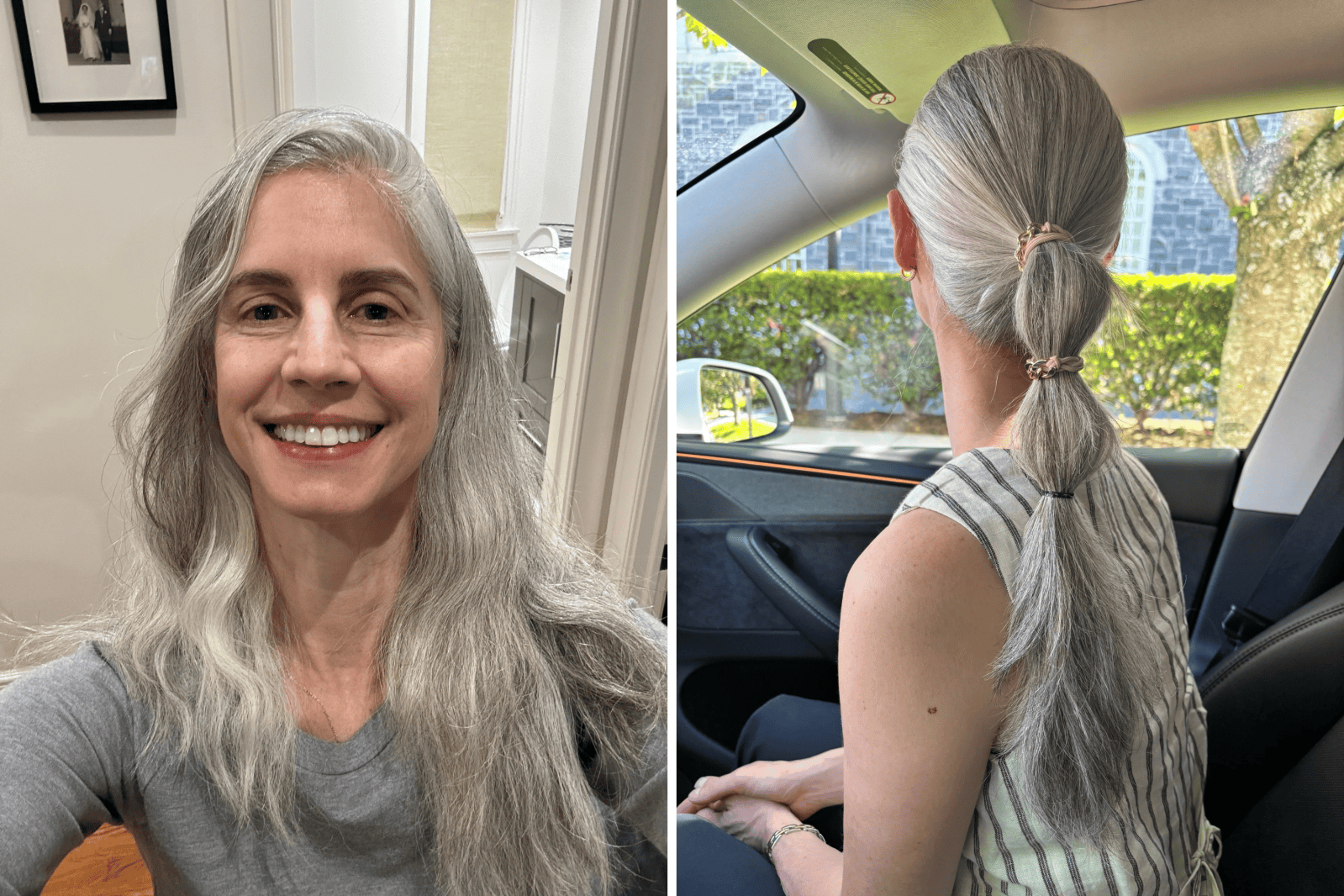
Choosing to go gray in my 50s ranks as one of my best decisions. The journey tested me in unforeseen ways. I had always followed social norms, but I decided to stop dyeing my hair. I let my natural gray grow, noticing a growing stripe along my part.
This choice felt defiant. It marked my new commitment to living without concern for others’ opinions. It allowed me to gradually accept my changing appearance as gray overtook brown.
The decision immediately freed me from the high cost and stress of hiding roots. Like persistent weeds, these roots would force regular salon visits to avoid looking old. Society often links age with unattractiveness.
“Your hair’s turning white,” my son Diego once said. The honesty and innocence of his comment eased my discomfort during the transition.
Diego compared me to a mother polar bear and Elsa from Frozen. His words were comforting. I found beauty in polar bears and appreciated being likened to Elsa.
As my roots grew to an obvious length, reactions varied. Gray-haired women encouraged me, saying going gray was liberating. Women with dyed hair saw my decision as brave, expressing doubt they could do the same. Both reactions reflected their perspectives.
Skeptics often prompted conversation. I assured them bravery was not required. I highlighted the time and financial savings, emphasizing that hair color should be a personal choice, not a societal expectation.
At 57, my hair, reaching halfway down my back, is fully gray. This change invites positive remarks from strangers, unexpectedly boosting my confidence. A young runner once shouted, “I love your gray!” during a 5K race. Her compliment energized my run and made me realize my reliance on external validation.
Despite my proclamation of not caring, I acknowledged my vanity. I retain the gray because it suits me and garners admiration, not merely for the health benefits.
Compliments often come from younger women who see me as an example. They contemplate their potential for adopting a similar style. Yet, I recognize that my bravery is no greater than that of a woman who dyes her hair. Who knows? If the compliments fade, I might reconsider my hair color too.
Daniella Mini is a writer and disability advocate. All views expressed in this article are the author’s own.