
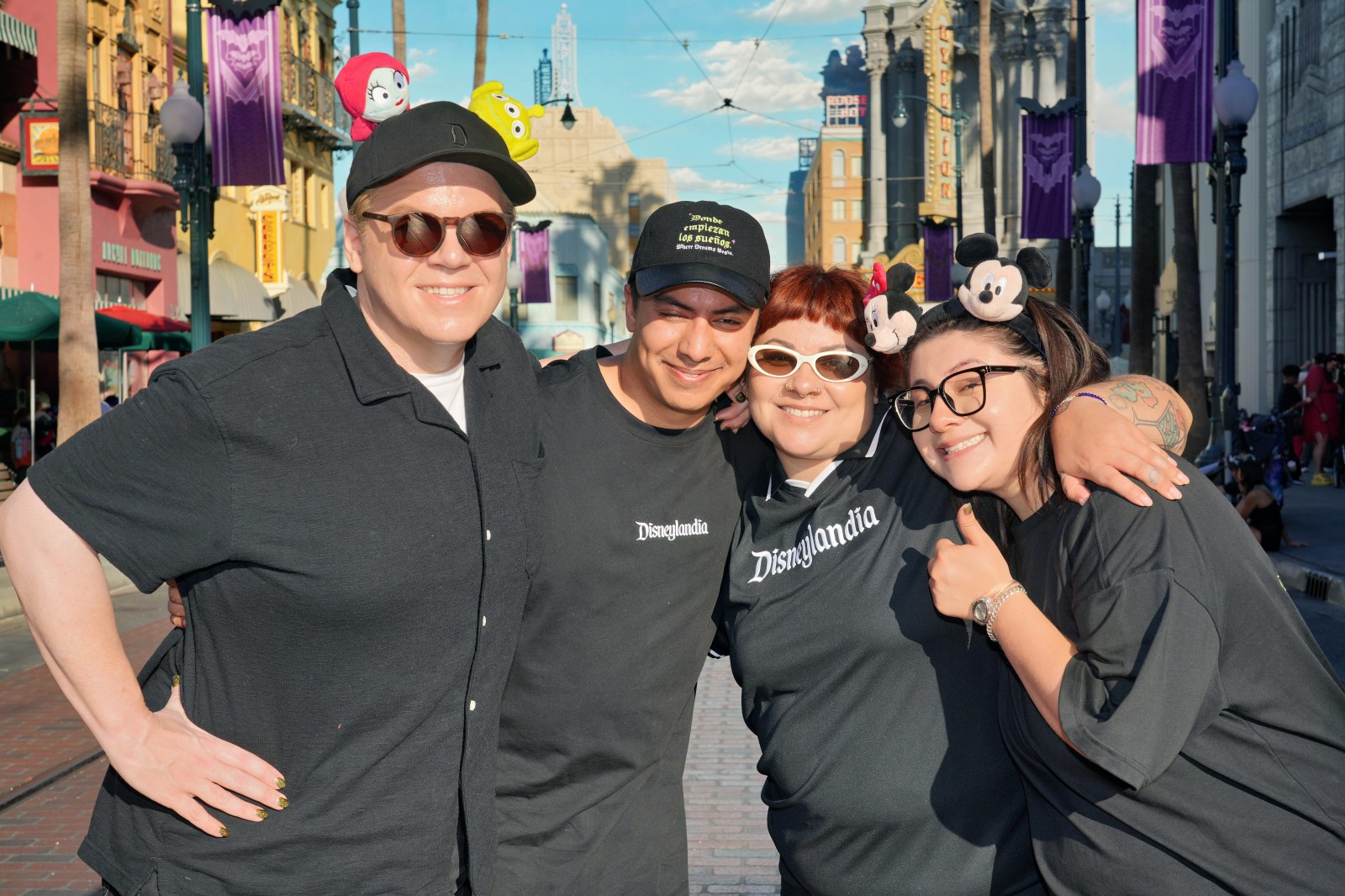
I recently attended a backyard party in Los Angeles, a city known for its cool vibes and where people don’t think twice about spending $30 on an Erewhon smoothie. During the gathering, a conversation emerged about Disney adults within a group of acquaintances that my best friend of over 20 years and I barely knew. “Oh, I have an annual pass to Disneyland,” I casually mentioned, without a shred of self-consciousness. Some participants appeared taken aback, while others seemed amused. Sensing the mood, my friend interceded, trying to soften the moment for me. “You’re not like a conventional Disney adult,” he said. “You’re more goth Disney.” He smiled, hoping the word “goth” might lend me some credibility. It was a kind attempt, yet I graciously declined it. “No, I’m simply a Disney adult,” I stated. “I’m an adult who loves visiting Disney. It’s straightforward.”
To many, it seems complex. I regularly engage in similar exchanges, the latest with a colleague. Shane Croucher penned a Newsweek op-ed titled “Disney Adults, Take Off the Mickey Ears, Go Home and Grow Up,” which predictably sparked outrage on social media. Croucher contended, “If you’re an adult with children, and you can afford it, visit Disney World. Dive in and revel in the experience. But if you’re an adult without these commitments, and you find yourself at Disney World, introspect deeply and confront any shame. I presume you use the term ‘adulting.’ I feel queasy even articulating it. Discard the Mickey ears, return home, and mature.” Strong words, indeed. Yet, no trouble that a ride on Space Mountain couldn’t alleviate.
Momentarily disregarding online culture, I commented on the Instagram post about Shane’s article. “Can’t rob me of my joy,” I typed. “I’m blessed, savoring churros at Disney devoid of stress.” Predictably, my feed was soon inundated with criticisms of Shane’s tone. I will refrain from repeating them here, since this narrative aims for positivity. Beneath my lighthearted churro remark lies an earnest belief: Shane misinterprets the situation. Being a Disney adult isn’t a reluctance to mature. For many, it’s something adulthood has finally enabled.
Shane posits that parks belong to parents, implying adults visiting without children possess flawed judgment. I empathize with this viewpoint. However, it prompts contemplation about alternatives. How does a mature adult typically occupy a Saturday? At a bar? A sports event? No one redirects a man clad in full Dodgers gear, advising maturity. To be clear, bars and ballgames are splendid pastimes if they resonate with you. They just don’t align with my interests. I’m not authoring essays criticizing traditional adult pursuits. (And don’t get me started on golf.) If those are what fulfill you, I sincerely celebrate your joy. Personally, I appreciate delectable cuisine, exhilarating attractions, and witnessing others revel in their day.
This element that critics of Disney adults often overlook is the genuine pleasure derived from observing children. A young child dashing toward Mickey with the fervor reserved for a long-lost relative. A youngster competes against time while indulging in an ice cream cone before it melts. A diminutive princess proudly strides through Fantasyland, adorned with attire befitting royalty. Is parental status a prerequisite for enjoying these moments? I disagree. Joy isn’t confined to familial bonds. Annoying adults exist at Disney, undeniably so. Some of them visit without offspring. Yet, equally bothersome individuals include parents whom Shane seemingly pardons. Every fandom bears unsavory participants; this doesn’t tarnish us all as flawed. (Yes, the Snow White reference is intentional; I simply cannot resist.)
Shane’s critique inspired introspection regarding my affection for Disney. Every Disney aficionado has a story. Mine began post-divorce between my parents, when my father gained custody, and my maternal visits became scarce. On one such occasion, she took me to watch ‘The Little Mermaid.’ Departing the cinema, the manager approached to apologize for the malfunctioned air conditioning, granting us complimentary tickets. What followed? We re-entered and viewed ‘The Little Mermaid’ once more. Truthfully, I don’t recall the heat. I cherish the doubled viewing alongside my mother. Subsequently, Disney films became our tradition. After a decade, we saved sufficiently for a family trip to Disney World, a memory etched in my mind. This tradition evolved with my maturity.
When I met my partner, our mutual love for Disney fortified the relationship. Our inaugural movie date featured ‘Coco.’ Birthdays and holidays uniformly find us at Disney. Intentional memory creation at a joy-inducing locale defines our choice. If this constitutes incorrect love, maybe I’m mistaken—but our happiness suggests otherwise.
Approaching Disneyland with an annual pass isn’t an act of immaturity. Rather, it exemplifies adulthood’s essence: independently choosing to revisit a site where cherished memories abound. Childhood meant economizing a decade for Disney, adulthood grants autonomy in choices. Where’s the shame?
Countless individuals, parents and childless alike, mirror this sentiment. Our visits aren’t escapism from difficulties. We attend because the park offers memories we cherish and wish to perpetuate. It remains a prime setting for generating new memories. Should an adult preserving joy concern you, might I gently propose the issue isn’t rooted in Mickey ears. Furthermore, us Disney enthusiasts refrain from critiquing those who harness children with leashes. (Seriously, aren’t leashes overboard?)