
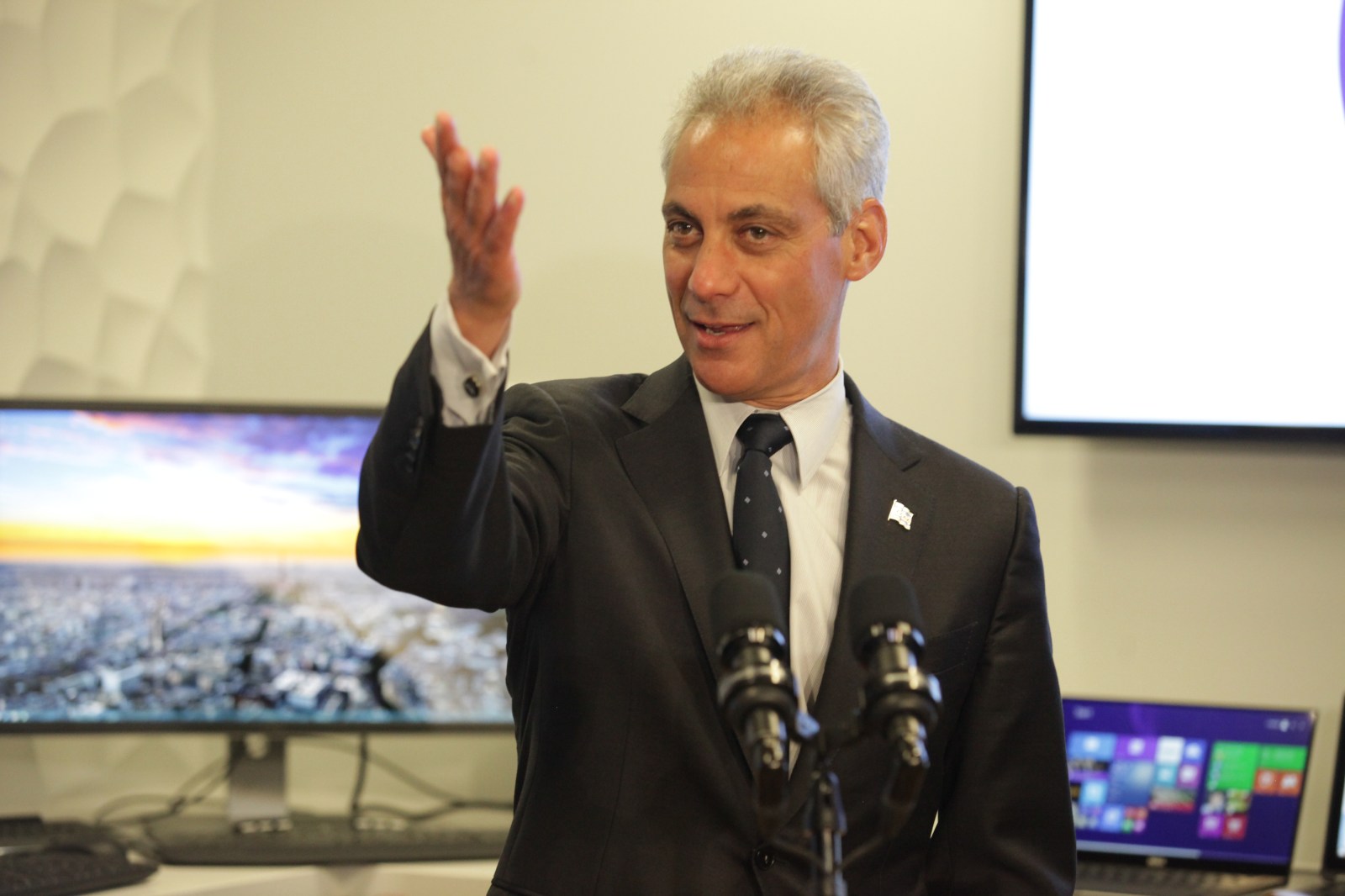
Rahm Emanuel’s recent remarks have intensified the debate on the Democratic Party’s future direction. Speaking on NBC News’ Meet the Press, Emanuel stated that Democratic Socialists are “their own party,” following a series of primary victories by candidates backed by the Democratic Socialists of America (DSA).
Emanuel, who held the position of White House chief of staff under President Barack Obama, dismissed the notion of democratic socialists as merely a faction within the Democratic coalition. He noted their distinct conventions and policy stances, which he argues deviate from traditional Democratic positions.
“I didn’t say form their own party. They are their own party. They had a convention here in Chicago just six weeks ago,” Emanuel explained. “They believe in defunding the police … open borders … letting prisoners out of prison. Those are not Democratic Party positions.”
As Emanuel considers a potential presidential run in 2028, his comments underscore the Democrats’ internal struggle to reconcile establishment views with an emergent progressive wing. Emanuel believes that a broader coalition including independents and disillusioned Republicans is vital for electoral success. He cited states like Arizona and Pennsylvania as pivotal for Democratic victories in future elections.
Emanuel identified a brand problem within the Democratic Party, emphasizing the need to demonstrate practical achievements rather than merely opposing former President Donald Trump. “We have to prove that we cannot just fight Donald Trump. But we can fight for America,” he emphasized.
This debate takes place as DSA-backed candidates make significant gains, raising questions about how closely the party should align with progressive policies such as Medicare for All. Democratic socialism, favoring expanded social welfare and labor protections, is championed by figures like Representatives Alexandria Ocasio-Cortez and Rashida Tlaib.
The DSA, advocating for major reforms like Medicare for All, faces criticism for positions that some Democrats see as misaligned with moderate and swing voter preferences. Emanuel reinforced that the Democratic Socialists’ stance is fundamentally different from the broader party goals, noting, “We have a healthy debate between the pragmatic wing and the progressive wing of the party.”
In August, House Minority Leader Hakeem Jeffries also distanced himself from the DSA agenda, highlighting a centrist approach focusing on reducing costs for Americans in essential areas like healthcare and housing.
Recent DSA Wins
The DSA has seen notable primary victories, with Abdul El-Sayed’s win in Michigan being a standout example. Running on progressive priorities, El-Sayed’s campaign attracted national attention and underscored the potential power of the progressive movement.
Despite disagreements on policy, Emanuel affirmed his support for Democratic nominees, including El-Sayed. This support reflects the need to keep electoral strategy centered on embracing the Democratic candidate, regardless of internal disagreements on policy specifics.
In New York, Claire Valdez and Darializa Avila Chevalier have shown the growing influence of DSA-backed candidates by securing victories over incumbents. Similarly, Chris Rabb’s success in Philadelphia and Melat Kiros’ win in Colorado have highlighted the impact of progressive candidates at multiple government levels.
Democratic Socialists have played a significant role in shaping discussions around expansive reforms, continuing to challenge and engage mainstream Democratic views. Emanuel, however, emphasized that Democratic Socialists’ policies set them apart from the party’s core objectives.