
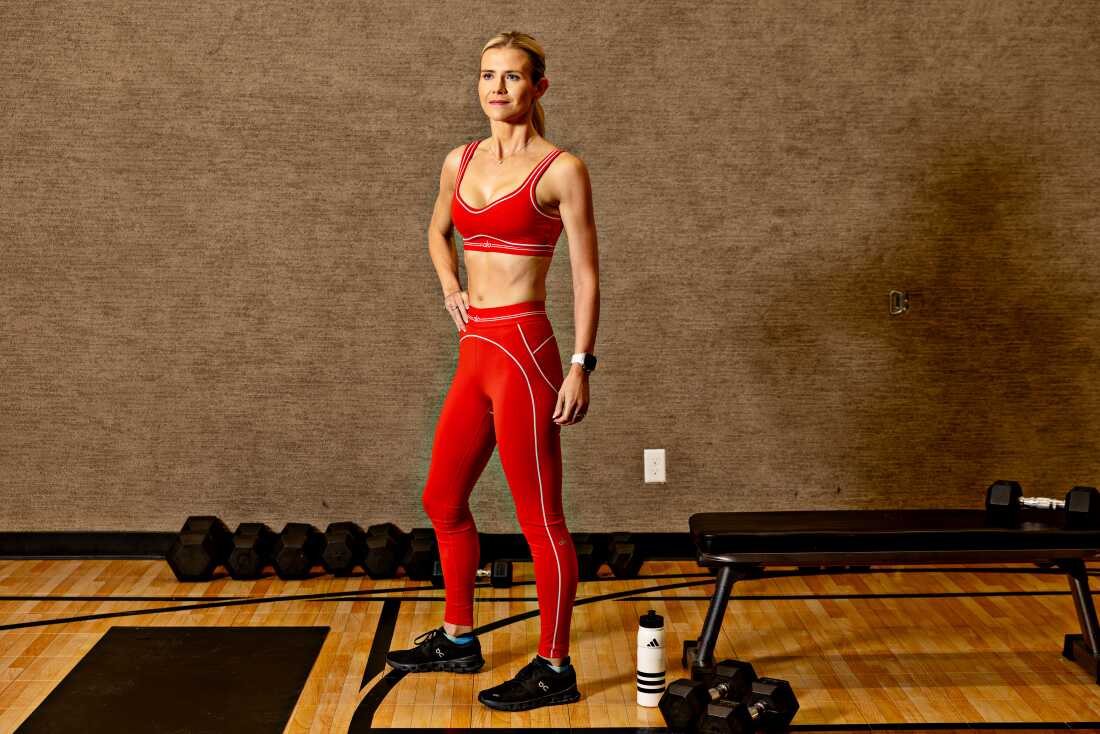
Elizabeth Smart has evolved into a confident competitive bodybuilder, continuing her advocacy for women and victims of sexual violence. Her journey began with a daunting experience stepping onto a bodybuilding stage.
Smart faced a choreographed routine with many challenges, including oversized costume jewelry and new blonde extensions. An onstage mishap involving her jewelry and extensions tested her resolve. Despite this, she persevered and developed newfound confidence in her body, transforming her relationship with herself and her efforts to survive traumatic experiences.
I’m at a point in my life where I want to celebrate [my body]. I don’t want to carry shame about my body.
In 2002, Smart was abducted from her bedroom by a self-proclaimed prophet. For months, her face was prominent in the media while she was held captive. To survive the nine-month ordeal, Smart clung to memories from life before her abduction.
Her book, Detours, discusses trauma as an unplanned path. Smart’s coping mechanism included holding onto moments reminding her of life outside captivity despite physical harm and psychological manipulation.
Robyn Brickel, a therapist, explains how survivors disconnect from their bodies as a safety mechanism during abuse. Survivors might notice intricate details in the room as they detach from the trauma.
Smart also felt profound shame from abuse, compounded by societal pressures. Raised with conservative values, she struggled with self-image post-rescue.
I had to always do the right thing, always say the right thing.
Smart describes a metamorphosis into advocacy and embracing visibility. Brickel sees this shift as significant, as trauma survivors often strive for invisibility to cope with unwanted attention.
Smart adopted bodybuilding after pursuing marathon running. Strength training and structured goals helped rebuild her confidence. Her disciplined regimen includes weight training, meal tracking, and cardio activities.
Studies link resistance training to reduced PTSD symptoms and improved well-being, empowering survivors to reconnect with their bodies. Brickel warns of exercising as a potentially unhealthy escape, emphasizing the importance of intention and emotional awareness.
Smart now appreciates her body’s resilience, echoing sentiments from Jane Eyre about the soul thriving despite physical struggles. Her body supported her through trauma and motherhood.
My body is incredible.
Brickel acknowledges positive body statements represent extensive emotional healing. Smart knows healing isn’t linear and looks to continue progressing.
Smart considers another bodybuilding competition, celebrating beyond survival. She balances training with leisure, like watching The Great British Bake Off, looking forward to indulging after shows.
We can be lots of things.