
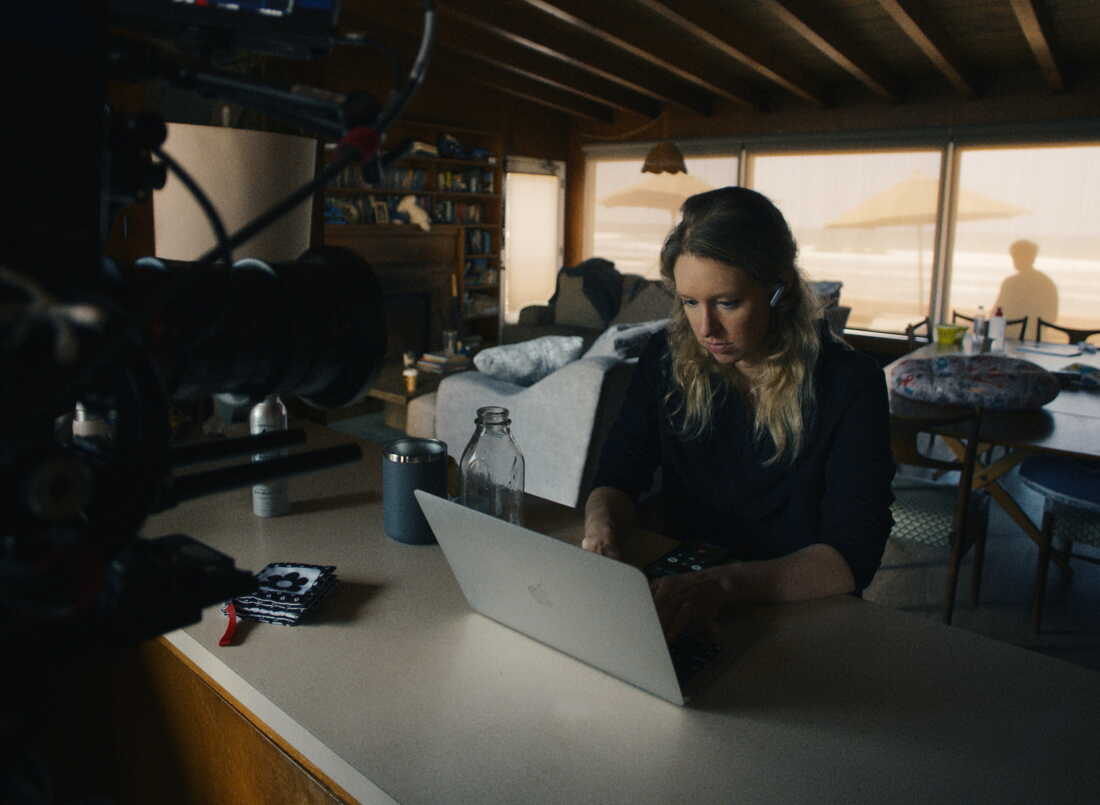
Elizabeth Holmes, once the youngest self-made billionaire in America, saw her life unravel after the collapse of Theranos. The documentary You Can See Everything explores her story with a compelling twist. Directed by Nathan Fielder and Lance Oppenheim, it offers an intense journey into her final days of freedom.
Before her prison sentence starts, the documentary captures Holmes at her San Diego beach house with her partner, Billy Evans, and their children. The filmmakers use Holmes’ promise of transparency to question her motives. Is she trying to recast herself as a caring mother and partner?
Holmes engages with Fielder, known for his distinctive style, in candid interviews. He attempts to uncover her inconsistencies and challenge her narrative. The film presents her in close-up shots, pulling viewers into her enigmatic world. It contrasts Holmes’ perception of reality with Fielder’s probing questions.
One vivid scene features Holmes watching Abbott and Costello’s ‘Who’s on First?’ As Holmes reacts, Fielder uncovers her difficulties with humor and language. Another moment shows her unease as she watches the series The Dropout, which depicts her own story.
As Holmes enters prison, the focus shifts to Evans. His actions raise questions about true manipulation and deceit. A notable presence enters, igniting unexpected events. Viewing this documentary might remind some of Fielder’s previous work, The Rehearsal, yet You Can See Everything pushes beyond conventional boundaries.
Oppenheim’s influence as co-director shines through the film’s visual and auditory elements. His past works, like Some Kind of Heaven, highlight his ability to craft striking images. This documentary, with its clear visuals and mysterious undertones, is best experienced on a large screen with an audience.