
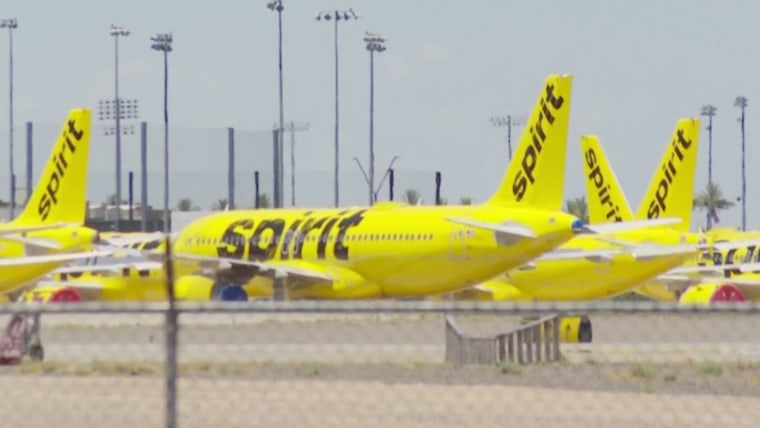
Spirit Airlines and Its Closure
Spirit Airlines had a reputation as a budget-friendly option that was both loved and hated by American travelers. However, it recently went out of business, leading to a viral crowdfunding campaign aimed at resurrecting the bankrupt airline.
Crowdfunding Initiative by Hunter Peterson
Hunter Peterson, a 32-year-old voice actor and content creator, initiated this effort on social media after Spirit announced its closure on May 2. Peterson proposed that if one-fifth of Americans contributed $45, reminiscent of a low-cost Spirit flight, the airline could potentially be bought. He likened the concept to the publicly-owned Green Bay Packers, which has millions of shares divided among over half a million owners.
The idea took off, with Peterson amassing $337 million in pledges from more than 370,000 verified individuals. Although not accepting actual cash, Peterson is seeking legal advice and understanding regulatory boundaries.
Challenges in the Airline Industry
Interest in Peterson’s idea reflects a public eagerness to disrupt the airline industry. However, experts highlight significant regulatory challenges that could impede progress. Charles Elson, a retired finance professor, emphasized the complexities involving numerous stakeholders such as lenders, aircraft, governmental leases, and union contracts.
“An airline is a very complicated financial enterprise. There’s a lot of players.” — Charles Elson
Financial and Regulatory Obstacles
Crowdfunding can effectively support smaller, less complicated ventures, but an airline’s complexity is daunting, as Elson noted. The extensive financial commitments required are substantial and involve various regulatory entities and contracts.
John Coffee Jr., a Columbia University law professor, further explored this by mentioning the costly and detailed process of registering an airline as a publicly traded entity with the Securities and Exchange Commission (SEC). There are exemptions for crowdfunded companies, but they cap at $5 million annually, which falls short for purchasing an airline.
Alternatives such as private placement offerings exist, yet typically cater to individuals with a net worth of $1 million, making it inaccessible to the average person. Additionally, Spirit’s bankruptcy complicates the scenario with additional risks to consider.
“You’re dealing with a very risky company that has essentially failed.” — John Coffee Jr.
Historical Financial Struggles
Spirit Airlines’ financial difficulties are well-documented, with the airline reporting $8.1 billion in debt by August 2025. Failed merger attempts with Frontier and JetBlue, along with rising oil prices due to international conflicts, further drained its resources, as noted by attorney Marshall Huebner.
CEO Dave Davis expressed during a hearing that these rising operational costs left the airline without options. Most airlines rely on branded credit cards and frequent-flyer programs, rather than ticket sales alone, to achieve profitability.
“We just kind of ran out of runway.” — Dave Davis
Prospective Plans for Spirit 2.0
Should the campaign succeed, the Spirit 2.0 collective aims to allow members to decide on routes, leadership, and strategic directions according to Peterson’s website. However, Peterson acknowledges the uncertainty of the endeavor and reiterates the challenges ahead, despite securing a legal fund for a bid and support from Spirit’s flight attendant union.
With an auction for Spirit’s assets looming, Peterson has engaged angel investors for potential financial backing. His prior experience in traveling with the airline 24 hours straight for a video underscores his commitment to this unconventional pursuit.
While Peterson is unable to accept individual contributions, he reaches out to high-net-worth investors for support. His efforts continue, bolstered by growing interest.
“There’s no guarantee that any of this is going to work.” — Hunter Peterson
Peterson’s initiative remains a bold attempt to challenge traditional industry models, offering the possibility of collective ownership of an airline and the potential for innovative business practices.