
Last year, Chicago reported the lowest number of violent crimes in 60 years. Yet, the current year presents a different story. While many cities continue reducing crime rates, Chicago faces a 7% increase in homicides. The arrival of summer often leads to an uptick in violence.
Financial challenges exacerbate these issues. Federal pandemic relief for cities has ceased, and the downtown area struggles as remote work persists. Chicago’s budget situation demands effective use of every dollar spent.
Recently, Chicago invested $100 million in community violence interventions (CVI). Unlike broad initiatives aimed at eradicating poverty, CVI focuses on preventing interpersonal conflicts from escalating into gun violence. This program involves community organizations that employ street outreach, mentoring, jobs programs, and case management to help curb violence.
A vital component of CVI is cognitive behavioral interventions. These interventions enhance the effectiveness of CVI, offering psychological tools to break the cycle of violence. Insights from interviews with 99 men from the most violence-afflicted neighborhoods of Chicago highlight this approach.
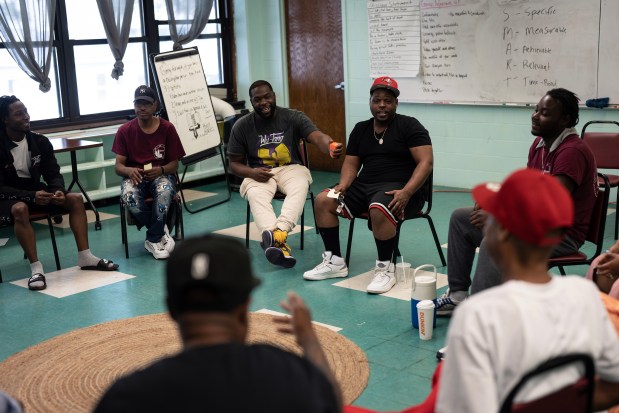
These men participated in READI Chicago, a CVI program that provided them with subsidized jobs, cognitive behavioral intervention, and support from street outreach workers for 18 months. At the start, 98% had prior arrests and 35% had been shot. The stories they shared reveal patterns in how past violence influences future actions.
Distinct Patterns
The men described three common experiences:
- **Altered Perceptions:** Victims of violence often perceive threats where none exist. For instance, one participant re-evaluated how he interpreted ambiguous interactions after his experiences.
- **Limited Response Options:** Exposure to violence limited their perceived options in conflicts. READI helped them realize alternatives beyond retaliation.
- **Self-Perception:** Those involved in violence often see themselves as inherently violent. Cognitive interventions allowed them to reframe their identities, focusing on growth from past situations.
These patterns reflect predictable responses to chronic violence but can be altered through cognitive behavioral interventions. Many participants saw READI as a chance for personal growth, indicating a shift in self-perception.
Participation in cognitive behavioral intervention programs, such as the group therapy sessions conducted on July 20, 2023, demonstrates the positive outcomes of this approach. Statistical evidence, including a trial showing a 65% reduction in shootings and homicide arrests among READI participants, corroborates its effectiveness.
The program, costing $60,000 per participant, saves society considerably by reducing healthcare costs, incarceration, and untimely deaths. Other initiatives like Becoming a Man (BAM), Choose to Change, and One Summer Chicago Plus also exhibit success in reducing youth violence.
The next pragmatic step involves integrating cognitive behavioral skills systematically across CVI programs. The cost is minimal, aligning with Chicago’s budget constraints, and presents an actionable, evidence-based solution to reduce violence.
Megan Kang, a sociologist affiliated with the University of Chicago Crime Lab, highlights these insights in collaboration with Kathryn Edin, Jens Ludwig, Timothy Nelson, and Sendhil Mullainathan in their co-authored work, “Social Cognition and Interpersonal Violence.”
Readers may submit a letter to the editor, limited to 400 words, at the following link or email: [email protected].