
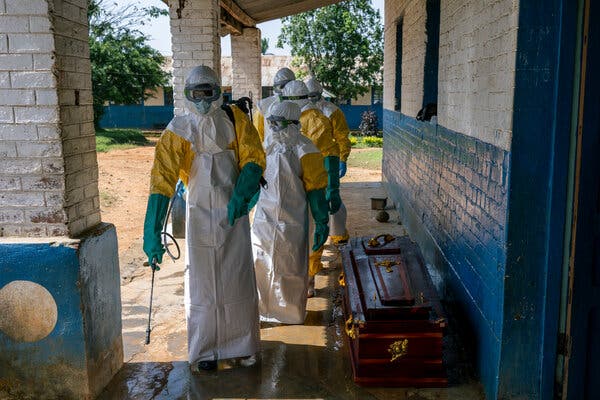
The Bundibugyo virus, a previously low-profile strain, is now at the forefront of a widening epidemic in Africa. Although it had caused only minor outbreaks before, the situation has escalated significantly.
As the Ebola outbreak spreads across the Democratic Republic of Congo and Uganda, health workers are moving swiftly. They aim to provide supportive care in the hope that some patients might recover naturally. Simultaneously, they focus on isolating the sick and identifying contacts of those infected.
Notably absent in the current fight against the virus are vaccines and drugs that could halt its progression. Faced with the growing crisis, scientists are urgently searching for viable solutions. This week, two prominent nonprofit vaccine organizations announced substantial funding to develop vaccines.
Experts from the World Health Organization have advocated for testing several monoclonal antibodies and other drugs as potential treatments. However, researchers caution that determining the effectiveness of these measures will take months. Nevertheless, they believe the treatments will remain valuable, as the outbreak is expected to persist.
Richard Hatchett, CEO of CEPI, a nonprofit focused on pandemic countermeasures, emphasized the need for a prolonged and dedicated response to control the outbreak.
One of the challenges in combating Ebola is its diverse origins. The term ‘Ebola virus’ often refers to a species first identified in 1976 in what was then Zaire, now the Democratic Republic of Congo. This complexity complicates treatment efforts.