
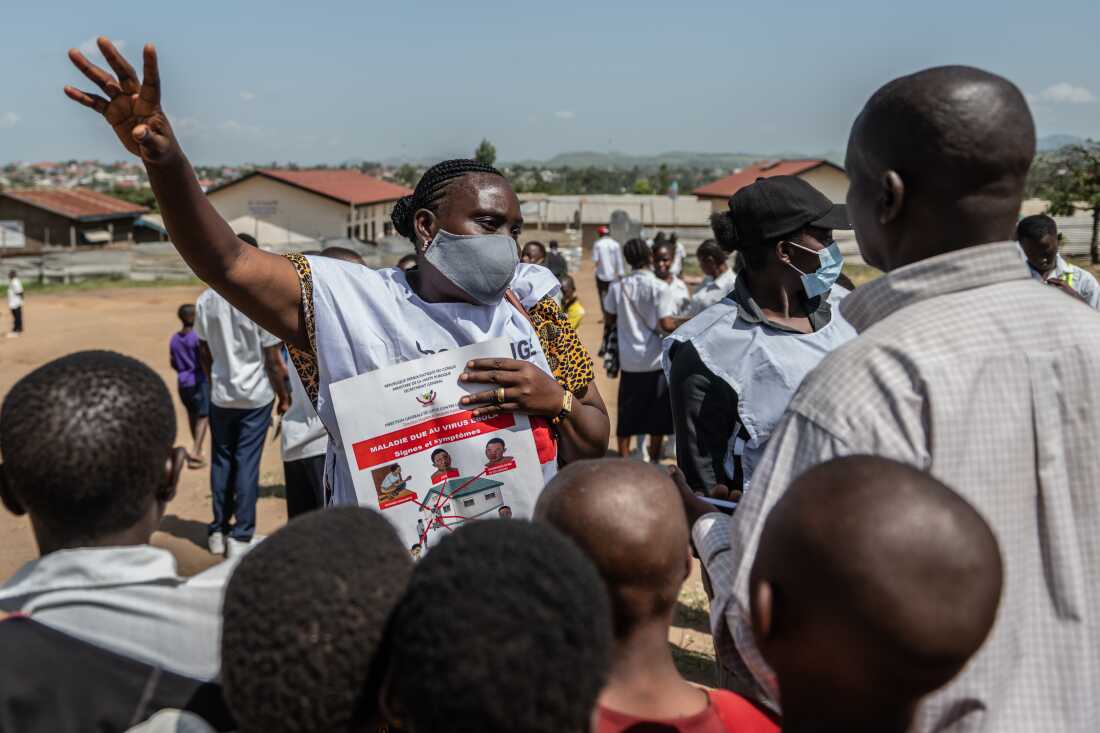
In eastern Congo, Vanny Birungi, a Red Cross volunteer, faces dual challenges in her efforts to raise awareness about the current Ebola outbreak. The region grapples with the rare Bundibugyo strain, which lacks a vaccine or treatment. Additionally, Birungi and her team encounter resistance and hostility from residents in Bunia, a city heavily affected by the epidemic.
The virus outbreak, nearing 1,000 suspected cases, spreads in a volatile area plagued by armed groups. Trust is scarce among locals, wary of external aid workers amidst an environment where thousands have perished, and more have been displaced. The delayed discovery of the outbreak compounds this mistrust, weakened by recent aid cuts.
“We continue to tell them that the disease is out there. Some accept, and others don’t,”
Birungi told The Associated Press. As she and her colleagues spoke with residents, they faced scepticism.
Challenges in Containment Efforts
Frustration among the populace leads to attacks on healthcare facilities, as seen within the last week. A hospital was stormed, a Doctors Without Borders tent in Mongbwalu was burned, and a center in Rwampara suffered a similar fate after a body retrieval denial.
Funeral rites restrictions, due to virus spread through bodily fluids such as sweat or blood, exacerbate anger. Trust issues hinder treatment-seeking behavior, as highlighted by Heather Kerr from the International Rescue Committee.
Additionally, armed conflict poses transportation risks between Bunia and other towns, impeding response efforts. Currently, over 900 suspected cases and more than 220 deaths are reported, as per the World Health Organization.
The Role of Community Engagement
Community resistance persists, with residents like Mado Nditamba expressing reliance on faith amidst uncertainties about the outbreak’s severity. Congo, having weathered 17 past Ebola outbreaks, finds initial testing errors cost precious time. Few facilities can conduct tests for the Bundibugyo strain in regions often losing power, with critical infrastructure under the control of rebels.
A lack of protection leaves health workers at risk, evidenced by cases of infected responders, including a recent Congolese doctor’s death and infections among Ugandan health workers.
Efforts must focus on improving community engagement, despite Action Aid reporting skepticism and misunderstanding among residents. The scale of the outbreak, according to both the WHO and Africa CDC, likely exceeds current reported figures.