
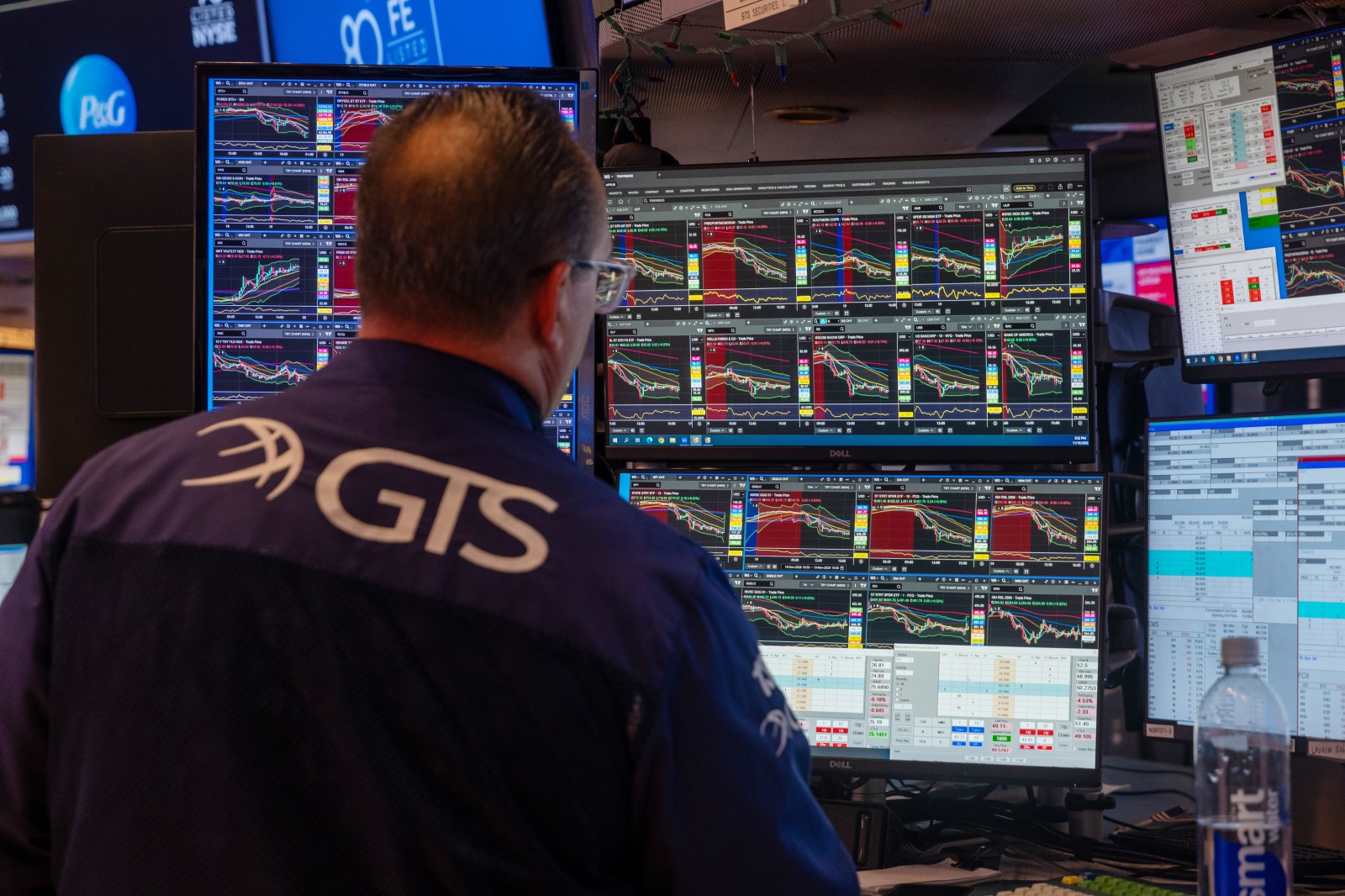
The Dow Jones Industrial Average fell by over 1,100 points on Thursday, ending below the notable 50,000-point mark highlighted by Pam Bondi during her congressional testimony on Jeffrey Epstein.
This marked the first time since June the index closed below this level, reigniting political discussions.
Bondi, then in her role as attorney general, referenced the index’s performance during queries about the Justice Department’s Epstein investigation.
“The Dow is over 50,000 … I don’t know why you’re laughing. You’re a great stock trader, as I hear, Raskin,”
Bondi addressed Representative Jamie Raskin, implying the Trump administration’s economic success.
The blue-chip index dropped 1,101.11 points, or 2.19%, closing at 49,097.06. The S&P 500 decreased by 2.02%, closing at 7,175.83. The Nasdaq composite dipped 2.25% to 23,879.20.
The day’s sell-off occurred amid concerns about the artificial intelligence sector, regulatory oversight, and potential Federal Reserve interest rate hikes.
Nvidia’s stock, a critical player, fell 3.3% to $145.98 despite positive quarterly results, with the stock returning to late-2024 levels.
Political Impact of the 50,000 Dow Remark
The 50,000-point mark gained significance in a 2026 congressional hearing.
On February 11, Bondi appeared before the House Judiciary Committee over the Epstein document handling inquiries.
Bondi defended the administration’s document management and criticized Democrats’ Epstein focus. She turned the discussion to the economy.
The S&P at almost 7,000, and the Nasdaq smashing records. Americans’ 401(k)s and retirement savings are booming. That’s what we should be talking about.
Bondi claimed Americans benefited from a robust stock market.
Her remarks, seen as diversionary, became memorable, tying the Dow’s performance to broader political debates.
Though the 50,000 level wasn’t an official benchmark, Bondi’s usage in political contexts made it symbolic.
Nvidia’s Earnings Fail to Rally Stocks
Nvidia’s strong third-quarter results initially lifted investor sentiment. But, their stock reversed as the week progressed.
The company recorded adjusted earnings of $2.68 per share with $115.84 billion in revenue, surpassing Wall Street’s expectations.
The stock’s decline highlighted investor wariness amid a Securities and Exchange Commission investigation into Nvidia’s disclosures.
This scrutiny, alongside leadership uncertainties post-Jensen Huang, weighed on the chipmaker’s perception.
Dow’s Historical Performance
The Dow first closed above 50,000 on February 6, 2026. It faced volatility, slipping again by mid-February.
A strong rally in June saw the index stabilize beyond 50,000, but recent factors resulted in its decline below the mark again.
Concerns Over Federal Reserve Rate Policies
Uncertainty from the Federal Reserve’s potential rate hikes also contributed to market anxiety.
Governor Christopher Waller suggested a possible half-percent increase needed to tackle inflation.
This increased investors’ worries over borrowing costs and their effect, especially on tech stocks valuing future growth.
Healthcare Stocks Influence Dow
The Dow faced pressure from healthcare stocks due to proposed anti-fraud rules affecting insurance providers.
Companies like UnitedHealth Group and Humana saw significant declines, amplifying overall market woes.
Market Outlook
Investors will closely monitor upcoming sessions to judge whether the current downturn is temporary or enduring.
Although Nvidia’s demand for AI infrastructure remains promising, concerns over valuations and monetary policy loom large.
Anticipated signals of inflation moderation and stable corporate earnings are crucial. They will help determine if the pressure on Wall Street will ease before year’s end.