
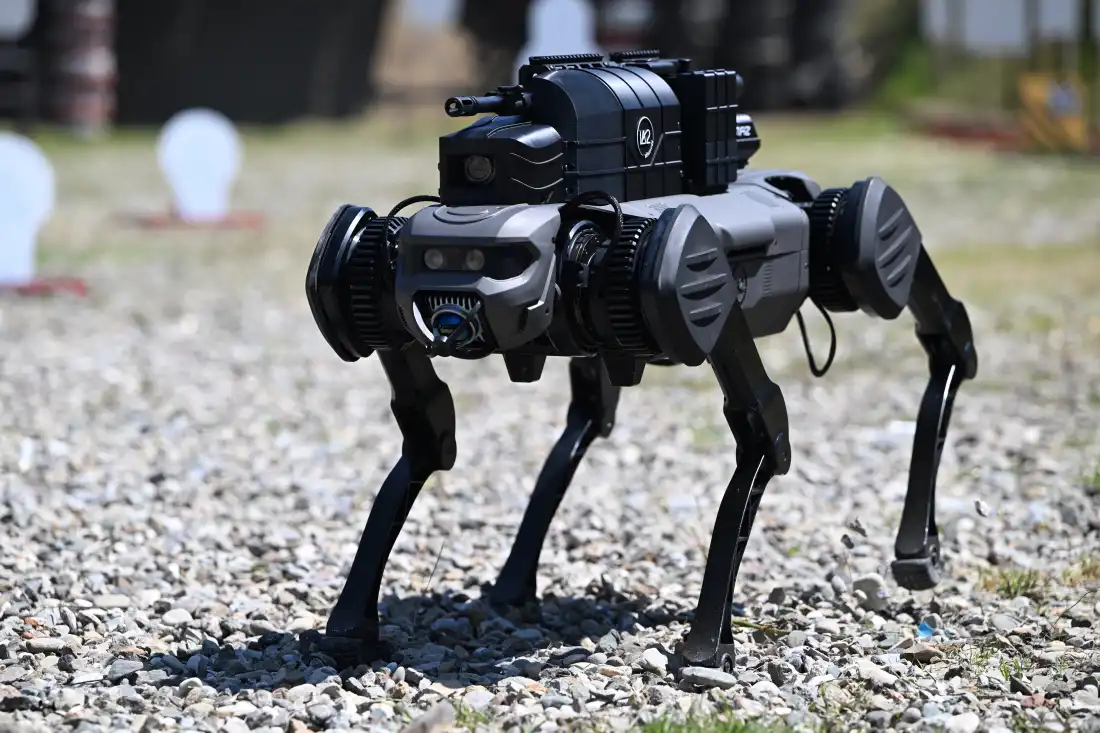
On April 29, at a facility in Duzce, Turkey, Turkish defense companies showcased an armed robot. This demonstration highlighted the ongoing global debate on autonomous lethal weapons. U.N.-backed discussions in Geneva have stalled, leading to an agreed extension of talks by two more years. The aim is to draft a potential accord on autonomous weapons by 2028. Nevertheless, the discussions yielded no binding regulations, despite calls from U.N. Secretary-General António Guterres and advocacy groups. This reflects the challenges of diplomacy amidst global conflicts and major military power rivalries.
Izumi Nakamitsu, the U.N. High Representative for Disarmament Affairs, praised the progress as a ‘significant achievement,’ though she recognized the uncertainty in the situation. Many activists and countries have criticized the lack of decisive action, with groups like Stop Killer Robots expressing disappointment over the weakened mandate. Beatrice Fihn from Lex International termed the decision a delay of necessary actions, echoing feelings of discontent among many nations pushing for a treaty.
Renowned machine learning expert Max Tegmark from MIT’s Future of Life Institute criticized the protracted discussions on this issue. The prolonged talks did not lead to substantial regulations even after 14 years, allowing autonomous weapons to become increasingly problematic.
Seven countries—Brazil, Austria, Belgium, Ireland, Mexico, New Zealand, and Panama—proposed starting negotiations on guidelines to restrict machines’ ability to operate without human oversight. However, this initiative did not succeed. Brazilian Ambassador Frederico Meyer commented, ‘Technology is moving faster than diplomacy; diplomats are very slow.’
“Advocacy groups criticized obstruction from military powers such as Russia. These countries are keen on maintaining freedom in developing high-tech weapons,” he said.
Guterres, set to retire at the end of the year, aimed for a 2026 deadline to begin negotiations. Pope Leo XIV and various advocacy groups have labeled the regulation of AI weapons as a critical issue. They emphasize the urgent need to control such technologies before they become ubiquitous and unmanageable. Although there have been instances where armed drones operated autonomously in conflict zones, widespread deployment remains limited.
This week’s deliberations focused on the Convention on Certain Conventional Weapons, a treaty ratified by 128 countries. Decisions within this framework depend on consensus, allowing any single country to block agreements. Consequently, negotiations are likely to result in minimal, broadly agreeable outcomes.