
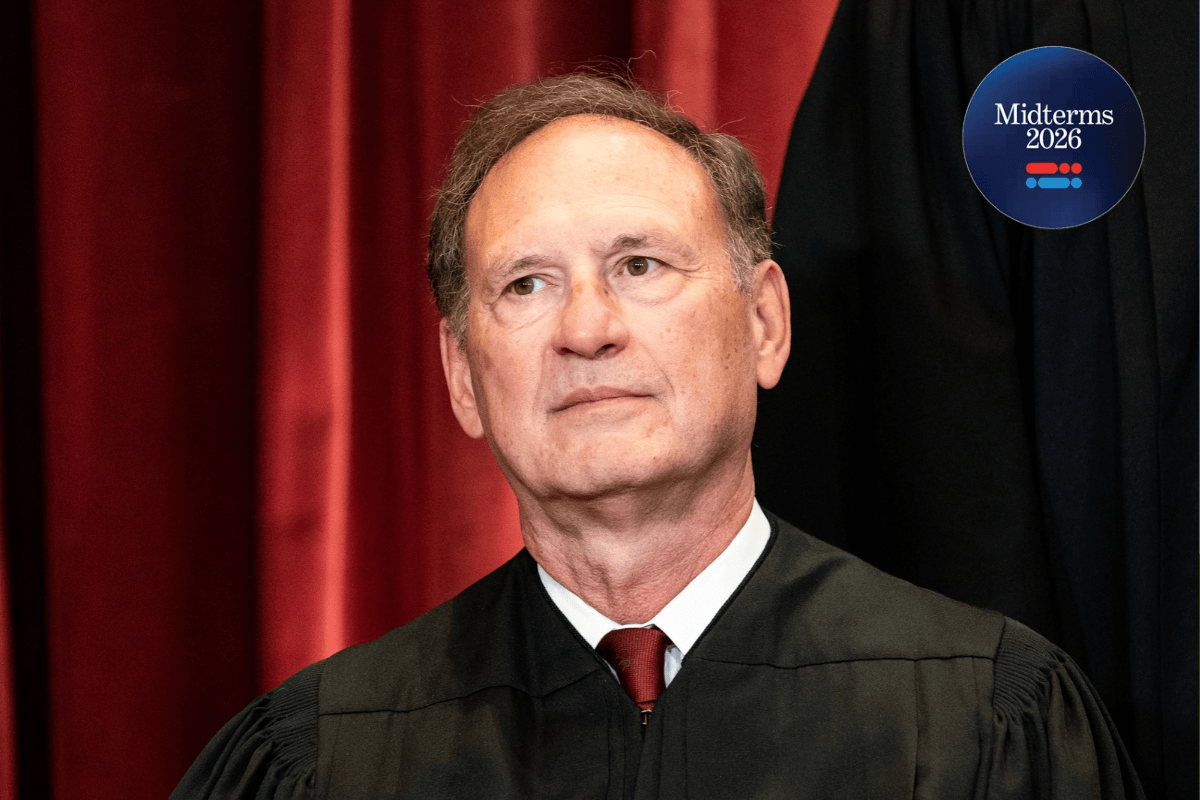
With Democrats securing a Senate majority, President Donald Trump’s opportunity to appoint another Supreme Court justice may have diminished, according to legal analysts. Democrats have gained at least seven Senate seats post-midterms in states like Iowa, Kansas, and Texas. Races in Alaska and Mississippi remain close.
A Democratic Senate poses a significant hurdle for Trump. Any nominee he proposes for an open Supreme Court seat would need Senate confirmation, which Democrats could block. Historically, bipartisan cooperation existed in confirming justices, but recent years have seen increased partisanship.
The 2016 scenario with Merrick Garland highlights the transformation. Republicans delayed his confirmation, hoping to win the presidency, which resulted in Trump appointing Justice Neil Gorsuch in 2017. In 2020, they confirmed Justice Amy Coney Barrett after Justice Ruth Bader Ginsburg’s death, despite the 2016 precedent suggesting otherwise.
During Trump’s second term, he failed to appoint more justices. Some Republicans hoped that older conservative justices, like Samuel Alito or Clarence Thomas, would retire before midterms, allowing Trump to appoint younger replacements. However, neither retired.
Democrats’ Strategy to Block Nominees
With a projected 54 Senate seats in January, Democrats could block any Trump nominee. Daniel Urman, a law professor, indicated Democrats might refuse even to hold hearings for Trump’s nominees, potentially leaving the Court divided (4-4) in certain cases.
Urman saw a slim chance of Trump nominating a moderate. Given his past frustrations with his appointees, it’s unlikely he would pursue this route. Trump desires loyal justices who support his policies.
Some Republicans express concern over the Supreme Court’s future. Florida Governor Ron DeSantis noted the impact of the Democratic majority, affecting Republican control for years. With 56 senators, confirming a justice under Trump becomes challenging unless action occurs soon.
Possibility of Lame Duck Session Retirement
Paul Collins, a professor of legal studies, noted the possibility of a justice retiring before year-end remains, though unlikely. A politically motivated retirement would be unprecedented. Justice Alito or Justice Thomas, with their strong conservative ties, are the likeliest to consider such action if it happens.
Former state attorney Dave Aronberg suggested Republicans might pressure Alito to retire, though a swift retirement seems improbable. Democrats, once in charge of the Senate, likely won’t allow new conservative justices without a struggle.
Alito addressed this topic, expressing bemusement at the speculation of his retirement. He stated he has no specific plan to retire.
Impact of Democratic Senate Majority
Senate Majority Leader John Thune mentioned the possibility of confirming a justice in a lame-duck session. However, Democrats could introduce Supreme Court reforms, like expansion or term limits, if Alito retires. Urman stressed such an action would be seen as partisan, impacting the Court’s public perception.
Stephen Wermiel, a constitutional law professor, stressed the difficulty for Trump to secure enough senatorial support for a nominee, especially with some Republican senators at odds with him.
Justice Thomas and His Legacy
Justice Clarence Thomas, another senior conservative, might consider his legacy beyond Trump’s appointment chances. He is nearing the record for the longest tenure on the Court, achievable by 2028. Collins suggested Thomas’s legacy could include maintaining the Court’s ideological balance, though retirement seems unlikely.
Wermiel doubted Thomas would resign before achieving the tenure record, especially knowing potential nominations by Trump might stall.
Potential Supreme Court Reforms
Collins mentioned possible Democratic attempts to introduce reforms, though passing them might still face obstacles without bipartisan support. Only 34% of Americans approved of the Court in a recent Gallup poll, indicating low public confidence, driving a demand for reform.
Despite not having veto-proof majorities, Democrats might pursue changes like term limits or stricter ethics codes for justices. These changes aim to restore trust in the Court.