
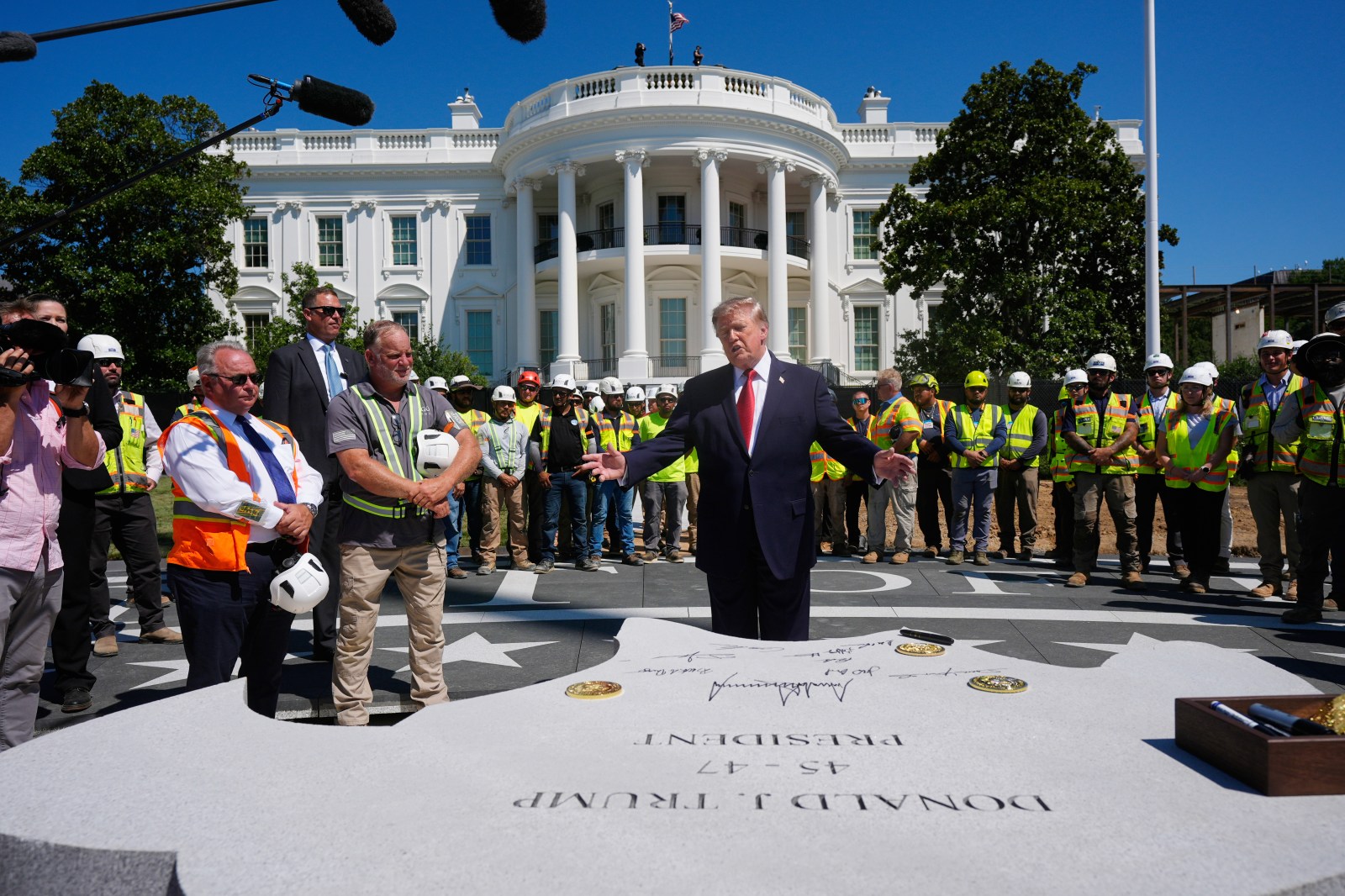
As the new White House ballroom nears completion, President Donald Trump outlined features such as a cocktail area and significant underground security enhancements. This includes bomb shelters designed by the military, located up to five stories below ground. Trump noted that guests could enjoy drinks outside before entering the ballroom, highlighting the dual purpose of the venue for both events and security.
A federal appeals court recently ruled against Trump’s unilateral progression of the ballroom project, pausing construction pending congressional review. The administration argues that historical precedent supports the president’s authority to make modifications without seeking congressional approval. Currently, about 250 workers are involved, working up to 20 hours daily, with the project around two-thirds complete.
Trump expressed confidence that the Supreme Court would rule in favor of the project. He also accused the National Trust for Historic Preservation of forcing the disclosure of sensitive information, calling them “treasonists.” The president argued that the project more closely resembles a military complex rather than just a ballroom.
During recent statements, Trump elaborated on the underground infrastructure, describing it as an essential security upgrade. Despite his accusations, there is no evidence the National Trust disclosed classified information. They were said to have been shown plans by military and Secret Service officials but opposed the project regardless.
The administration’s Supreme Court filing notes the inclusion of advanced security elements, including bomb shelters, sniper positions, and facilities built to withstand missile attacks. However, the National Trust for Historic Preservation denied having access to detailed underground plans, contesting claims they imperiled Trump’s security.
This article incorporates details from the Associated Press.