
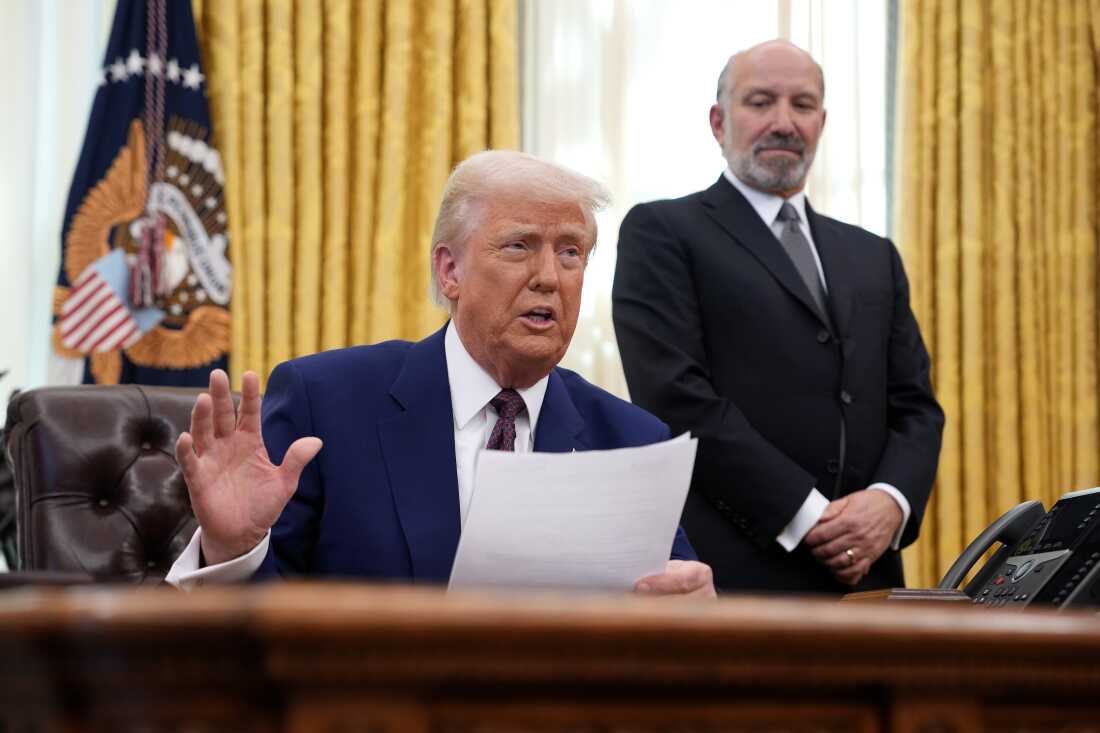
President Trump has released a Census Bureau report, sparking debate over claims of illegal voting by non-U.S. citizens. The report, associated with a Trump-linked think tank, has used data from the 2020 election to suggest widespread illegal voting. Trump claims over 24,000 noncitizens voted illegally, a number he insists will grow as more records are analyzed.
The seven-page report, lacking author attribution, relies on a commercial voter file and various federal records. However, experts criticize its methodology. The report was not authored by the career staff at the Census Bureau; it involved members of the America First Policy Institute, tied to Trump’s earlier administration.
Methodology Concerns
Experts find faults in both the report’s methods and conclusions. According to David Becker, head of the Center for Election Innovation & Research, matching Census data to voter data is unreliable. He notes that the estimated 24,000 noncitizen votes make up less than 0.02% of total votes in 2020, a negligible amount that couldn’t have altered the election outcome.
Michael Morse from the University of Pennsylvania highlights issues due to lack of unique identifiers in voter records. He emphasizes that errors are consistent with the minimal estimated rate of noncitizen voting.
Impact on the Census Bureau
The report raises concerns about the Census Bureau’s reputation as a nonpartisan body. Misty Heggeness points out the lack of author attribution is unusual, which undermines the report’s credibility. Amy O’Hara elaborates on the mismatch risks between voter files and federal citizenship records, potentially inflating figures.
“This brief lacks discussion of variance or bias,” says O’Hara, now leading Georgetown’s Data Institute.
The claim that the bureau is uniquely positioned to publish statistics on election crime surprises O’Hara, since anomalies don’t equate to fraud.
Implications for Future Reports
The report comes amid staffing losses at the bureau and proposed changes for the 2030 census, which may lead to further political disputes. O’Hara emphasizes the importance of maintaining integrity and transparency as the Census Bureau prepares for future census activities.
Heggeness calls for public vigilance as similar reports might emerge, stressing that transparency and proper sourcing are vital for credibility. A lack of these elements should prompt skepticism about the report’s validity.