
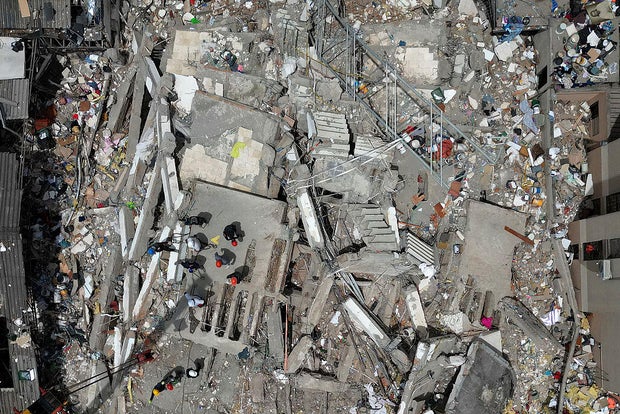
On Wednesday, relief supplies from regional partners began arriving in Colombia as the search for survivors of a devastating earthquake became more urgent. The earthquake, a 7.4 magnitude tremor, took a severe toll by destroying buildings, roads, and vehicles. It posed a significant challenge to Colombia’s new president, Abelardo de la Espriella, and his administration as they scrambled to respond to the crisis. Civil society also mobilized to aid the most affected communities.
President de la Espriella reported on Wednesday evening that the earthquake, which struck the country’s west on Monday, resulted in at least 265 fatalities. Nearly 500 individuals were reported missing, but community databases indicated over 4,100 missing people. More than 25,800 families faced disruption due to the disaster.
“Our efforts are focused on the disappeared,”de la Espriella told journalists in Colombia’s capital.
Rescuers continued to sift through debris in cities such as Cali, Pereira, Manizales, and Quibdo. They raced against time to find survivors. Aid agencies noted that the initial 48 to 72 hours after a disaster are critical for locating and saving individuals, though this period can be extended if the trapped have access to food and water.
Rescue Operations and Stories of Hope
Cali’s mayor, Alejandro Eder, announced on Wednesday afternoon that rescue teams were still detecting signs of life beneath the debris. He emphasized the urgency:
“The next 20 hours are the most critical to find and rescue people alive,”he said.“Every minute is vital.”
Footage from social media showed a baby being rescued from a collapsed building in Cali, with a survivor alerting rescue workers, “I’m with a baby,” amid the child’s cries. In Pereira, rescuers successfully freed 32-year-old Daniela Largo late Tuesday after a complex 12-hour operation. Lines of volunteers passed pieces of debris by hand, enabling rescue teams to reach her. Once freed, she was wrapped in a blanket and transported to an ambulance as firefighters and onlookers cheered.
In another rescue incident, volunteers and military personnel worked silently in anticipation of signs from survivors. Their efforts led to the detection of life by specialized equipment and trained dogs in Pereira, causing cheers to erupt from hundreds of onlookers.
Fears and Aftershocks
Across the coffee-growing region, areas severely affected by the quake, local authorities converted sports arenas, schools, and public buildings into temporary shelters for displaced Colombians. Many families, especially in Pereira and Cali, opted to sleep in parks. Some feared aftershocks or further collapse of damaged homes; others lacked homes to return to. Colombia has experienced 130 aftershocks since the earthquake.
“We have the most important things: a roof over our heads, food, water and, in my case, medical care,”said Edith Penagos, a displaced resident now sheltered in a park tent with her teenage son.
Rodrigo León Loya, a seismologist, explained the low probability of a similar earthquake happening soon in the same region. However, he noted Colombia’s landscape filled with active fault lines suggests it is likely elsewhere in the future.
Response to a Humanitarian Crisis
In many regions, including the quake’s epicenter, Choco, humanitarian aid was impeded by longstanding issues of poverty and violence. Many communities remain isolated without telecommunications, complicating response efforts. Giovanni Rizzo from the Norwegian Refugee Council called for more support:
“This earthquake compounds an already severe humanitarian situation, and there is a need for increased support,”he noted.
With prior commitments in Choco supporting a 2016 peace agreement, many aid workers were already on-site and able to transition swiftly to disaster relief. María José Torres, the U.N. resident coordinator, underscored the presence of aid workers on the ground:
“We have a presence on the ground. Therefore, our ability to be there, present with the people, has increased exponentially,”Torres said.
International Aid and Solidarity
The international community ramped up assistance, with teams from the U.S. and other nations arriving soon after the quake. The U.S. committed over $15 million, and Mexico dispatched military aircraft with provisions. President Nayib Bukele of El Salvador provided further aid, including sizable donations of supplies. Pope Leo XIV expressed his support and prayers for victims, praising the altruistic efforts underway in Colombia.
An upcoming concert in Miami will feature various artists performing to raise funds for both Colombian and Venezuelan earthquake victims.