
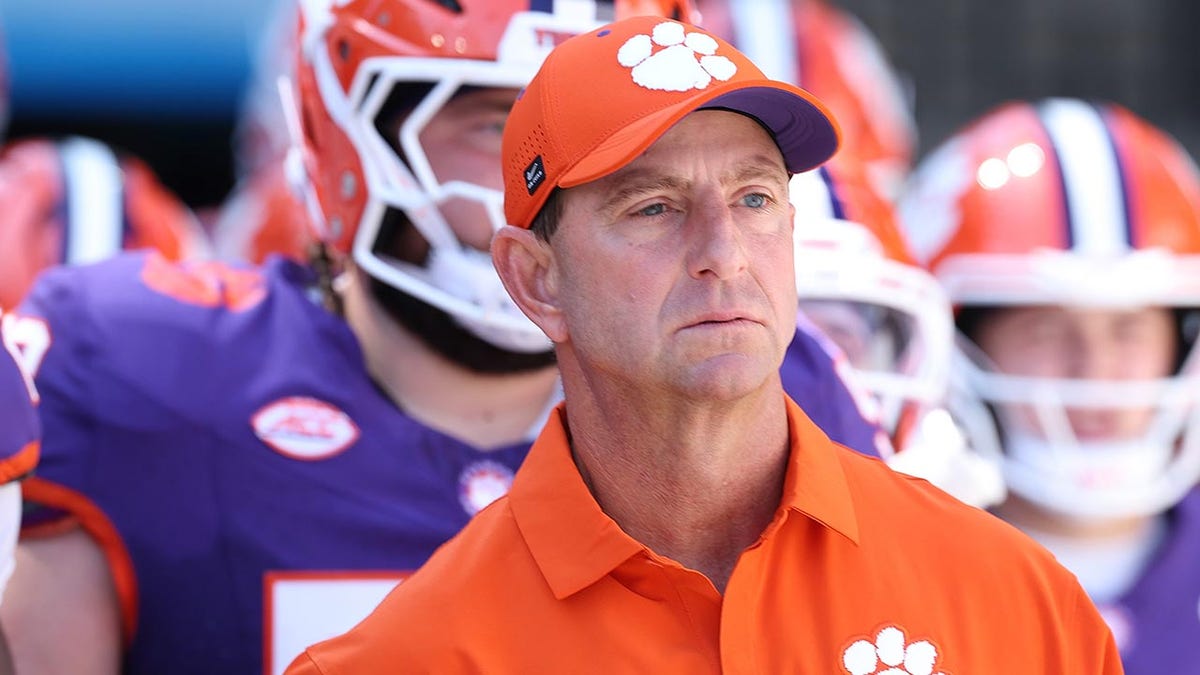
The Clemson Tigers are facing significant challenges in college football. The team, once a national power, is struggling to maintain its prominence. This decline has become evident after a heavy 51-10 defeat against LSU.
Criticism is mounting around head coach Dabo Swinney. Questions arise regarding his ability to adapt to the current era, particularly with the evolving dynamics of Name, Image, and Likeness (NIL) policies.
Challenges Facing Dabo Swinney
Dabo Swinney once led Clemson to significant achievements, including an ACC championship. However, recent performances have fallen short of expectations. The team frequently loses to strong opponents, which shifts public perception from shock to indifference.
The increased competitiveness within the ACC further complicates Swinney’s position. Traditional rivals have adopted new strategies, strengthening their positions in the conference.
Potential Coaching Change at Clemson
The need for a change is becoming a topic of discussion. If Clemson decides to part ways with Swinney, the process of finding a suitable replacement will be critical. While some programs choose high-profile coaches, history shows this approach doesn’t always guarantee success. Recent examples include Jimbo Fisher at Texas A&M and Brian Kelly at LSU.
Why Tony Elliott Could Be the Answer
Tony Elliott, currently head coach at Virginia, stands out as a promising candidate. Elliott has a track record of success. Under his leadership, Virginia achieved its best season with 11 wins, earning an ACC title game berth. His achievements resulted in receiving the Paul ‘Bear’ Bryant Coach of the Year award.
Furthermore, Elliott’s ties to Clemson strengthen his candidacy. As a former player and offensive coordinator at Clemson, he contributed to the team’s national championships.
The Alumni Advantage
The trend of bringing in alumni as head coaches is gaining popularity in the ACC. Schools like Georgia Tech, Louisville, and Miami have seen success with this approach. It offers familiarity and a deep understanding of the program’s culture and expectations.
Considering Elliott’s past with Clemson and his current success, he represents a logical choice to steer the Tigers. The resources and support available at Clemson could elevate his coaching capabilities further.
The opportunity for Clemson lies in taking decisive action. Tony Elliott’s return could revitalize the Tigers’ winning tradition. As discussions continue, the focus will be on ensuring Clemson makes a strategic choice for its future in college football.