
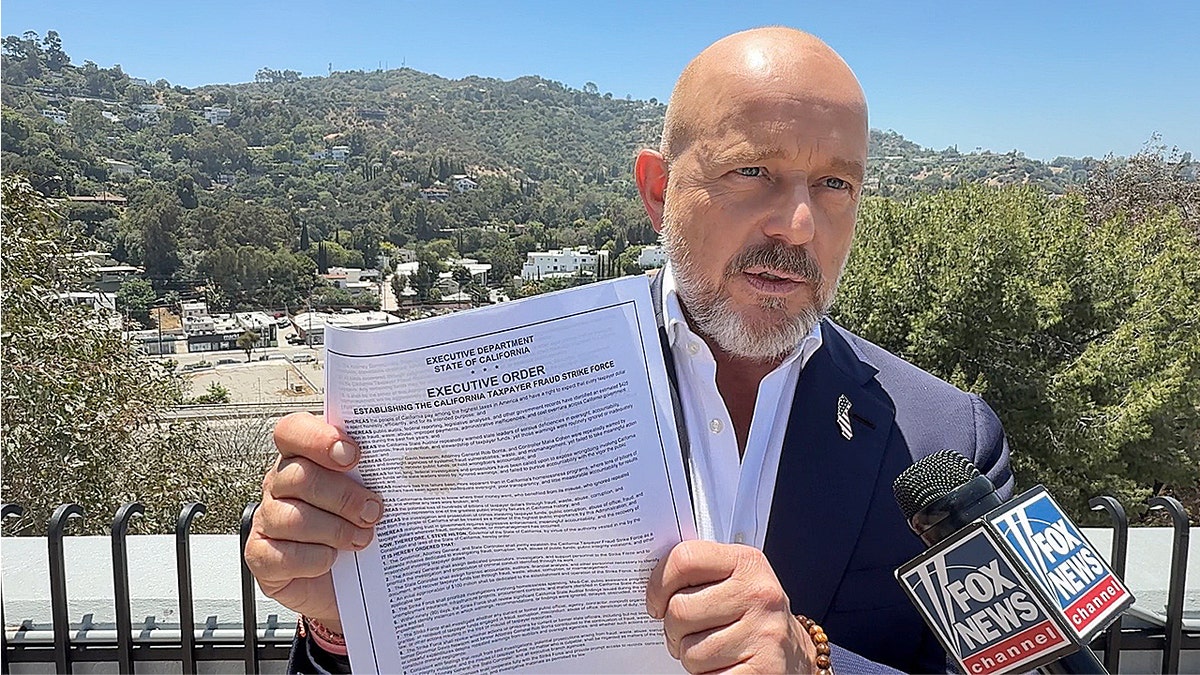
Republican California gubernatorial candidate Steve Hilton challenged Kentucky Gov. Andy Beshear’s suggestion that a Democratic governor should lead the party’s 2028 presidential ticket. This conversation unfolded on HBO’s “Real Time with Bill Maher.” Hilton brought up California Gov. Gavin Newsom’s unfinished high-speed rail project as an example during a discussion about Democratic governors’ achievements.
Beshear argued that Democratic governors could highlight specific accomplishments, distinguishing them from President Donald Trump. He emphasized tangible achievements such as housing and infrastructure projects.
“What Democratic governors have are receipts,” Beshear said. “You can look at, have you built the housing?”
Hilton questioned this by asking about the completion of the high-speed rail in California.
The exchange occurred after Maher introduced Newsom as a possible 2028 presidential contender. While Newsom has not announced any presidential campaign intentions, Maher acknowledged Hilton’s critique of the rail project.
Bill Maher commented, “You’re going to have a field day with that. No, you’re right,” suggesting the troubled rail project could be a point of contention.
Matt Ciepielowski, Hilton’s campaign manager, released a statement criticizing the ongoing investment in the project. He noted billions have been spent, the project is delayed, and Californians have yet to benefit from it.
“If Andy Beshear thinks California’s high-speed rail is something to brag about, he should try buying a ticket. Billions spent, years behind schedule, and Californians still can’t ride it. Gavin Newsom’s answer is to keep pouring money into it,” Ciepielowski stated.
He further commented that Hilton would cease state funding for the high-speed rail project immediately if elected governor.
“Steve Hilton will end state funding on day one,” he said. “Californians are struggling to pay their own bills. They shouldn’t have to keep paying for Sacramento’s failures, too.”
In agreement, California state Sen. Tony Strickland criticized Newsom’s management of the rail project. Strickland pointed to findings about taxpayer-funded travel expenses by project consultants.
“The high-speed fail should have been defunded when Newsom took office in 2019,” Strickland said. “Instead, he doubled down on a project that will never be built as originally proposed to Californians. The latest scandal involving project consultants’ misuse of public funds to pay for luxury travel under Newsom’s watch is yet another slap in the face to California families struggling to pay for essentials like gas, food, and rent.”
Strickland remarked that the handling of taxpayer dollars by consultants, treating them like a “personal ATM,” exemplifies wasteful government expenditure.
Originally, California voters approved nearly $10 billion in bonds for the high-speed rail system in 2008. As of April, the project’s cost was estimated at $126 billion, an increase from the initial $33 billion projection. The last report indicated no high-speed track had been laid.
The California High-Speed Rail Authority, in its 2026 business plan, estimated the cost of completing the Merced-to-Bakersfield segment at $35.7 billion, aiming for passenger service by 2033. Financial records show $15.7 billion had been spent through February.
A September investigation spotlighted oversight concerns when the state’s independent high-speed rail inspector general probed consultant travel expenses. Investigators found approximately $81,000 in expenses possibly conflicting with state regulations and another $543,000 potentially breaching contract terms. Suspect charges involved premium travel and trips to recreational venues.
In response to the findings, the California High-Speed Rail Authority initiated corrective actions including enhanced oversight, additional employee training, and efforts to recoup improper payments.
Despite criticism, officials from the Authority reported progress in October, with 66 major structures and nearly 90 miles of guideway completed in the Central Valley. They highlighted the anticipated transportation, economic, and employment benefits once finished.