
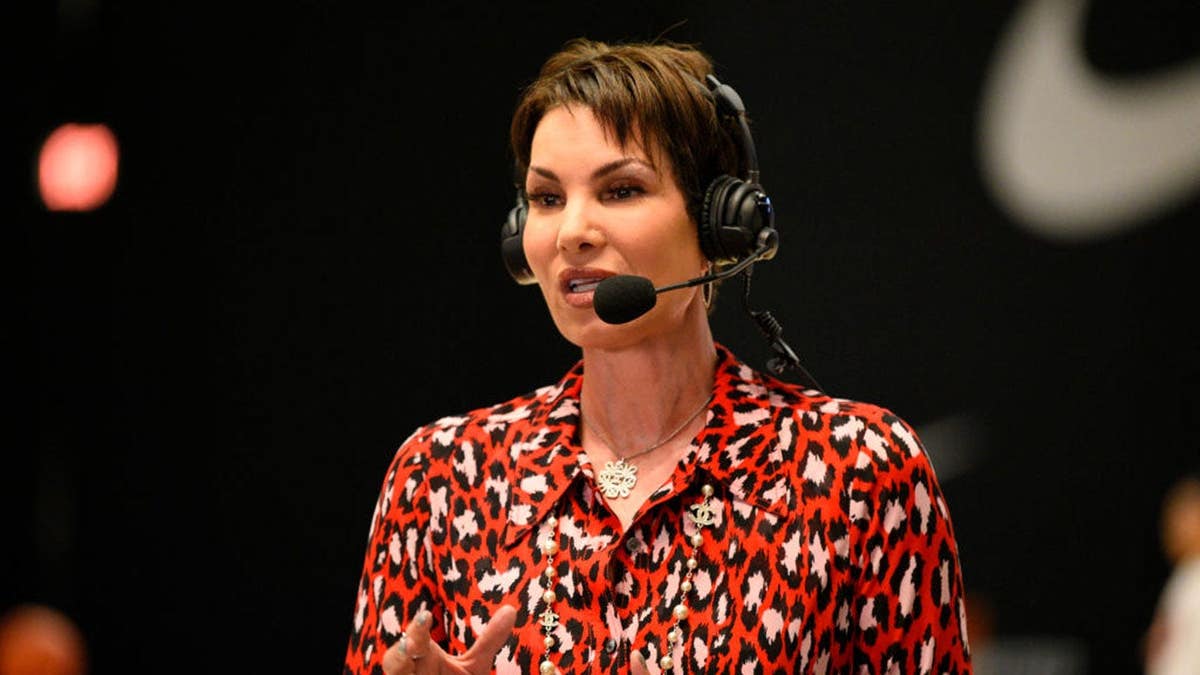
Former ESPN broadcaster Cindy Brunson has recently been at the center of controversy within the sports media realm. This follows her defense of DiJonai Carrington after Carrington clotheslined Sophie Cunningham. Post-ejection, Carrington posted a message highlighting ‘White privilege’ from the locker room, intensifying the situation.
Brunson argued that Carrington’s ejection was unwarranted. She suggested instead that Cunningham should have faced ejection. Additionally, Brunson posted claims that white WNBA players benefit from ‘reverse DEI’. This statement has fueled the ongoing conversation about privilege and discrimination in sports.
Cindy Brunson, who supports DiJonai Carrington “all day every day,” argued that Carrington’s actions did not warrant a Flagrant 2 ejection. Brunson’s post on Threads reflects her firm stance and underlying agenda in favor of Carrington.
Caitlin Clark Criticism
In contrast, Brunson has expressed criticism towards Caitlin Clark. Despite Clark scoring an impressive 37 points with 10 assists in a victory for the Fever, Brunson dismissed the significance of the performance. She described Clark’s stats as merely padding because the game was not competitive.
Brunson’s commentary extended beyond the game, as she insinuated an agenda against Clark by dismissing her historical achievements. For instance, Clark recently recorded her fifth career game with over 30 points and 10 assists, surpassing any other WNBA player’s record in history. Yet, Brunson referred to this feat as a ‘small sample size,’ a statement that has invited criticism for its seemingly biased perspective.
Differential Treatment
Brunson’s tone remains inconsistent when praising other players. For example, she lauded Paige Bueckers’ 22 points and 11 assists in a one-sided victory without mentioning stat-padding. Similarly, when Angel Reese set records, Brunson celebrated without raising concerns about the competition level or game margin.
This differential treatment highlights a pattern in Brunson’s commentary where criticism is disproportionately directed at certain players while others receive praise. The inconsistency questions her credibility, especially when her comments on Clark differ vastly from those on players like Reese.
The Impact on WNBA’s Public Image
Brunson’s comments have reignited discussions on bias within sports media, particularly in the WNBA context. Critics argue that her approach contributes to the league’s divisive climate, where personal biases overshadow fair analysis. For those who believe White Fever fans are a problem in the WNBA, Brunson’s commentary suggests internal divisions are deeper.
Ultimately, sacrificing journalistic integrity for loyalty or bias erodes trust. It’s crucial for sports commentators to maintain objectivity to retain credibility. As Brunson’s actions continue to be scrutinized, the impact on the league’s public image remains a subject of debate.