
Efforts to Reclaim a Community
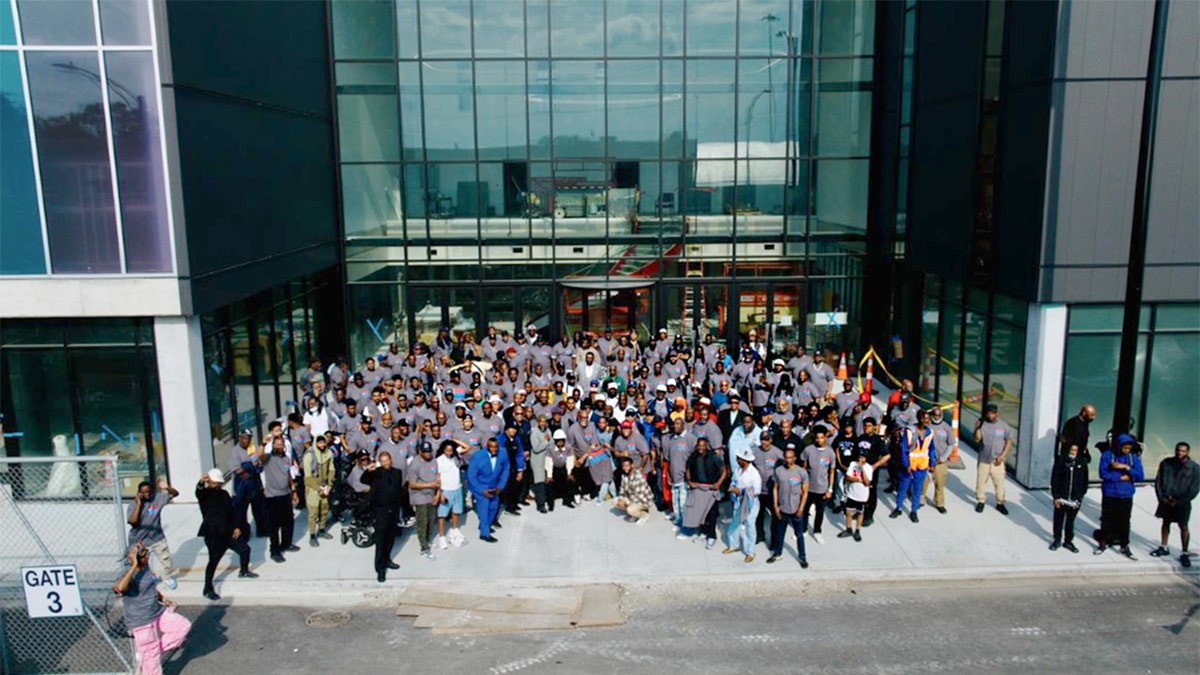
Pastor Corey B. Brooks led an effort to bring hundreds of men together on Chicago’s South Side to combat violence and rejuvenate a neighborhood previously labeled as one of the city’s most dangerous. Partnering with Project H.O.O.D., Brooks hosted the ‘1000 Men Unity Gathering’ at the Robert R. McCormick Leadership & Economic Opportunity Center, where the surrounding area was declared a ‘100% violence-free zone.’
Brooks emphasized the importance of this initiative, stating, ‘This is bigger than a building. This is about creating a culture where men stand together to protect families, mentor young people, reduce violence, and build something that will outlive us.’ He expressed a commitment to providing peace, opportunity, and hope to the community.
‘We declared that this is going to be a peace zone, a nonviolent zone, a violence-free zone,’ Brooks mentioned. ‘So the young kids can come to the center and have peace of mind knowing they don’t have to worry about their safety.’
Community Engagement and Gathering
Approximately 750 men participated in the gathering, uniting pastors, fathers, mentors, activists, business leaders, former gang members, and local residents. This collective effort aims to promote safety, accountability, and opportunity on the South Side.
Attendees had the opportunity to explore the facility, designed to tackle violence and poverty through initiatives such as workforce development, mentorship, education, entrepreneurship, job training, and community engagement.
Project H.O.O.D.’s Vision
Brooks shared that the neighborhood was once considered among the most dangerous, as reported by the Chicago Sun-Times in 2014. Project H.O.O.D. was established with the mission to reduce violence and poverty through mentorship, faith, workforce training, and economic development.
Brooks hopes this initiative will serve as a model for urban communities nationwide. ‘I think this center is going to be an example of what we can do across America in urban areas. If we don’t wait on government and take responsibility for ourselves, we can change the trajectory of these neighborhoods and urban centers,’ he said.
His efforts have seen tangible results, as the area no longer ranks among Chicago’s 35 most dangerous blocks due to ongoing community outreach and investment.