
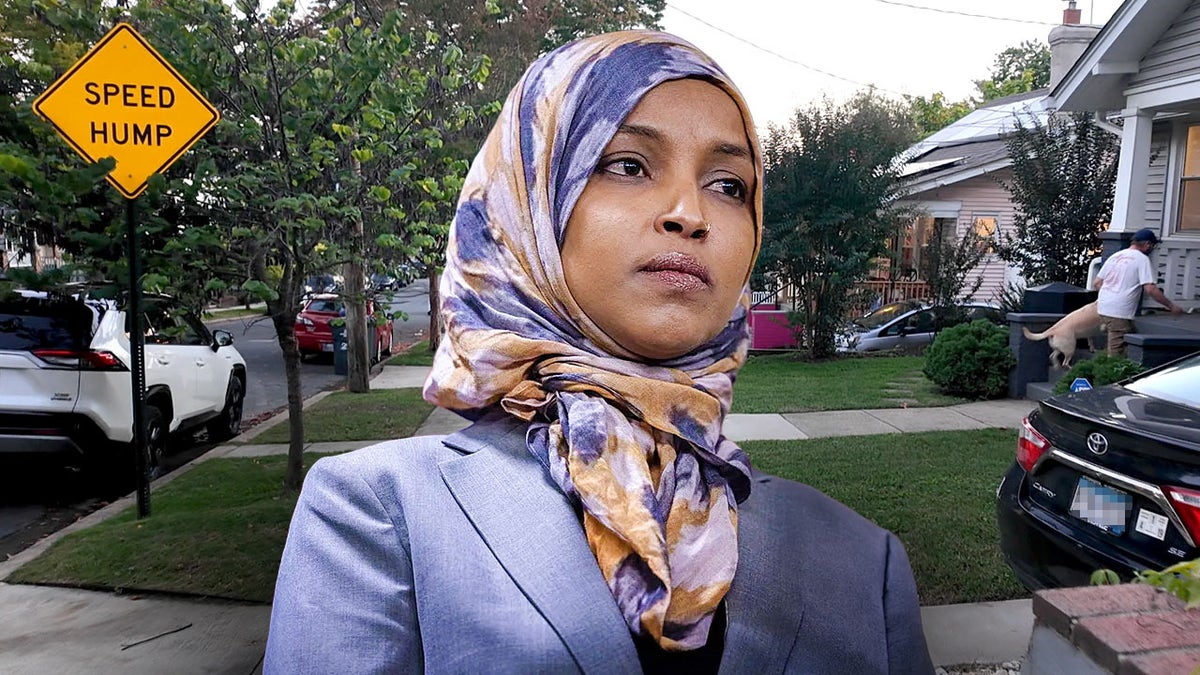
Republican leaders are hopeful that several Democrats will lose their reelection bids. They are urging voters to elect new representatives. However, President Trump has a particular focus on one Democrat, Rep. Ilhan Omar from Minnesota.
Despite winning her district comfortably, Trump questions Omar’s eligibility to serve in Congress. This stems from allegations about her legal status in the country. The President claims she used a different name to assume her position.
The Department of Justice is looking into claims of potential immigration fraud involving Omar. Federal agents recently conducted a search at her Washington, D.C., residence, removing several items including electronic devices.
Trump asserts that Omar’s name is not genuine. He suggests it might be “Ihan Nur Sayeed Elmi.” A federal document reportedly lists her name with variations, adding to the controversy.
Omar has firmly confirmed that her name is Ilhan Abdullahi Omar. The official records of the House of Representatives list her as Ilhan Omar, dating back to her tenure in the Minnesota legislature.
President Trump has called for her immediate resignation. However, only Congress can decide on its membership according to the Constitution.
Rep. Morgan Griffith of Virginia has expressed willingness to explore this issue. Griffith noted the House holds the prerogative to expel members but requires “good sound reasons.”
The Constitution states you must be a citizen, over 25, and reside in the state you represent to serve in the House. Despite potential legal issues, these are the primary qualifications.
The House can expel members by a two-thirds vote. Historically, this occurs only under extraordinary circumstances. Omar has not been convicted, which complicates any move toward expulsion.
There is also a legal separation between legislative and executive branches. This may hinder the acquisition of Omar’s official documents by federal prosecutors.
In House history, only six members have been expelled. This makes it unlikely Omar would face expulsion without concrete proof of misconduct.
In 1968, Rep. Adam Clayton Powell was under criminal investigation but was seated following a Supreme Court decision. This sets a precedence where the House cannot exclude a member who meets basic qualifications.
Nonetheless, there could be motions challenging the seating of members based on controversies, mirroring past actions taken with other representatives.
Despite the allegations and ongoing investigations, it remains improbable that Omar’s adversaries can effectively alter her congressional role based on her name or other related issues.