
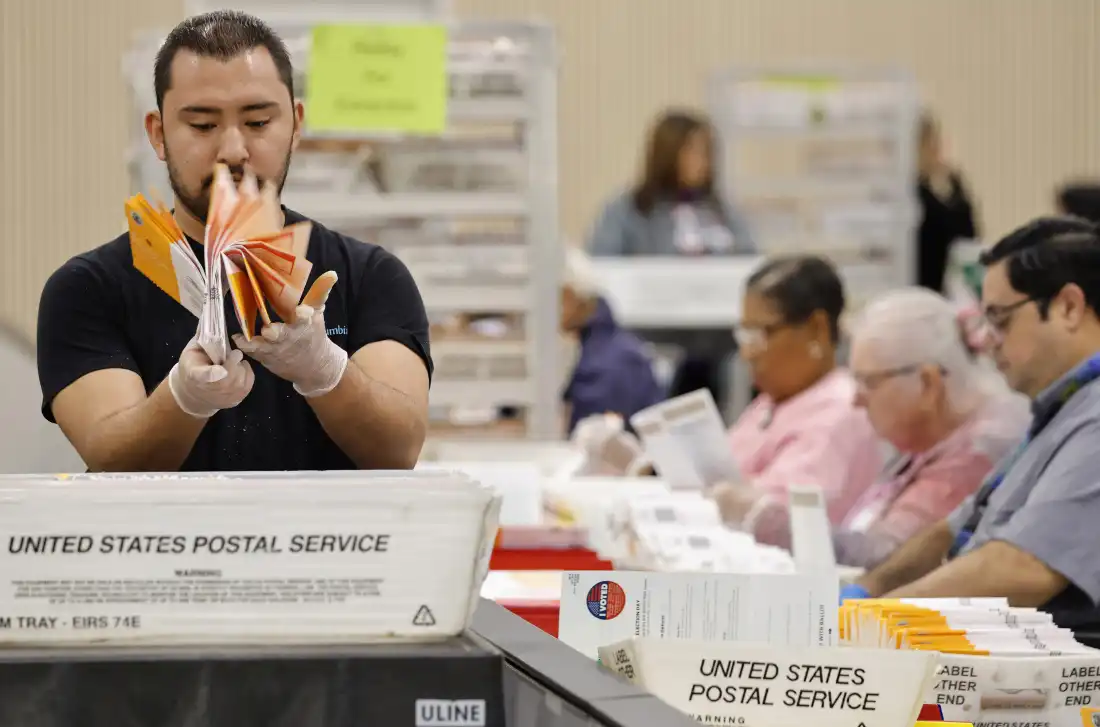
Election officials in California processed vote-by-mail ballots amidst intensified scrutiny by the Trump administration, which sought evidence of voter fraud, especially involving non-U.S. citizens. This scrutiny, exacerbated before Election Day, centered on verifying voter rolls and pressuring election officials to address alleged illegal voting activities.
Despite Election Day passing, officials and civil rights attorneys anticipate continued federal efforts targeting noncitizen voting. James Williams from Santa Clara County noted the persistence of efforts to address supposed voting fraud without substantial evidence, emphasizing preparedness to deal with these challenges.
Federal prosecutors have charged several individuals accused of voting or attempting to vote as noncitizens. Yet, instances of noncitizen voting remain minimal compared to the vast voter population. In mid-October, federal authorities claimed 20,000 likely noncitizens on California’s voter rolls, leading to a lawsuit urging election officials to reject ballots from these individuals. However, both a federal judge and appeals court dismissed the lawsuit, a stance supported by the U.S. Supreme Court’s decision not to intervene.
“We continue to investigate election integrity cases criminally and civilly,” U.S. Attorney General Todd Blanche announced, reinforcing the administration’s ongoing pursuit of election-related cases.
Recent court rulings have impeded federal endeavors to manage state voter lists. Legal rulings affirmed state authority over elections and questioned the accuracy of federal data on noncitizens. A federal judge in Washington, D.C., determined the DOJ and the Department of Homeland Security lacked statutory authority to provide supposed noncitizen lists to election officials, in violation of the Privacy Act. The government plans to appeal this decision.
The DOJ’s initiative to obtain unredacted voter rolls for comparison with federal databases was voided by a judge earlier, citing unlawful disenfranchisement. Appeals are underway, and the DOJ maintains its commitment to uphold federal election laws and actions informed by legal facts.
Ongoing Investigations and Legal Subpoenas
Federal prosecutors, supported by local authorities, persist in probing noncitizen voting cases. In San Luis Obispo, District Attorney Dan Dow announced ongoing investigations based on federal allegations, having charged one individual while examining other cases.
Justin Levitt from Loyola Law School, a former White House voting rights adviser, noted a minor occurrence of actual noncitizen voting cases consistent with historical data, acknowledging the challenge of determining DOJ’s future approach concerning threats against local election officials.
Before Election Day, subpoenas were issued to several California counties, seeking information regarding supposed noncitizen voting practices and local election offices’ responses. Federal officials indicated potential legal repercussions for processing ballots cast by alleged noncitizens.
President Trump warned, “They will all go to jail for a long period of time!!!” on Truth Social, further emphasizing federal prosecution threats.
Questions Surrounding Federal Data Accuracy
As federal interventions encounter hurdles from inflated and erroneous data, state officials dispute federal claims about noncitizen registration numbers. A significant portion of names listed on the DOJ’s records turned out not to appear on current rolls or included naturalized citizens misclassified as noncitizens.
Analysis by UCLA’s Voting Rights Project challenged the DOJ’s list integrity, finding inconsistencies and noting duplicate or incorrect data. Similarly, election officials in various California counties reported inaccuracies and duplicate entries within the DOJ’s lists.
Judicial proceedings scrutinizing DOJ lists’ authenticity are abandoned due to the lawsuit’s withdrawal. This leaves doubts about compliance with the Privacy Act and potential repercussions with Congress’ Democratic control possibly prompting further investigations into the DOJ’s methodology.