
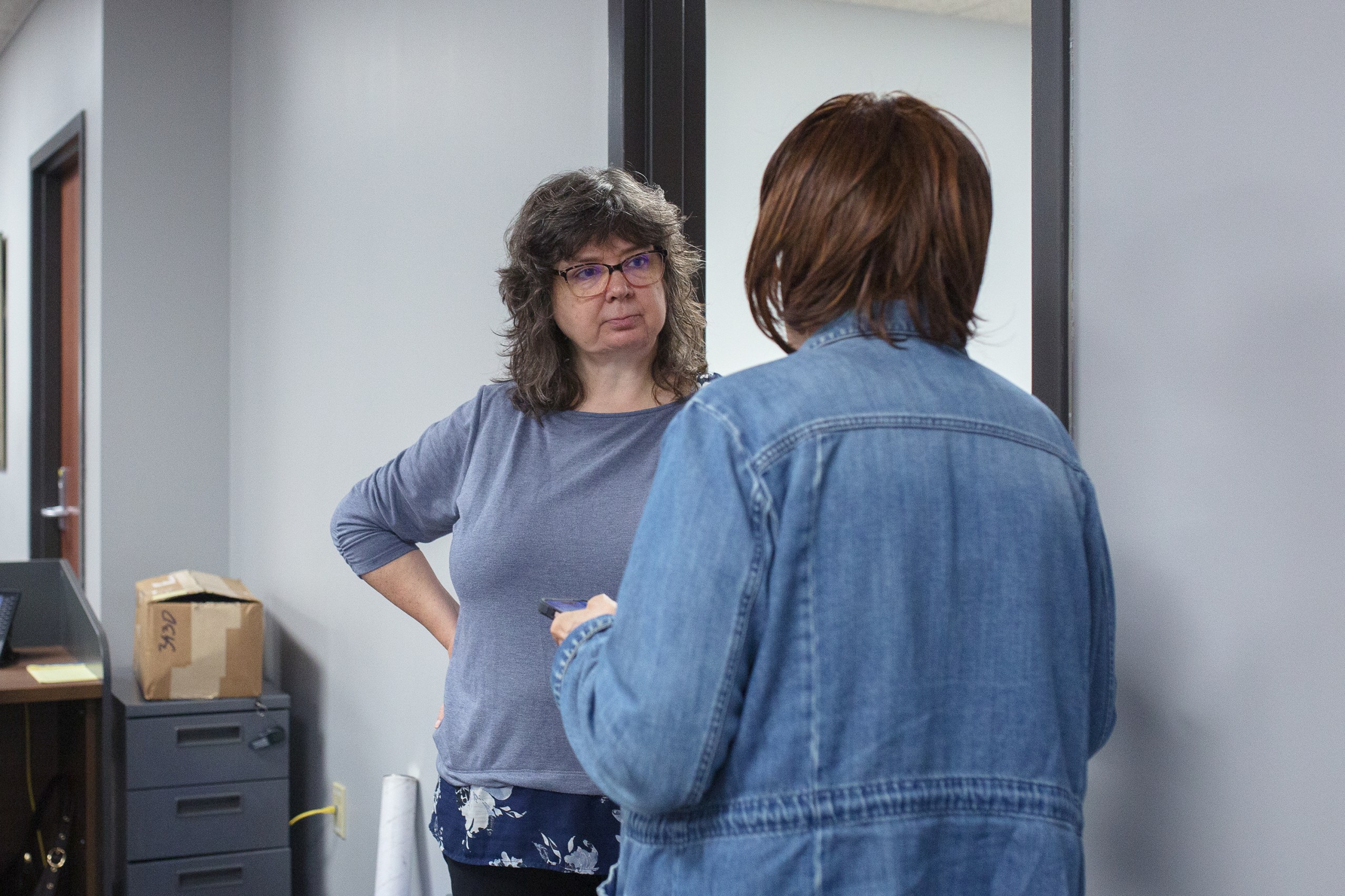
Amy Miller plays a vital role in ensuring that elderly and disabled individuals can vote. As an attorney for Disability Rights Nebraska, she travels across the state, evaluating the quality of nursing homes and assisted living facilities. During her visits, she offers voter registration forms and reminds residents of how they can report abuse or neglect. Recently, Miller assisted a veteran with a traumatic brain injury with change-of-address paperwork to vote in the upcoming elections. Although the veteran had difficulties writing with a pen, he knew exactly whom he wanted to vote for.
Funding from Congress enables Disability Rights Nebraska to ensure that those without internet or transportation have access to participate in elections. However, a White House proposal now jeopardizes this effort. The Office of Management and Budget, led by Russell Vought, aims to change spending rules, prohibiting the use of federal grant money on voter registration drives and activities. Vought has previously resisted Congress’s orders concerning federal funding allocations. In her six years with the organization, Miller has never encountered such obstacles from regulators. She expresses bewilderment at the proposal, which could complicate ballot access for many Americans.
The proposal forms part of a wider initiative by the Trump administration to limit federal actions expanding voting access, particularly for historically disenfranchised groups. Trump endorses the SAVE America Act, demanding proof of citizenship for voter registration. This act could potentially terminate voter registration drives. Last year, the administration temporarily restricted non-governmental organizations from conducting registration drives at naturalization ceremonies, lifting the ban after legal challenges.
The Department of Education discouraged federal work-study funding for voting-related work through a contested directive. These funds supported students in part-time roles facilitating voter registration on campuses and neighboring areas. To start Trump’s second term, the president rescinded an executive order by Joe Biden, which expanded federal agencies’ roles in increasing registration opportunities. Biden’s order acknowledged barriers affecting various groups, like Black citizens and individuals with disabilities.
“I don’t really think this rule had in mind that we are going to disenfranchise voters with disabilities. But it’s going to have that kind of effect,” said Rabia Belt, Stanford law professor and expert on disability.
Congress attempted to tackle these obstacles through the Help America Vote Act in 2002. Designed after the controversial 2000 election, this act updated states’ voting systems and strengthened security, creating funding to assist disabled individuals with registration and polling accessibility. Continuously funded by Congress, this initiative supports 57 nonprofit groups, representing states, Washington, D.C., Puerto Rico, Native American communities, and U.S. territories. It has helped reduce voting disparities between people with disabilities and the general population.
Despite progress, voter registration challenges remain. A Rutgers University report highlighted that 3.6% of disabled registered voters faced registration difficulties during the 2024 election, compared to 1.4% without disabilities. Although the difference seems small, it corresponds to the experiences of over 740,000 disabled registered voters. Disability Rights Nebraska frequently hosts voter registration efforts, like a National Night Out event in Scottsbluff, Nebraska.
Legal experts anticipate litigation once OMB’s proposal is finalized, conflicting with existing laws and policies like grants established by the 2002 law. They argue Congress holds constitutional budgetary power, setting financial distributions for federal agencies. Former OMB general counsel Samuel Bagenstos critiques Vought’s disregard for Congress’s role, branding the proposal as a substantial power grab, affecting voter registration.
This year, Disability Rights Nebraska received $141,000 in voter accessibility funding. The organization opposed the proposal, emphasizing its nonpartisan nature. During a recent visit to a rural assisted living facility, the group noted that 30% of newly registered voters identified as Republican, 20% as Democrat, and 50% as nonpartisan or affiliated with another party.
Miller and colleagues conduct bipartisan registration drives as required by law. Her visits to rural facilities reveal that many residents lack basic local amenities, limiting their voting access. At one event, a resident realized they could still register, highlighting the organization’s invaluable work.
Miller hopes policymakers could witness these transformative moments. She believes such experiences underscore the importance of her organization’s efforts in empowering isolated and disenfranchised voters.