
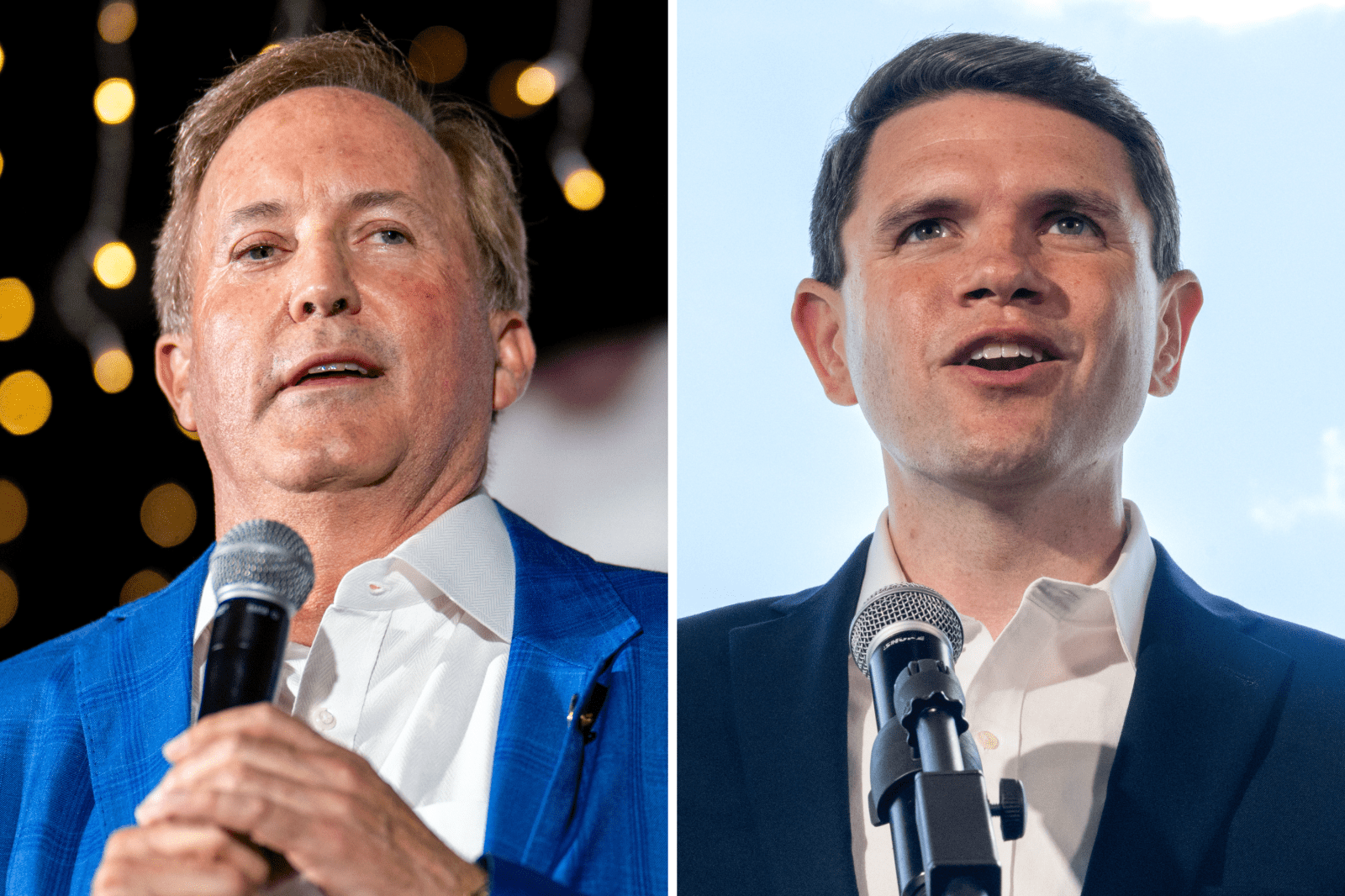
A recent poll has highlighted significant challenges for Republican Texas Attorney General Ken Paxton in his Senate race against Democratic state Representative James Talarico. Traditionally a Republican stronghold, Texas presents a potential opportunity for Democrats in the 2026 midterm elections. Though the state backed Donald Trump by 14 points in 2024, recent polls show Talarico has a narrow lead over Paxton.
Democrats face a tough fight in Texas but believe this year’s shifting dynamics provide a chance. Trump’s declining national approval rating and economic concerns contribute to frustration with Republicans. Moreover, Paxton’s lack of popularity among Texan voters could tilt the scales in Talarico’s favor.
Key Challenges from Recent Polls
The University of Texas and Texas Politics Project conducted a poll revealing critical indicators of a competitive race. Between August 5 and 13, 2026, 1,200 registered voters were surveyed. The poll indicated four warning signs for Paxton: his declining support, low GOP voter enthusiasm, unfavorable perception compared to Talarico, and Trump’s diminishing approval ratings.
Ken Paxton’s Support Drops: Paxton’s support has declined since June 2026, with Democrat Talarico showing a 3-point lead at 42 percent to Paxton’s 39 percent. Libertarian candidate Ted Brown secured 3 percent, and 1 percent preferred someone else. Notably, 14 percent remain undecided, highlighting an opportunity for both candidates to sway these voters.
Republicans’ support for Paxton has waned from 84 percent to 79 percent, with 5 percent backing Talarico. Within independents, a decisive demographic, Paxton trails at 11 percent compared to Talarico’s 37 percent. Talarico has the backing of 91 percent of Democrats.
Republican Enthusiasm Lags: Voter motivation reflects potential turnout issues. Only 39 percent of Republicans express extreme voting enthusiasm compared to 50 percent of Democrats and 20 percent of independents. This is a drop from August 2022, when Republican enthusiasm was higher at 52 percent.
Paxton’s Favorability Crisis: Across all voters, Talarico’s favorability is +10, whereas Paxton’s is -13. Among Republicans, Paxton maintains a +40 favorability, but Talarico shows a stronger +77 favorability among Democrats, illustrating bipartisan appeal concerns.
Paxton has faced scandals, including his 2023 impeachment over bribery accusations and subsequent acquittal in the Texas Senate. He described the impeachment as politically motivated.
Trump’s Approval Rating: Trump’s support in Texas affects Paxton’s campaign. Despite endorsing Paxton, Trump shows a net disapproval of 51 percent versus 43 percent approval among voters.
Competitive Polling Landscape
Other polls indicate a close race. Emerson College put Paxton ahead by a single point, whereas Texas Southern University’s survey showed Talarico leading by 2 points. The TexasPulse poll, conducted by ReconMR and the Texas A&M Bush School, gave Talarico a 4-point lead.
The Cook Political Report recently reclassified the race from Lean Republican to toss-up, acknowledging the competitive nature reflected in polling. Analyst Jessica Taylor cited both public and private polls pointing to increasing competitiveness.
Prediction Markets and Democrats’ Outlook
Prediction markets show tightening opportunities, with Kalshi slightly favoring Talarico over Paxton at 51 percent to 49 percent. On Polymarket, the race is nearly even with Talarico at 50 percent and Paxton at 49 percent.
Democrats hope to capitalize on suburban demographic changes, especially in Austin, Dallas, and Houston areas. Although Republicans outperformed among Hispanic voters in 2024, Democrats aim to leverage urban population shifts that have shrunk Republican margins over recent elections.
Republicans’ Chances in Senate Control
The Senate landscape presents a challenge for Democrats to gain control. Republicans hold a 53-47 majority, requiring Democrats to flip four seats for a majority with Vice President JD Vance as tiebreaker. Seats in Georgia and Michigan are Democratic defenses against Republican holds in potentially vulnerable states like Maine and North Carolina. Securing victories in more conservative territories, including Texas, remains crucial for Democrats.