
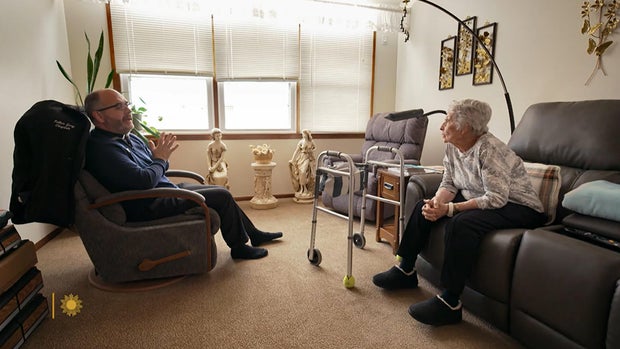
In small North Dakota towns like Hebron and Glen Ullin, which have many retirees, residents face numerous challenges. Among them is 98-year-old Mae Buchli, who is determined to stay in her hometown. ‘We decided we’re not going to move, because we want to stay home,’ she says.
Aging populations are rising faster in rural America than in urban areas. According to the USDA, the number of counties with at least 20% of residents over 65 has nearly tripled since 2010. This trend heightens health risks related to loneliness and social isolation.
For 88-year-old Lynda Hoerauf, rural life is irreplaceable. ‘It’s the opposite of cities,’ she comments, expressing no desire to move elsewhere. Yet, she admits Sundays feel empty with little activity.
Father Gary Benz, a local priest, understands these challenges well. He visits parishioners like 96-year-old Viola Weinhart, sharing news and companionship. ‘It’s made me more compassionate,’ he notes, recalling his own parents’ experiences with loneliness.
‘He spends a little time with me each week, and fills me in on the latest news, especially on the church,’ says Viola Weinhart.
In rural counties, about one in five adults is 65 or older. Even though some seniors might want to relocate to urban areas for better resources, cost differences often stand in their way.
The Rural Health Transformation Program, initiated by President Trump’s policy, allocates $50 billion to enhance healthcare access for seniors. Still, some needs aren’t purely medical.
Jane Strommen, a gerontology expert at North Dakota State University Extension, sees older adults being overlooked at times. Her grassroots project, Aging in Community, draws on local help. ‘People want to help their neighbors,’ she explains, emphasizing organization.
Funded by Margaret A. Cargill Philanthropies, this program motivates neighbors to support each other, forming a neighborhood watch for seniors.
Kyla Sanders, a retired nurse, grew up in rural Montana and coordinates the program. ‘They want to feel connected and valued,’ she says of the seniors. On a visit, she brought Mae Buchli a talking calendar, a seemingly small gesture with significant impact.
Sanders’ work involves practical support—fixing wristwatches, assisting with taxes, and organizing social events. ‘Our clients feel more confident and connected to local resources,’ she reports. The program, now in place for five years, is expanding to 12 ‘frontier’ counties, with six or fewer people per square mile.
After Kyla Sanders’ departure, time spent at Lynda Hoerauf’s home was cherished. The location mattered more than discussions—as Hoerauf says, ‘There’s no place like home.’
For more information, visit the Rural Health Transformation Program or learn about Aging in Community initiatives at North Dakota State University.