
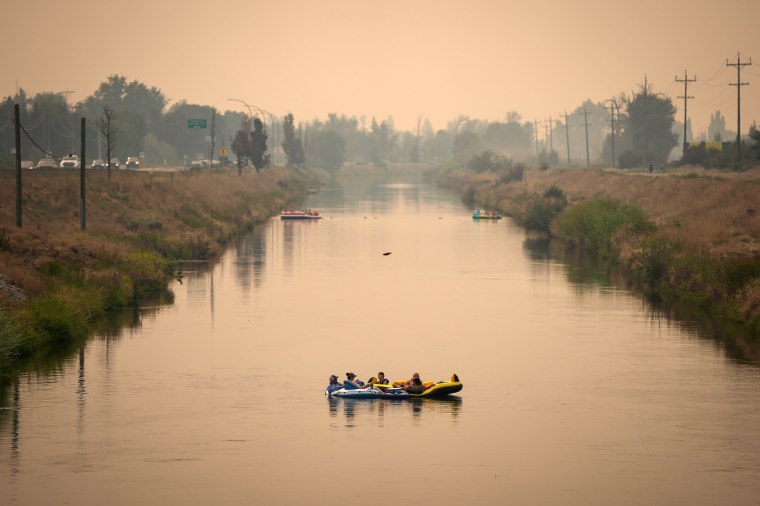
In West Kelowna, British Columbia, a devastating wildfire has forced around 20,000 residents to evacuate their homes. Despite the absence of strong winds, the fire expanded overnight, complicating efforts to control it and assess the destruction, officials reported on Tuesday.
To aid in combating the blaze, 100 firefighters from Mexico have joined local crews, bringing the total number to 193. This fire has resulted in fatalities and the destruction of properties near Okanagan Lake, as it moves threateningly close to Summerland, a community of approximately 12,000 people located about 300 kilometers east of Vancouver.
Cliff Chapman, the director of operations for the British Columbia Wildfire Service, highlighted significant growth in some areas of the fire overnight. Crews are working tirelessly to establish control lines, aiming to make the area safe for evacuees to return home.
“We recognize and hear people’s desire to return home and see the extent of the damage,” Chapman stated.
Provincial Response and Evacuations
Kevin Dunbar, British Columbia’s executive director for emergency response and recovery operations, described this as one of the most extensive evacuations in the province’s history. Authorities secured 1,600 hotel rooms and 1,000 group accommodations for evacuees in Okanagan after some experienced delays in accessing emergency assistance during the weekend.
Additional evacuation warnings are in place, with another 10,000 people advised to be ready to leave immediately if needed. Over 100 wildfires are raging across the province, with officials alerting that dry lightning could ignite new fires in Central Interior and Okanagan. The province has also reached out to the federal government for additional support in providing accommodations for evacuees.
Meanwhile, the Royal Canadian Mounted Police are investigating the possibility of criminal activity contributing to the fire. Although only about 4% of wildfires in British Columbia in the past decade were suspected to be intentional, there is no confirmation that the Bald Range fire was deliberately set.
Experiences of Affected Residents
Lucille and Gordon Beach, residents of Summerland, were in Vancouver for a family event when the fire broke out. While currently staying in West Kelowna, they have not been able to see their home since leaving but remain hopeful about its condition.
For Carmen Bodzasy, the evacuation from Summerland was emotional and challenging, given her unfamiliarity with the roads and the absence of her husband, who was working elsewhere. She managed to take significant family photographs with her, contemplating them as vital memories should their home be destroyed.
“I’ll do whatever I can to help rebuild because everyone’s so kind there,” Bodzasy remarked about the Summerland community.
The lack of detailed information about the situation has led some residents to rely on online images and videos from the evacuated areas.
Wildfire Situation in the United States
In California, firefighters are battling a significant blaze in the Big Sur region, affecting nearly five square miles. These conditions have resulted in the closure of state parks and prompted evacuation orders, including for a seven-mile stretch of the iconic Highway 1.
Along the Nevada-California border, a rapid fire spread to about 90.6 square miles, forcing the evacuation of over 4,000 individuals, including a memory care facility. The Washoe County Sheriff reported that the hot, dry, and windy conditions are exacerbating the fire risk.
In Minnesota, a person involved in firefighting operations near the town of Ely passed away due to a medical emergency. Moreover, eight other fatalities related to firefighting efforts have been reported across the U.S. this year, including several firefighters and helicopter pilots.