
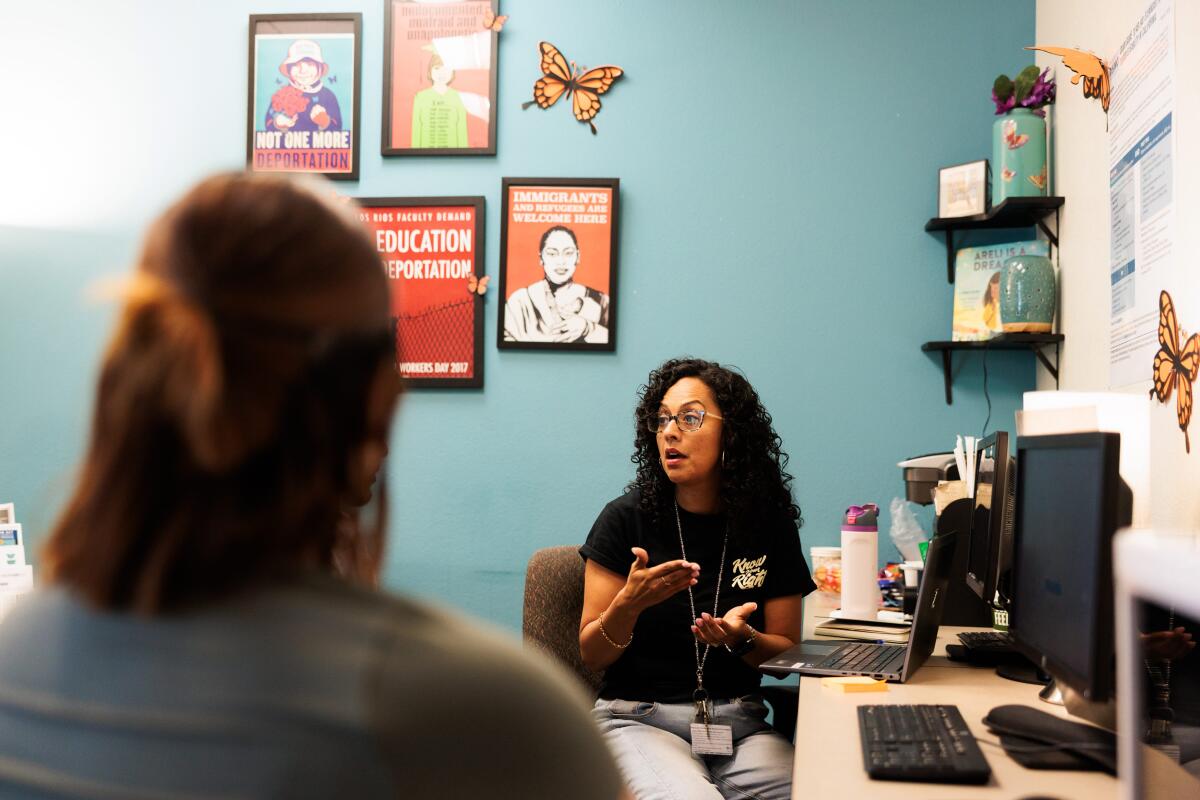
At Folsom Lake College, a sign in the main administrative building encourages undocumented students. It reassures them that they can still pursue an education in California, despite the political climate. The sign urges, “Keep going. You are not alone.” Nearby, Alicia Alejo works at the college’s Undocu-Falcons Center, aiding undocumented students with various resources. These include legal consults, mental health support, food access, and financial aid. However, during the Trump administration, students have become more cautious, often choosing online classes and minimizing their campus involvement.
Alejo noted the reluctance among students to be openly vocal about their status. This contrasts with California’s national position as a supportive state for undocumented college students. The state offers in-state tuition and state financial aid through the California Dream Act. Community college fees are covered, and specialized staff are available to assist these students. Despite these supports, financial aid applications have decreased amid Trump’s immigration enforcement. Applications for state financial aid from undocumented students have dropped from nearly 50,000 to 35,949, according to the California Student Aid Commission.
Enrollment of low-income undocumented students at the University of California and California State University systems halved between 2016 and 2022. Experts attribute this to the pandemic and Trump’s immigration policies. Additionally, the Deferred Action for Childhood Arrivals (DACA) program no longer accepts new applicants, hindering employment prospects for undocumented graduates. The Department of Justice has challenged tuition support for undocumented students in California and other states, causing families to reconsider college for their children.
Christian Espinoza immigrated from Mexico at age nine, learning English quickly and excelling in school. After community college, he transferred to UCLA with the aid of California Dream Act grants. UCLA offered resources for undocumented students, including a special program for research projects. Espinoza felt included and valued, using these opportunities to advance his education. He later pursued a master’s degree and began research at Claremont Graduate University.
However, in October 2024, Espinoza was detained by Immigration and Customs Enforcement, leading to his decision to leave the U.S. He completed his doctorate remotely from Mexico City, where he now struggles to find work. This experience highlights the systemic barriers faced by undocumented students in both countries.
Without work permits, students face difficulties in securing jobs and internships. California responds by developing professional opportunities without federal work authorization requirements. The UCLA Labor Center’s Dream Summer program offers fellowships for students in social justice roles, distributing over $6 million. Although UC policy currently excludes undocumented students from payroll, advocates continue to push for inclusive hiring practices.
Some lawmakers propose legislation to grant campus job access to undocumented students, which could boost college attendance and employment opportunities. Additionally, California educators encourage entrepreneurial skills, as undocumented individuals can legally operate businesses in the U.S. A state grant program supports immigrants in entrepreneurship, despite employment barriers.
Initiatives like these aim to keep undocumented students in college and highlight their potential contributions. “Could they have become the next doctors, researchers, or innovators?” asked Parshan Khosravi from uAspire. Such efforts underscore the importance of supporting these students beyond legal challenges.