
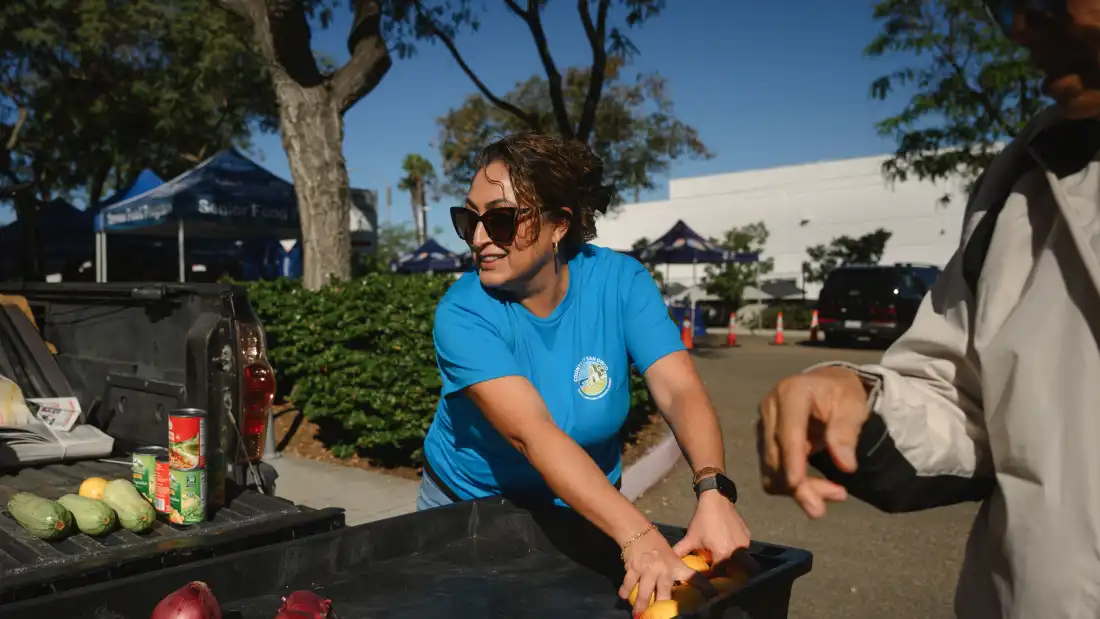
Rosa Rodarte, a specialist in human services for San Diego County, spent a recent Saturday morning assisting with food distribution in the Kearny Mesa area. Although it was her scheduled day off, she loaded groceries into attendees’ vehicles. Rodarte generally assists individuals in applying for programs like food assistance, yet her recent focus has been ensuring people acquire food. ‘We have the same goal,’ Rodarte expressed. ‘We want to ensure everyone is helped and not judged.’
The Supplemental Nutrition Assistance Program, or SNAP, has experienced a significant decline in participation over the past year. Approximately five million Americans lost federal food benefits following the enactment of the One Big Beautiful Bill. This legislation reduced SNAP funding and imposed stricter eligibility criteria, particularly affecting asylum seekers and refugees. The decline exceeded federal projections, impacting both families and SNAP administrators.
Nina Olivas, overseeing San Diego’s Access Customer Service Call Center, noted the emotional toll on workers who hear urgent pleas for help. Approximately 36,000 fewer residents participated in San Diego County’s SNAP program in September compared to July 2025. This change prompted the county to distribute free groceries in conjunction with local food banks. ‘We are not ending the call with nothing,’ said Olivas.
Olivas emphasized to her staff the significance of their role in enabling residents to access vital resources like food, rent assistance, and essentials for children. However, the introduction of new work requirements for various groups, such as homeless people and veterans, increased the administrative burden, requiring additional paperwork and documentation review.
San Diego processed over 830,000 more documents in 2023 compared to the previous year. Brenda Vargas-Ramirez, a San Diego Health and Human Services Agency employee, acknowledged the increased interaction with community members at distribution events.
The decline in SNAP participation has varied nationwide. Some states, like Texas, face substantial application backlogs. In response, San Diego County secured $15.8 million to compensate for federal cuts and approved hiring additional social workers. Other states adopted different measures, including one-time financial benefits and state-funded assistance programs for noncitizens.
Monica Montgomery Steppe, vice chair of the County Board of Supervisors, initiated food distribution events following projections of significant benefit losses. Having relied on similar assistance, she devised a plan to distribute nearly 70,000 pounds of food to over 5,200 residents since August, in collaboration with Feeding San Diego and the San Diego Food Bank.
Attendees of the events, including families and seniors, sought both food and clarification on federal policy changes. Ambar Santiago attended for groceries and received assistance on a paperwork-related benefit issue, feeling relieved by the support. At home, Santiago prepared dinner with ingredients received that day, reflecting on the unique availability of assistance in her area.