
Fox News anchor Shannon Bream reports on escalating tensions in the Middle East, with Trey Yingst providing coverage from Tel Aviv. This follows US airstrikes targeting Iranian missile and drone storage facilities after Iran’s threats to shipping in the Strait of Hormuz.
Iran’s actions also include drone launches aimed at Kuwait and Bahrain, while Israel targets Hezbollah in Lebanon. These military moves coincide with a diplomatic agreement framework between Israel and Lebanon.
A new normal of heightened risk and uncertain regulation affects the Strait of Hormuz.– German shipping firm Hapag-Lloyd
The company’s caution comes amid increased military strikes and conflicting routing directives resulting in operational chaos. Tehran has simultaneously started transporting millions of barrels of crude oil from Kharg Island after days of inactivity, revealed by maritime intelligence firm Windward AI. Their data shows significant loading and export activity at Kharg’s terminals.
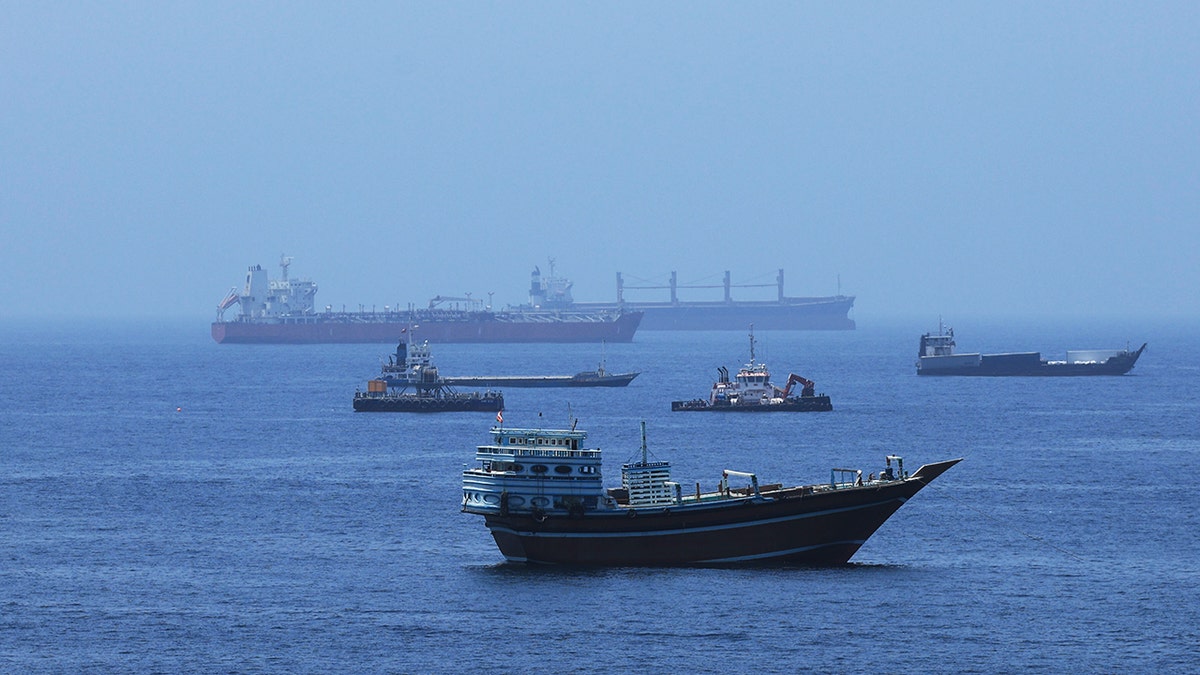
Commercial cargo vessels and oil tankers remain in the Gulf of Oman, preparing to pass through the critical Strait of Hormuz. The region has been fluid since the beginning of the conflict, and constant vigilance is crucial for shipping operations, according to Hanja Maria Richter of Hapag-Lloyd AG.
Richter explained that the company conducts regular risk assessments with security partners and relevant authorities, ensuring safety for every ship and crew navigating the Persian Gulf region.
The tension’s complexity escalates as the US Central Command (CENTCOM) successful airstrikes against Iranian sites follow Iran’s retaliatory strikes targeting US military bases in Kuwait and Bahrain. Confusion persists over control of transit lanes, with Lloyd’s List highlighting a fractured waterway system between the Iran-controlled northern route and a US-protected southern route.
Iranian Foreign Minister Abbas Araghchi stated Iran’s responsibility in managing maritime traffic in the Strait of Hormuz, according to Iran International. Notably, Iranian state TV emphasizes coordination with the Islamic Revolutionary Guard Corps for navigation through the strait.
Imposing fees for passage through international waters would be fundamentally wrong.– Hanja Maria Richter of Hapag-Lloyd
Richter argues that fees for passage should not be leveraged in critical international waters, contrasting with infrastructure-related fees like those for the Suez Canal and Panama Canal.
Despite the challenges, Hapag-Lloyd managed successful navigation through a temporary closure of the Strait of Hormuz, ensuring crew safety is prioritized. The firm’s spokesperson highlights the importance of safeguarding vessel and personnel well-being.
Emma Bussey contributes as a breaking news writer for Fox News Digital, drawing from her experience at The Telegraph across various desks, including foreign, politics, news, sport, and culture.