
For traditional Catholics attending churches affiliated with the Society of St. Pius X (SSPX), Sunday Mass presents a crucial dilemma. The Vatican has excommunicated SSPX priests and bishops for what is considered a severe violation of church unity: consecrating bishops without papal consent. This has led the Vatican to advise Catholics to avoid the society’s services and activities, describing some sacraments conducted by SSPX as illicit and invalid.
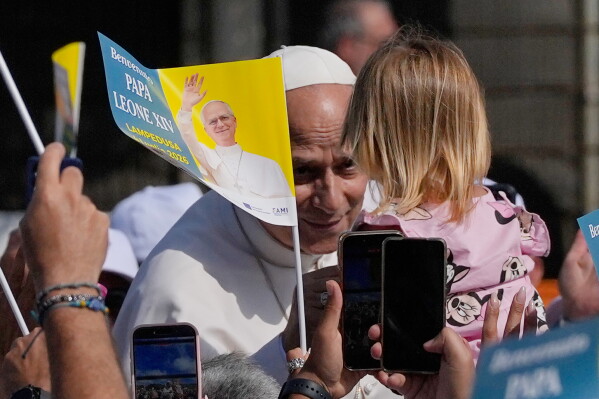
Despite these developments, activities at SSPX churches continue as usual. The old Latin Mass is still celebrated, baptisms proceed, and events like camps and pilgrimages remain uninterrupted. Many members have no plans to leave, despite the excommunications, which have placed Pope Leo XIV in a challenging position due to his focus on church unity. He has endeavored to reach out to conservative factions of the church that felt distanced during Pope Francis’s tenure.
Several U.S. bishops echo the Vatican’s stance, encouraging the faithful to attend churches aligned with Rome. San Antonio Archbishop Gustavo García-Siller emphasized the importance of unity in a message to his archdiocese, urging communion with Pope Leo XIV and the Catholic hierarchy.
“To embrace the unity called for by Christ is to remain attached to the vine and to be in communion with Pope Leo XIV and the hierarchy of the Catholic Church,” García-Siller wrote.
The Society of St. Pius X, with approximately 750 priests, was established in response to the Second Vatican Council’s modernizing reforms, which SSPX views as erroneous. These reforms aimed to improve the church’s relations with Jews and other faiths, promote religious liberty, and allow Mass in local languages instead of Latin.
SSPX leaders see themselves as defenders of church tradition and have justified the consecrations as crucial for spiritual salvation. They have questioned the validity of the Vatican’s sanctions. R. Andrew Chesnut, a Catholic Studies expert, notes that many long-term SSPX members view such Vatican statements through the lens of persistent conflict with church authorities, making them less susceptible to persuasion.
According to James Vogel, a U.S. district spokesperson for SSPX, the society has appealed the Vatican’s decree, and the impact remains uncertain. Masses and other events continue unabated, with many members steadfast in their practices.
Mike Lewis, editor of a Catholic commentary site, highlights how the society’s membership has remained largely unchanged by the excommunications. For example, Jim De Piante, deeply connected to SSPX, views the move as a prompt to further embrace tradition. His church, St. Anthony of Padua, even acquired new land for expansion shortly after the excommunications.
While some members experience a “crisis of conscience,” as noted by Ross McKnight, others continue participating in SSPX activities. For McKnight, who joined the society during the pandemic, the supportive community makes leaving difficult.
In addition to the spiritual implications, bishops like Frank J. Caggiano of Connecticut are inviting SSPX members to “come home” to traditional Catholicism. Excommunication is described as a “medicinal” sanction, which means those who abandon SSPX could have certain restrictions lifted.
Yet, many SSPX churches continue as usual, offering services and maintaining the traditional Latin Mass. As Rev. Stephen Zigrang of a Texas SSPX church put it, many society members see no reason to alter their course, and remain committed to their community.
Associated Press writer Peter Smith contributed to this report.