
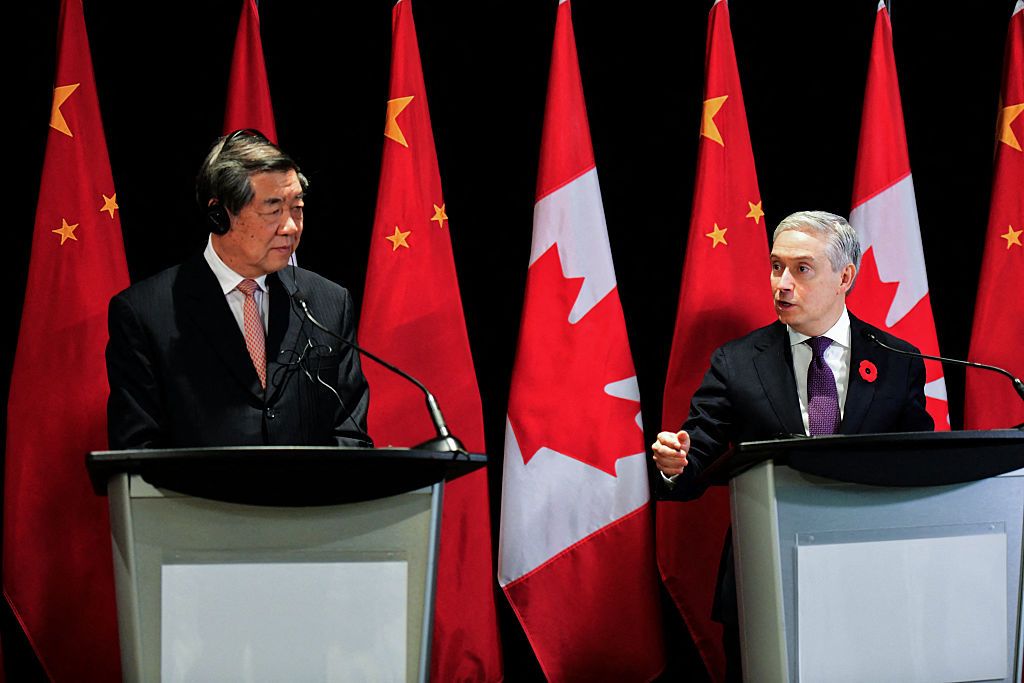
Canada has signed new economic agreements with China as part of its efforts to reduce trade tensions with the United States. These agreements were announced after discussions in Vancouver, where Canada’s Finance Minister, François-Philippe Champagne, and International Trade Minister, Maninder Sidhu, met with China’s Vice Premier, He Lifeng.
Expanding Trade Relations
The agreements aim to enhance financial cooperation between Canada and China. Prime Minister Mark Carney plans to further these discussions at the Asia-Pacific Economic Cooperation (APEC) summit in Shenzhen. The new arrangements focus on expanding trade and investment opportunities between the two nations, thereby strengthening Canada’s economy.
Both countries have agreed to extend an existing trade agreement until 2028. This includes lower tariffs on Canadian products such as canola meal, peas, lobster, and crab, while Canada maintains reduced tariffs on certain Chinese steel and aluminum products. The strategy is designed to help Canadian agricultural and seafood sectors increase their exports to China and facilitate Canadian companies’ access to Chinese metal imports.
Strategic Diversification
Carney has been advocating for reduced economic dependence on the U.S. by diversifying trade alliances. The recent agreements form part of this strategy. Canada’s intent to strengthen its engagement with China comes amidst ongoing tariff disputes with the U.S. Carney confirmed that while a deal with the U.S. is still in negotiation, significant differences remain.
Details of the Agreements
At the Vancouver meeting, three agreements were finalized. These cover cooperation between finance ministries and financial regulators, and involve a working group between the central banks of Canada and China. Additionally, progress was made on a bilateral currency-swap arrangement aimed at increasing financial services market access.
These efforts build on Carney’s January visit to China, where a strategic partnership was renewed. The easing of trade restrictions has notably boosted Canadian exports. For instance, Canadian canola meal exports to China surged from $104 million to $277 million, while coffee and lobster exports also increased significantly.
China stands as Canada’s second-largest trade partner, with goods trade reaching $89 billion last year. The Canadian government aims to further increase exports to China by 50% by 2030.
Negotiations with the U.S.
Canada continues negotiations with the United States, although differences persist. U.S. tariffs on Canadian lumber, steel, aluminum, and automobiles remain contentious issues. However, the recent political changes in Washington, including Republican losses in the midterm elections, offer hope for progress.
Foreign Minister Anita Anand emphasized the importance of resolving trade issues that have led to job losses in Canada. She highlighted Canada’s active role in signing over 20 security, economic, and defense agreements to enhance its non-U.S. trade options.
Adjustments to U.S. Tariffs
Canada has announced changes to its tariff relief program for U.S. imports. The program’s extension until June 30, 2028, continues the exemption of certain U.S. goods not readily sourced in Canada. However, tariffs will be reimposed on certain U.S. products easily manufactured in Canada, like trailers and specified aluminum and paperboard products.
These measures aim to safeguard Canadian manufacturers while supporting businesses that rely on American supplies. Canada assessed over $10 billion in tariffs on U.S. goods, with approximately $3.7 billion in net tariff revenue remaining after relief measures.