
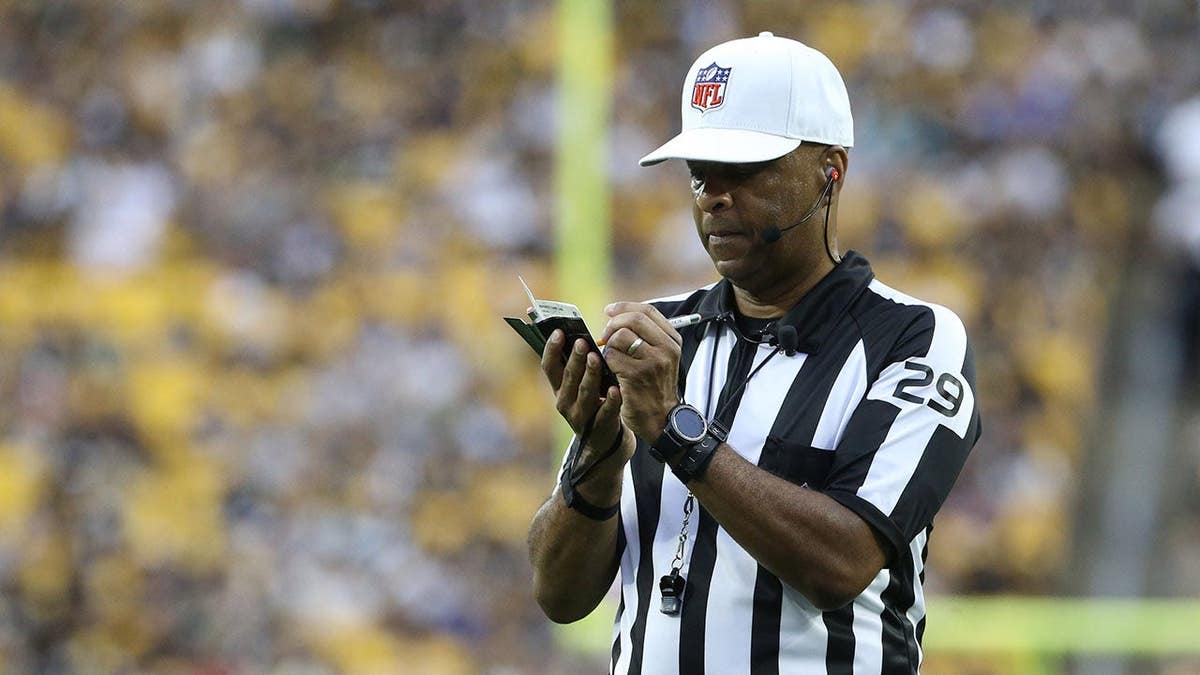
NFL players and coaches often face post-game questions, dealing with queries in the heat of their emotions. Former NFL quarterback Sean Salisbury suggests that officials should receive similar scrutiny when errors occur on their part.
“I want to know what they saw on the field immediately after the game, when their emotions were up, just like the players and coaches,” Salisbury stated in an interview with OutKick.
Salisbury wants officials explaining what they saw after games
Salisbury prefers immediate explanations from the officials responsible for decisions, rather than waiting for a response from the league the next day. The NFL does provide a process for this through pool interviews; reporters can request explanations on specific calls, with the responses distributed to the media.
However, Salisbury advocates for more transparency. He suggests that officials should routinely face questions on camera after games, similar to the way players and coaches do.
Referees face errors that players and coaches often contend with after games. Salisbury reiterated understanding of the difficulties officials face but expressed frustration over preventable mistakes. “You can’t miss the ones that the naked eye can see,” he remarked.
He also mentioned the influence of replay technology, suggesting it might lead some officials to rely too heavily on it, referring to it as a “security blanket” that might impact their confidence in making real-time decisions.
The NFL recently suspended two officials for on-field confrontations with players, illustrating the league’s accountability measures. On October 5, line judge Jeff Seeman was suspended for two games, and referee Adrian Hill for one, after clashes with players in separate incidents during Week 4 games. These confrontations highlight the delicate balance officials must maintain in managing games.
Keeping your emotions out of it is part of the job
In discussions with Salisbury, it was noted that officials, like players, should adhere to high standards. The key difference lies in the official’s role: maintaining control during disputes rather than escalating them.
Salisbury, echoing his role as an umpire, emphasized that handling frustrations is part of an official’s duties. “Your job is not there to pour gasoline,” he said. Effective officiating requires calming players and maintaining the game’s flow, proving that professionalism and fairness are critical.
Moreover, the rise in sports betting adds another layer of complexity. Disputed calls can quickly fuel conspiracy theories among bettors. Post-game interviews could clarify officials’ decisions, dispelling doubts regarding motives.
Salisbury believes accountability should extend to both players and officials. He advocates for on-camera interviews directly following games, as they provide immediate clarity and transparency. He concluded, “We hold players accountable. I think officials need to be held accountable.”
Dan Zaksheske is a reporter at OutKick.