
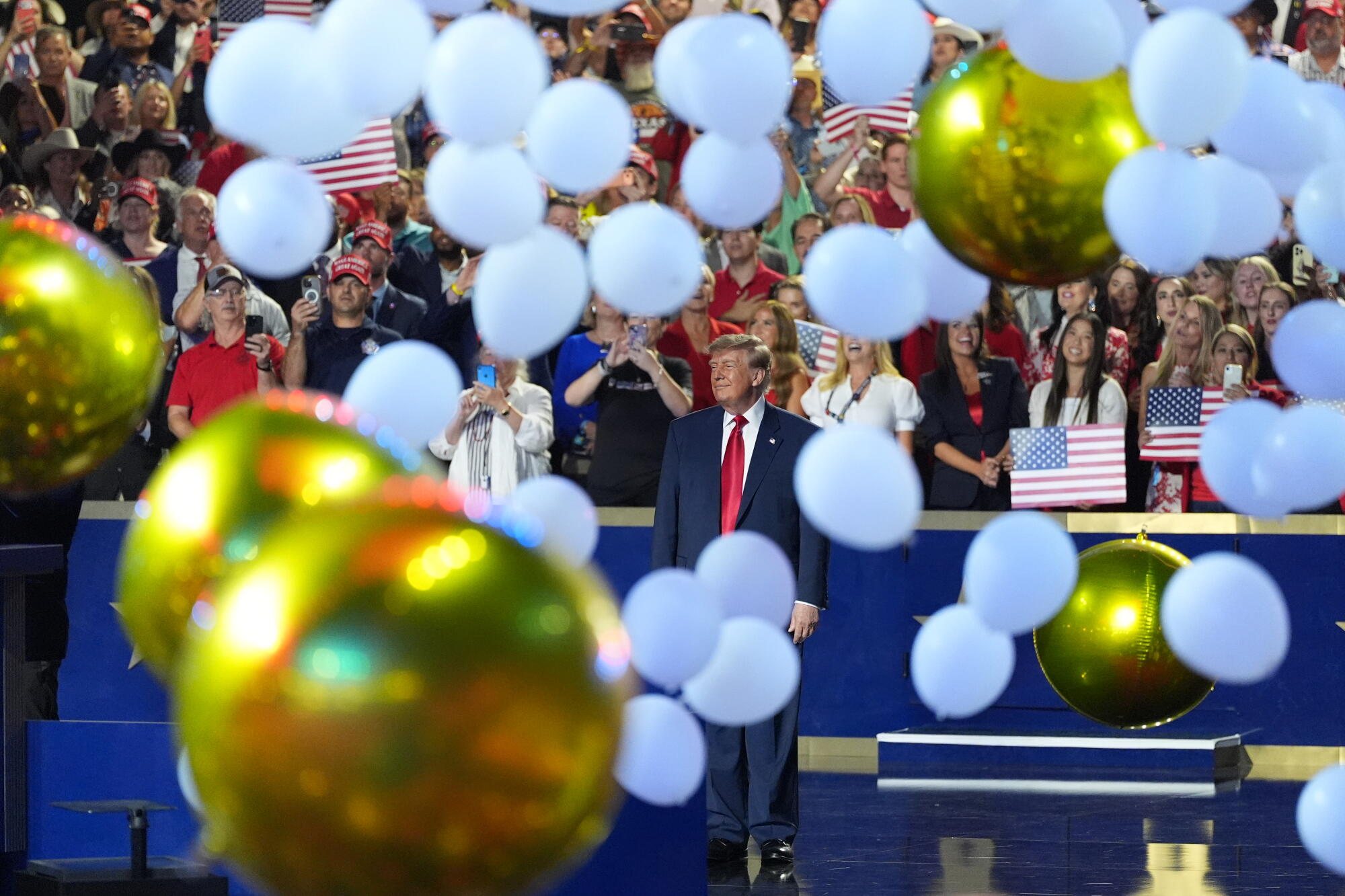
President Trump urged supporters to vote in November as if his name were on the ballot. However, California Republicans in key congressional races are opting for a different approach. The four Republicans in competitive U.S. House races, along with one challenging a fellow party member, are keeping some distance from Trump as they campaign for the November 3 election.
These candidates skipped the president’s midterm convention in Dallas. Two contenders removed Trump references from their websites. Most are focusing on local and state issues, contrasting with Trump’s election narrative centered on loyalty.
“You’ve got to do me the biggest favor you’ve ever done me. You’ve got to do this for me: You have to pretend I am on the ticket,” Trump addressed a crowd at the GOP midterm convention.
The Republican situation involves competing elements: attracting new voters in districts reshaped by redistricting, hoping Trump activates the base while candidates target swing voters, and fears that Trump’s low approval could cost important seats.
Consultant Rob Stutzman observed, “These candidates hope Trump motivates voters, while they focus on gaining votes, especially from independents who aren’t fond of the president currently.” Redistricting under Proposition 50 made districts more favorable to Democrats and pushed candidates to appeal to newer electorates, noted Pete Peterson from Pepperdine University.
Navigating Challenges
The party in power often faces challenges in midterm elections, and vulnerable candidates tend to distance themselves from the president. Facing Trump’s low favorability and public frustration with issues like the economy and foreign policy, Republicans are confronting significant hurdles.
Despite dismissing economic concerns, Trump continues to advocate for AI advancement amid backlash. He also faced criticism for promising a $5,000 payment to every adult citizen if Republicans win in November—a legally complex proposition.
Lawmakers in tough races are cautious with Trump’s endorsements. A Washington Post analysis shows politicians mention Trump on social media less frequently now compared to January. Many skipped his convention, and some disagreed with him on various issues.
In California, a survey indicated a greater share of independents prefer Democrats in House districts, according to the Public Policy Institute of California. Republican Steve Hilton acknowledged potential voter discontent with Trump in a fundraising message.
Democrats have capitalized on this situation. “California Republicans know their loyalty to a toxic MAGA brand is a losing strategy,” said Democratic Congressional Campaign Committee spokesperson Anna Elsasser.
Emphasizing Local Issues
In Orange County, Rep. Young Kim removed “America first” branding and Trump references from her campaign. In Northern California, Rep. James Gallagher deleted Trump’s endorsement. Rep. David Valadao, Kevin Lincoln, and Jim Desmond also prioritize regional issues over partisan politics. None attended Trump’s convention, and Valadao is the last House Republican who voted for Trump’s second impeachment.
Rep. Kevin Kiley, who left the Republican Party and clashed with Trump over tariffs, appeals to moderate voters by focusing on AI safeguards while criticizing Sacramento policies. Though he caucuses with Republicans, he claims he won’t if reelected.
The absence of Trump endorsements on websites aims to signal to moderates they aren’t bound by party lines. This strategy might permit centrist Democratic voters to consider them.
Strategists argue that local issues are the best strategy for California Republicans, paired with criticisms of Gov. Gavin Newsom’s policies. These include affordability issues and accusations of overemphasizing Trump without substantial solutions.
Republican consultant Mike Madrid stated that distancing from Trump reflects a decline in his popularity. He observed, “When you’re distancing yourself from your party’s president, a figure previously championed politically and culturally, that’s not subtle.” Vice President JD Vance advocated for more time to continue Republican efforts during a podcast interview.