
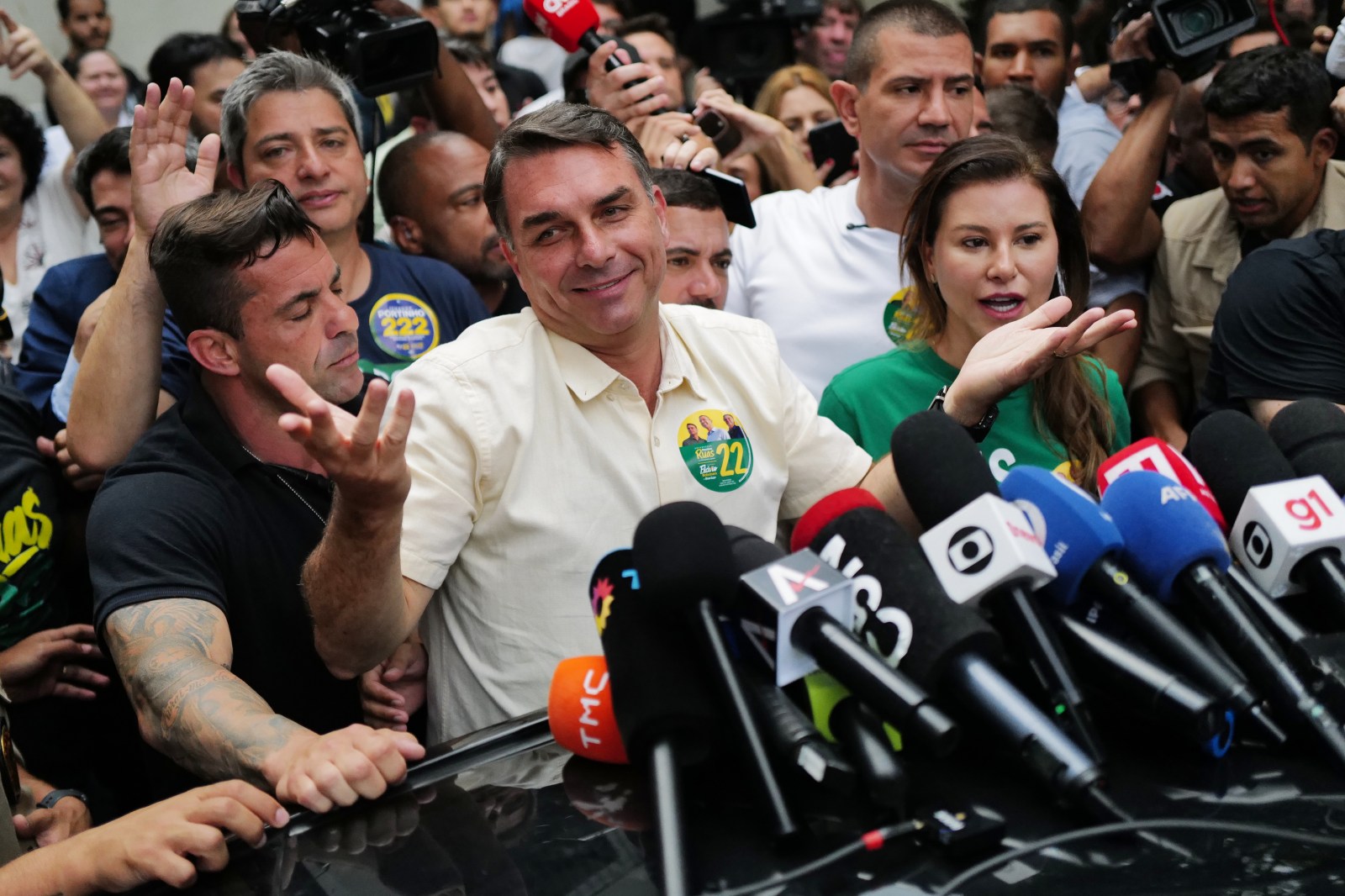
On Sunday, millions of Brazilians are participating in a crucial presidential runoff election. This election is not just a political contest, but also a personal journey for families involved. Incumbent Luiz Inácio Lula da Silva, representing the left, faces off against right-wing Senator Flávio Bolsonaro. Flávio aims to restore his family name in the presidential palace and is keen on freeing his father, Jair Bolsonaro, who is under house arrest for a coup attempt following a 2022 election defeat.
Flávio’s campaign is built on populist ideals like law and order, smaller government, and strong opposition to Lula’s Workers’ Party and the judiciary. Notably, he lacks an endorsement from Donald Trump, a significant supporter of his father. Yet, the Trump and Bolsonaro families share a disdain for political elites, each aiming to create a new establishment with their family members in power.
Natural Partners
Trump and Jair Bolsonaro have a long-standing relationship. During a 2019 White House visit, both leaders discovered shared values in nationalism and a rejection of traditional politics. Even after their defeats, Bolsonaro mirrored Trump’s behavior by questioning Brazil’s electronic voting system, leading to his conviction for coup plotting.
Flávio’s campaign builds on this relationship, pledging to pardon his father. Unlike Trump, however, the Bolsonaro family is entrenched in politics. Jair served in Congress for nearly 30 years, and his children have built their own political careers. According to expert Henrique Tavares Furtado, their rise was fueled by Brazil’s evangelical communities and an anti-Workers’ Party stance.
Family Politics
Trump’s family, though not initially political, gained influence during his administration. Ivanka Trump, Jared Kushner, and other family members held significant roles. Kushner continues to engage in international negotiations, while other family members like Lara Trump and Charles Kushner hold political and diplomatic positions.
Critics point to the expansion of the Trump family’s influence both through appointments and business ventures. The Bolsonaros, by contrast, use elected positions to assert power. Flávio, dubbed a “quintessential politician nepo baby,” began his career early alongside his family, indicating a strategic use of elected positions to gain influence.
A Modern Dynasty
Trump likely views a Bolsonaro return positively, aligning with his administration’s national security strategies. These strategies emphasize strengthening ties with supportive governments within the Western Hemisphere to combat cartels, secure resources, and counter China’s influence.
Lula, while open to negotiation with Washington, resists adopting Trump’s political agenda. Brazil’s economic relationship with China is substantial, with significant trade imbalances in favor of China. A Bolsonaro presidency might address these imbalances, providing a strategic advantage for the United States.
In Flávio, Trump may see a more compatible partner than Jair ever was, fostering a potential partnership that aligns politically and commercially. For both families, changing the system may ultimately mean becoming the system they aimed to challenge.