
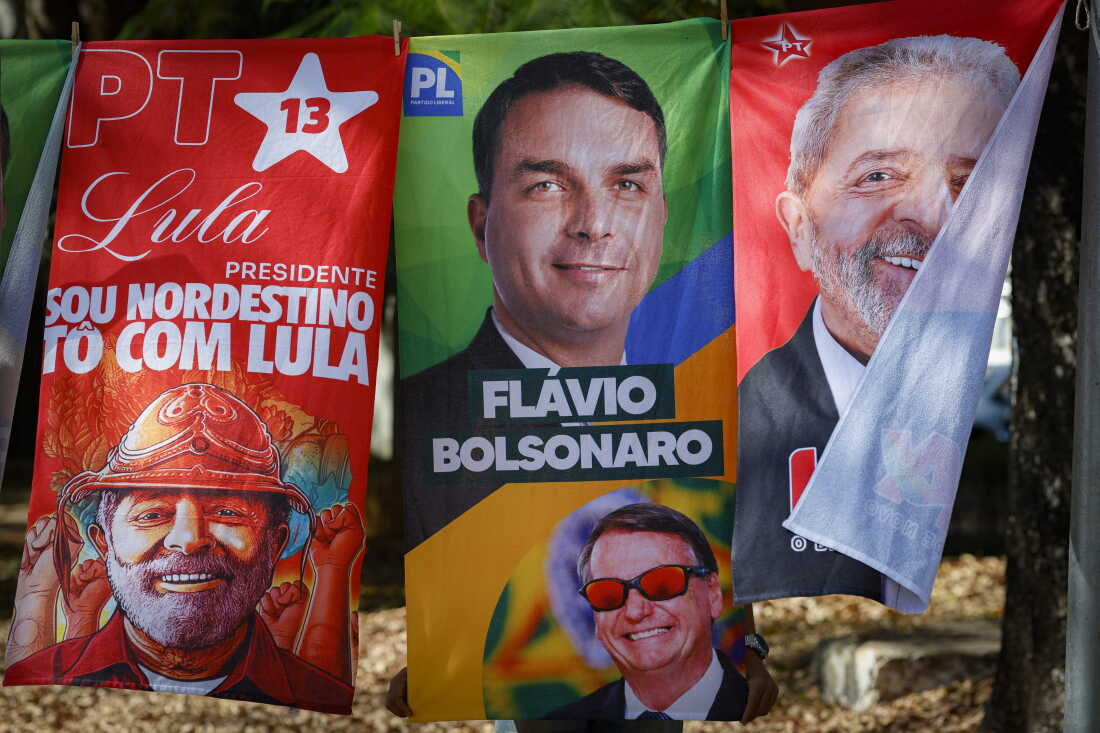
Banners and merchandise featuring candidates Luiz Inacio Lula da Silva and Flavio Bolsonaro were visible in a residential area of Brasília as Brazil prepared for its presidential election on October 4, 2026. The upcoming election revives tensions from the 2022 contest, with current president Lula once again facing the Bolsonaro political influence, this time through Flávio, the son of Jair Bolsonaro.
Election Overview
The election marks a continuation of Brazil’s political saga, where Lula battles Flávio Bolsonaro, a senator bringing forward his father’s political movement. Jair Bolsonaro is currently imprisoned for attempting to overturn his 2022 election defeat by plotting a coup. His son, Flávio, intends to pardon him if elected and presents himself as a moderate, yet his policies reveal similarities to those of his father.
Impact on Brazil’s Future
Lula seeks a fourth term, while the outcome will shape Brazil’s government direction. The incoming president will have the power to appoint four Supreme Court justices, significantly influencing the judicial landscape. Decisions on economic strategies, environmental policies and international relations will also hinge on this election.
Understanding the Election Process
Brazil uses electronic voting machines, with results typically available within hours of polls closing. If no presidential or governor candidate receives more than half of the valid votes, a runoff will occur on October 25. Currently, polling indicates a tight race between Lula and Flávio Bolsonaro.
Challenges Facing the Bolsonaro Name
The Bolsonaro legacy carries substantial baggage. Jair Bolsonaro narrowly lost the 2022 election to Lula and is now convicted for coup plotting. His son’s pledge to pardon him links the elder Bolsonaro’s fate to the campaign, posing questions about the impact of a Bolsonaro return on Brazil’s democratic integrity.
Existing Political Tensions
Lula faced previous imprisonment over corruption charges, which were annulled, leaving his political history contentious. His tenure is often associated with poverty reduction and Amazon rainforest preservation efforts. Both political sides foster strong supporter loyalty but are met with intense opposition.
Domestic Issues at the Forefront
Local issues are as significant as political ones for voters. Crime and insecurity top voter concerns, with Flávio Bolsonaro advocating tougher crime-fighting measures, including potential U.S. military collaboration. Corruption remains a pressing issue, involving controversy around ties to prominent politicians.
The Economy and Beyond
Economic considerations are crucial for voters. Lula’s past economic policies promoted growth, but recent years have seen a downturn. Bolsonaro suggests reducing national debt through spending cuts similar to measures taken by Argentina.
International Influences
US influence emerges strongly in the campaign, illustrated by Flávio Bolsonaro’s engagements with Trump allies. His intentions to foster closer ties with the Trump administration are visible in campaign activities. In contrast, Lula has resisted U.S. pressure on several political fronts.
Possible Election Outcomes
The election outcome is critical, with potential challenges to results anticipated if margins are narrow. Concerns about voting machine reliability might rekindle debates akin to those in 2022.
Global Implications
This election holds significance beyond Brazil. As a member of the G20 and BRICS, Brazil’s decision will influence global economic, climate, and security policies, impacting its relations with global entities.