
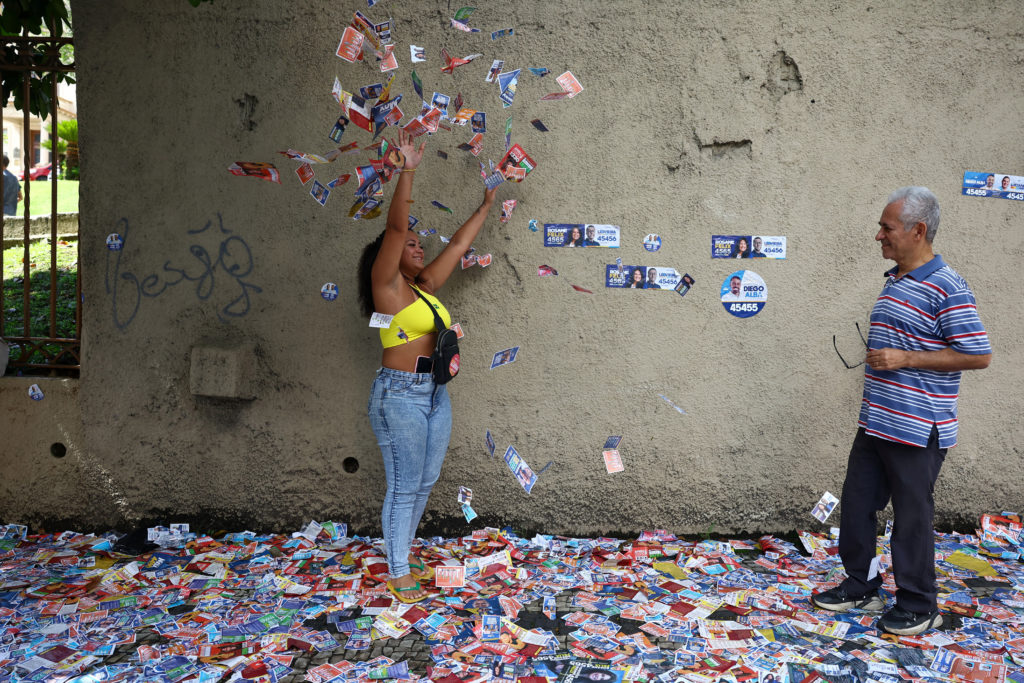
Brazilians went to the polls on Sunday to vote in a significant presidential election. Incumbent Luiz Inácio Lula da Silva faces off against Senator Flávio Bolsonaro. The two candidates, ideological opposites, both have a chance for an outright victory. If neither secures more than 50% of the vote, a runoff will be held on October 25. Latin America’s largest economy could see a major political shift depending on the outcome.
Flávio Bolsonaro, 45, is the son of former far-right President Jair Bolsonaro and is allied with U.S. President Donald Trump. Lula, at 80, is running for his seventh presidential race and has worked to strengthen ties with China. Trump supporters have gained influence in countries like Argentina, Colombia, and Peru. In this high-stakes election, nearly 159 million Brazilians are eligible to vote.
The election also includes 27 state governors, all 513 federal lower house members, and 54 of 81 senators. Lula has criticized the U.S. over past actions, claiming intervention risks. In contrast, Bolsonaro emphasizes his connection with the Trump administration. He advocates for better deals, particularly in the rare minerals sector, where Brazil’s deposits rank second only to China.
Bolsonaro’s campaign involves calling for his father’s release from prison, where he is serving a sentence for attempted coup charges. Meanwhile, voter sentiments reflect political divides. Rosane Wink, a retired engineer from Rio de Janeiro, supports Bolsonaro for classifying criminal groups as terrorists. Maria Ribeiro, a vendor in Brasilia, seeks religious expression freedom, backing Bolsonaro.
Conversely, Lula finds support for his social policies helping underprivileged Brazilians. Rosangela Resende da Rocha supports Lula for his stands against U.S. leadership interference. Even overseas voters, like Catia Oliveira in Portugal, back social programs aiding health, education, and other needs.
Thomas Traumann, a political consultant, warns last-minute errors by candidates could sway undecided voters. The polarized environment turns the election into a battlefield of accusations. In the previous election, Lula narrowly defeated Jair Bolsonaro amidst public discontent with pandemic handling, economic issues, and threats to democracy.
Currently, Lula faces challenges due to affordability crises and a corruption scandal involving a justice linked to an investigation of Bolsonaro. Political science expert Carlos Melo notes Lula’s campaign underestimates the election’s difficulty. With Lula among the oldest presidents, questions arise about future leadership without him.
Bolsonaro’s career bears taints from corruption claims, including alleged dealings with a disgraced banker. Moreover, his religious policy shifts trouble Roman Catholic constituents. The tight race showcases the political complexities facing Brazil as it decides its future leadership.