
As I grew up, many fathers in my neighborhood were World War II veterans. They rarely discussed their wartime experiences. Information emerged indirectly. My best friend’s father, once in the Air Force in China, taught us to say ‘hot water’ in Mandarin. Another father, an Army veteran, mentioned burning his uniform upon returning home. My dad, a Navy veteran, referred to ‘funny paperbacks’ from that era. I learned more about these books while researching The Great Gatsby, discovering my father was among millions of servicemen who benefited from the largest book giveaway in history.
Upon the U.S. entry into World War II, an initiative sought to distribute books to servicemen, easing their boredom. The books needed to be compact and lightweight, fitting in pockets. Publishers, librarians, and booksellers formed the Council on Books in Wartime, overcoming challenges to initiate a remarkable distribution program. This effort sharply contrasted with the Nazi book burnings that began in 1933. The Council’s motto was: ‘Books Are Weapons in the War of Ideas.’ This implied an affirmation of the freedom to read widely in America.
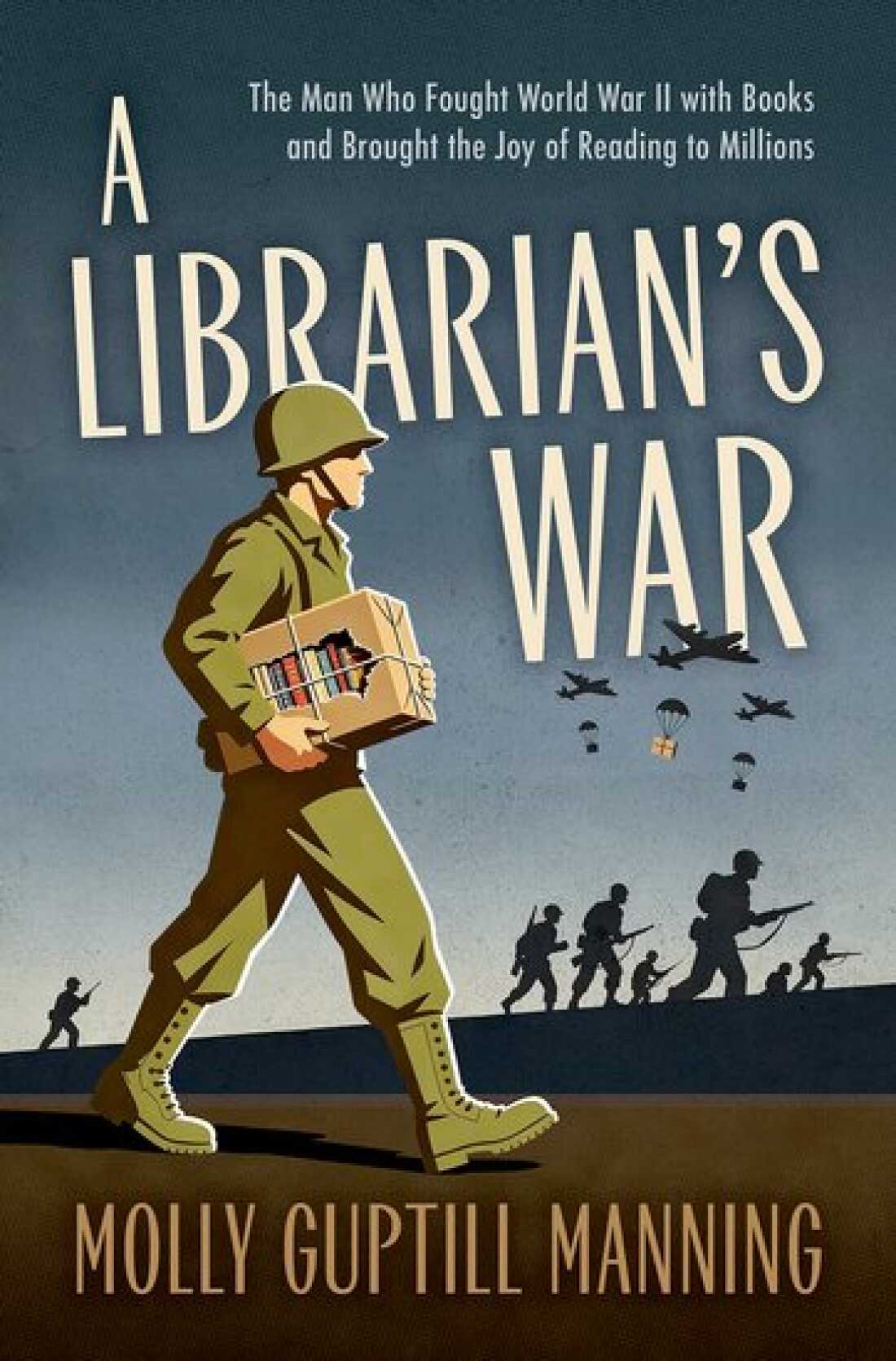
Col. Ray Trautman played a key role in this story. A forthcoming book, A Librarian’s War by Molly Guptill Manning, to be published in September, details Trautman’s idea not just to distribute books, but to produce them for the troops. The result was the creation of Armed Services Editions (ASEs), referred to as ‘funny paperbacks’ by my father. Printed on pulp paper, these books started production in 1943, and by 1947, nearly 123 million copies had been distributed to U.S. troops. The largest distribution occurred on the eve of D-Day, with soldiers carrying ASEs in their pockets. Among the popular titles was Betty Smith’s A Tree Grows in Brooklyn.
Equally significant was the Council’s broad selection of books, not limited to assumed troop preferences. Cowboy tales, Tarzan stories, and suspense fiction were common, but so were Moby Dick, biographies of Frederick Douglass and Queen Victoria, essays by Lincoln and Emerson, and poetry collections by Longfellow, Keats, and Edna St. Vincent Millay. It is important to recognize that most ASEs were authored by white writers, and some books faced banning efforts. Manning discusses in A Librarian’s War the controversies over titles perceived to support President Roosevelt during the 1944 presidential election. Newspapers published editorials, and troops themselves protested against these bans. The backlash was effective, preserving soldiers’ reading freedom.
For those eager to learn more before A Librarian’s War is released, Manning’s earlier work, When Books Went to War, and the Library of Congress’s Books in Action are excellent resources. In 2012, I visited the Library of Congress to explore how The Great Gatsby, initially met with mixed reviews and poor sales in 1925, swiftly rose from obscurity after Fitzgerald’s death in 1940. The Armed Services Editions played a crucial role; The Great Gatsby was distributed as an ASE, with 155,000 copies reaching servicemen in 1945. The Library of Congress, our national repository of books, holds the sole complete collection of Armed Services Editions. Anyone can apply for access. Experiencing these diminutive books is profoundly moving, considering their crucial service during the war.