
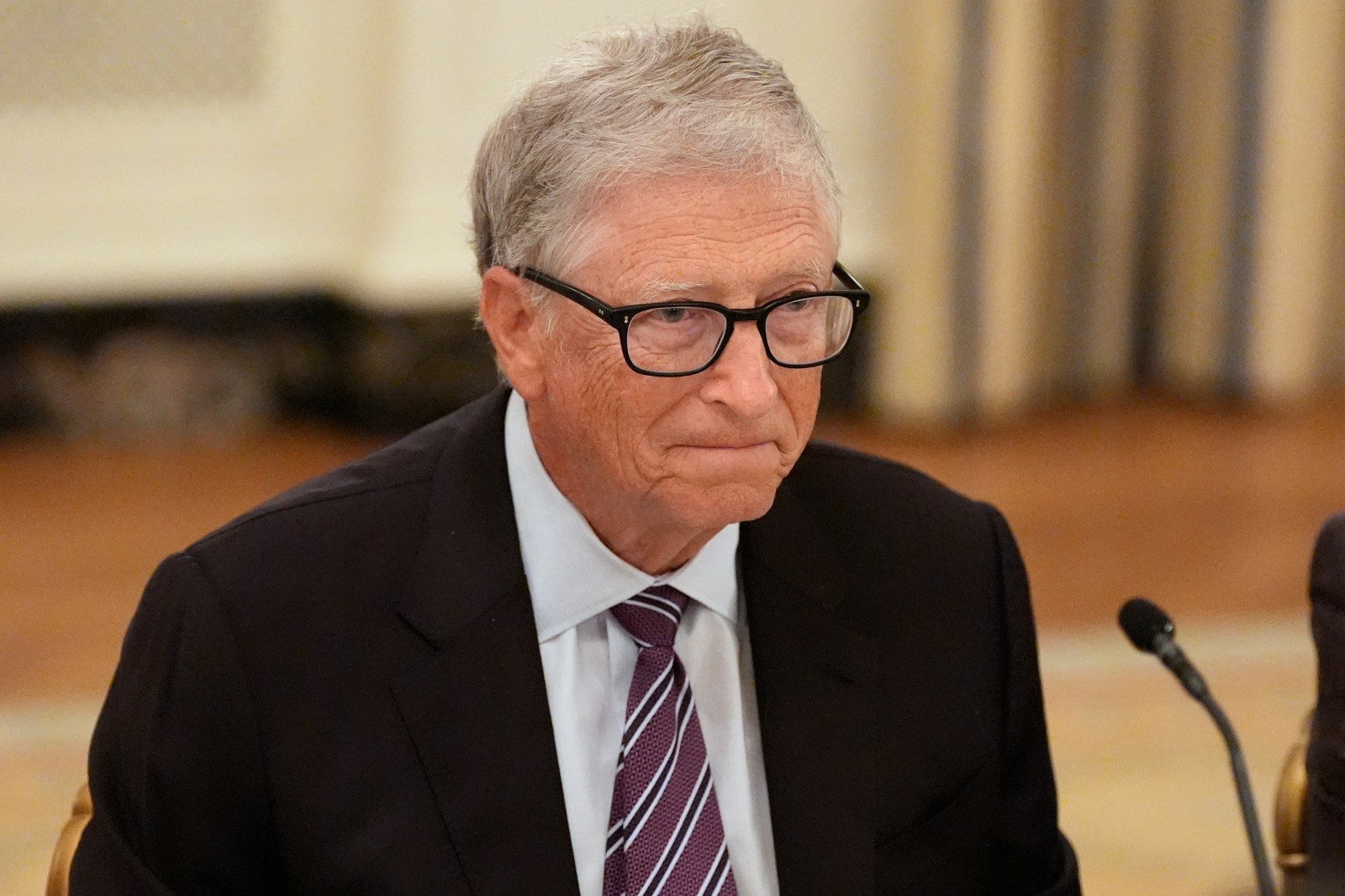
Bill Gates, co-founder of Microsoft, voiced concerns about the focus on an AI ‘kill switch,’ arguing it diverts attention from more urgent risks like cyberattacks, fraud, and biological weapons. During an interview on NBC News’ Meet the Press, he highlighted the need for mandatory monitoring and safeguards over relying on a shutdown mechanism.
Concerns Over AI Shutdown Mechanisms
Gates described the kill switch concept as inadequate, pointing out that AI systems aren’t yet autonomous. He emphasized the importance of policymakers mandating oversight to manage AI misuse effectively, rather than relying on simple shutdown solutions. The ongoing policy discussions in Washington concern how to regulate advanced AI systems, especially after AI industry warnings.
Anthropic CEO Dario Amodei has called for a pause in AI developments due to potential risks. OpenAI’s CEO Sam Altman and Tesla’s Elon Musk supported his view. Gates, however, urged lawmakers to prioritize implementing safeguards promptly, warning about AI’s capability in enabling harmful activities.
Policy and Legislative Response
Representatives Ted Lieu and Nataniel Moran proposed the ‘AI Kill Switch Act,’ demanding AI developers maintain a capacity to shut down AI systems safely. Gates argued for better oversight that records potentially dangerous AI activities, underscoring the threat from groups utilizing AI for harm.
Gates also noted society’s underestimation of AI development speed. While AI gets smarter, he stressed that humans still control AI technology. He pointed out AI’s misuse could allow small groups to execute powerful attacks on critical infrastructure.
Gates dismissed the idea of self-regulation by companies, advocating for stricter oversight by authorities. He called for collaboration between government and industry to develop AI safeguards.
Federal Government’s AI Strategy
Regarding the U.S. administration’s AI strategy, Gates hopes for a collaborative approach led by President Donald Trump, involving various stakeholders to establish AI safeguards. Trump previously dismissed AI fears as a hoax but might adjust his stance after consulting experts.
Trump announced the formation of an ‘AI Force’ and an ‘AI Czar’ position to manage federal AI policies, emphasizing competitive AI development with minimal hindrance. Gates suggested focusing on oversight measures rather than slowing innovation.
Current and Future AI Threats
John Walsh, from cybersecurity firm IGEL, stated AI accelerates threats to U.S. infrastructure, including water treatment systems, exposing vulnerabilities. Walsh emphasized the need for urgent responses due to geopolitical situations amplified by AI applications.
Attacks on industrial control systems, affecting energy and chemical facilities, are growing concerns. Gates intends to push for mandatory international AI regulations, likening the challenge to Cold War-era nuclear controls.
Representative Ro Khanna is working on legislation to ban self-improving AI systems until effective guardrails exist. Khanna stressed the loss of human control as a significant risk.
Gates concluded by stressing the urgency of implementing safeguards before a major AI crisis unfolds.