
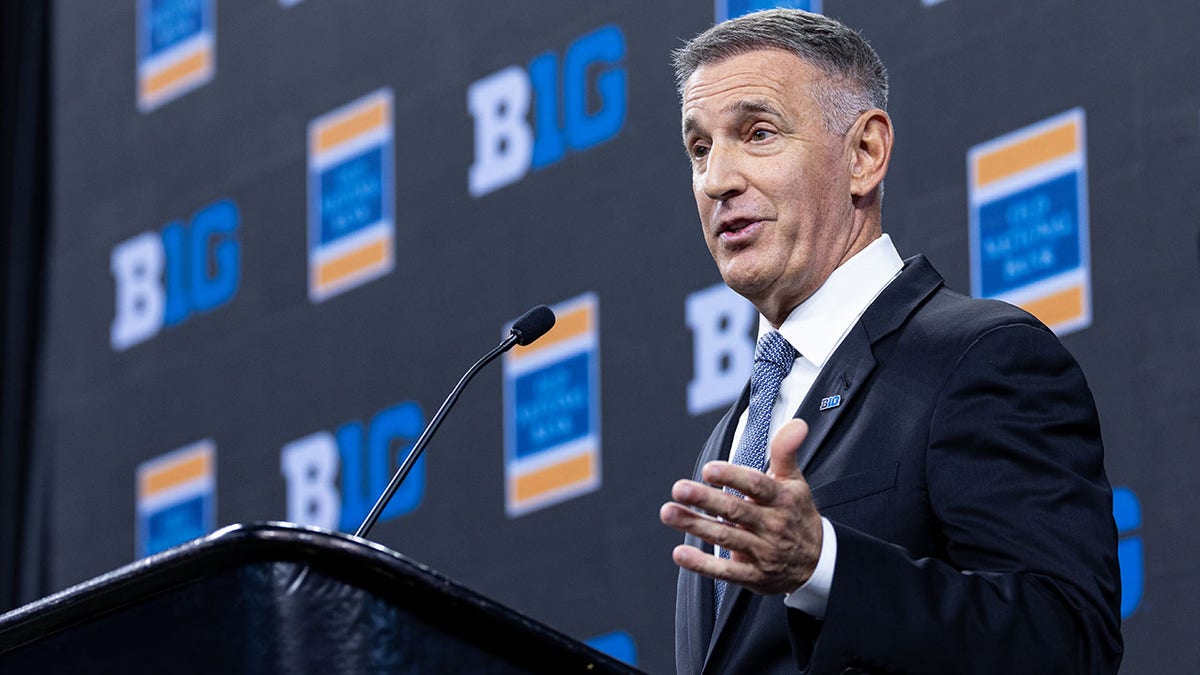
The Big Ten Conference has established a new policy that blocks athletes who have signed NFL contracts from returning to college football. This decision follows recent cases where former college athletes re-entered college teams after beginning professional careers, often through legal means. On Tuesday, the conference voted to make these athletes ineligible for future participation.
Under the new regulations, any athlete who has either signed a professional contract, declared for the NFL Draft, or attended a professional training camp is barred from competing in the Big Ten. This initiative aims to maintain the integrity of college sports.
NFL TO NCAA? COURTROOM CHAOS IS GIVING PRO ATHLETES A BIZARRE PATH BACK TO COLLEGE, AND IT’S ONLY JUST BEGUN
The decision by the Big Ten arrives after a series of legal rulings in different states allowed professional athletes to regain college eligibility. These court decisions focus on the NCAA’s revised eligibility guidelines, which permit athletes to compete for five seasons over five years. Multiple lawsuits filed since June have argued for additional eligibility, with courts often siding with these athletes.
LSU head coach Lane Kiffin and the SEC have faced criticism for welcoming back players with NFL experience. Former Ole Miss players Dae’Quan Wright and Zxavian Harris are set to join LSU due to a Louisiana court ruling that granted them an extra year of eligibility. This situation has led to debates within the SEC.
Kiffin has defended his approach, noting that due to various legal rulings, athletes can either play for his team or elsewhere under the same eligibility extensions. He stated, “We made a decision to recruit them, like probably most people are.” The controversy may lead to potential legal challenges within the SEC, as some players return to college rosters.
Will this turn into a legal battle within the SEC? Sure, it could, if the Tigers administration feels as though it could win the court battle that could be lying ahead with its own conference.
SEC officials are convening in Birmingham, Alabama, to address this issue. Many oppose allowing athletes with professional experience to return to college play. Discussions are taking place across other conferences, like the ACC and Big 12, to consider similar rules.
As the debate continues, the risk of legal disputes could set the stage for significant changes in college sports policies, especially if universities challenge these new regulations.