
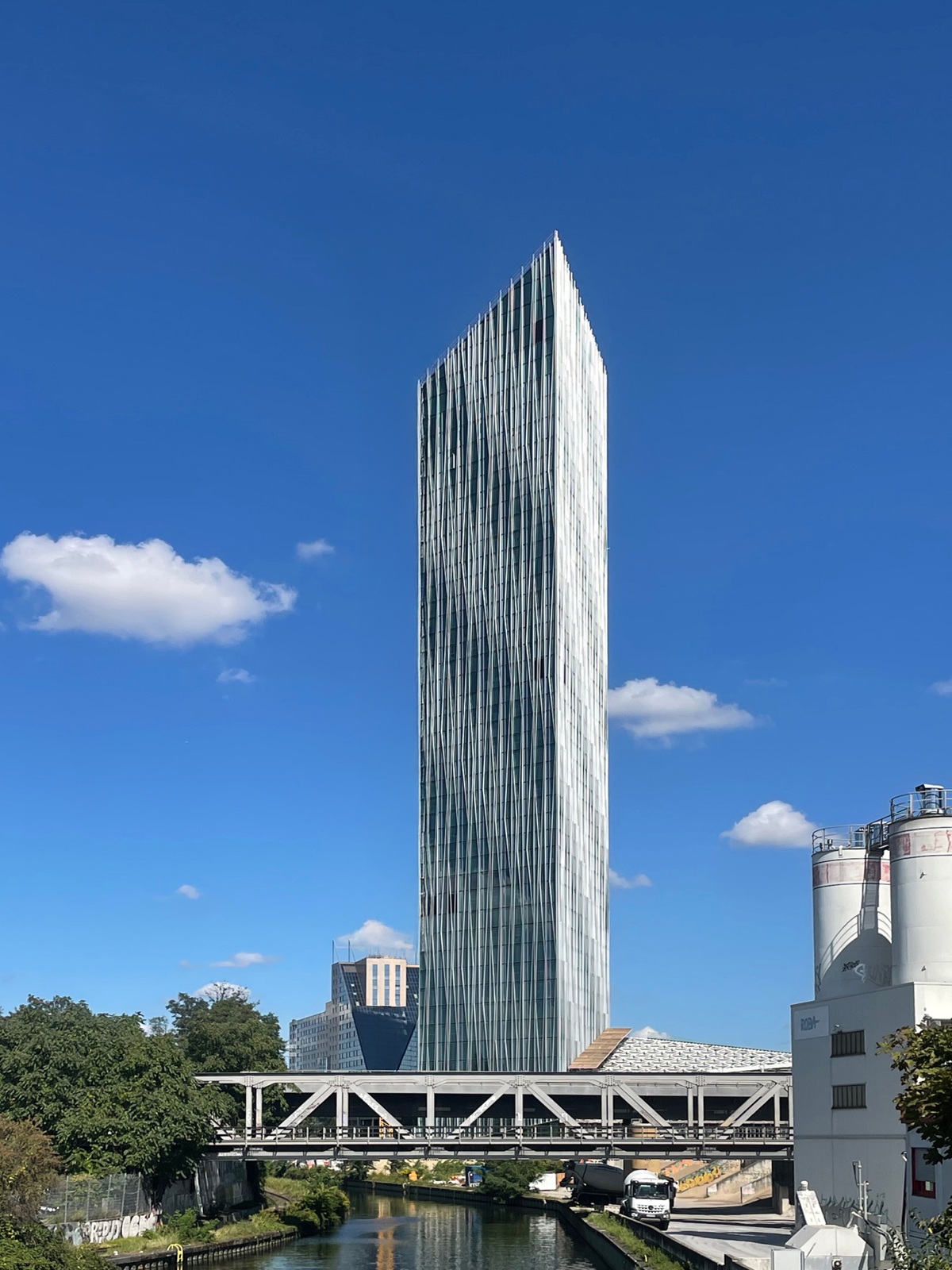
Berlin will soon mark a significant chapter in its architectural history with the completion of the Estrel Tower, a 577-foot (176-meter) mixed-use building. This structure is poised to become Berlin’s tallest nontechnical building and its first true skyscraper. According to the Council on Vertical Urbanism, skyscrapers typically exceed 150 meters (around 492 feet) in height, placing the Estrel Tower in this category.
Set to open to the public by the end of 2026, the tower will feature a hotel, workspace, gallery, restaurant, and bar. Designers aim for it to serve as a new urban destination within the city’s Neukölln district. The Berlin-based architecture firm Barkow Leibinger is behind the design, marking a departure from the city’s tradition of low-rise buildings and strict height regulations.
Sustainability and Preservation Debate
Berlin’s latest development arises amid ongoing debates about urban sustainability. Many architects and preservationists suggest focusing on adapting and reusing existing buildings. Retaining the carbon embedded in older structures and extending their lifespan through renovation are key points of discussion.
Gordon Gill, architect of the proposed tallest skyscraper, Jeddah Tower, once noted the potential in the United States for architectural innovation through existing buildings to increase sustainability and efficiency. Other experts voice similar concerns in Germany, emphasizing historic character preservation over new construction.
Frank Barkow, founder of Barkow Leibinger, argues that tall buildings could contribute to sustainable urban futures if thoughtfully designed. Although high-rises may initially have a higher carbon footprint, they provide long-term benefits through compact development and efficient land usage.
A Singular Landmark
The Estrel Tower is conceived as a unique landmark rather than part of a skyscraper cluster, acting as a solitary beacon within Berlin’s urban landscape. “Berlin has traditionally adhered to a 22-meter cornice height, mainly for historical consistency,” Barkow noted. The Estrel Tower intentionally stands alone to respect this context.
This approach is in contrast with cities like New York or Frankfurt, which host districts filled with tall buildings. The tower is described as a gateway to the city, complementing the existing Estrel Hotel nearby. Its design integrates geometric forms like triangles and polygons, inspired by Tangram puzzles, emphasizing dynamic and interconnected structures.
Construction and Sustainability Features
The building’s visually striking façade includes metal fins for solar shading, smart glazing, and operable windows. The design integrates low-carbon energy sources, water-retention systems, and a green roof, optimizing natural light while minimizing energy use. The construction is aiming for LEED Platinum certification, a top environmental standard.
Logistical challenges were significant due to the project’s scale. Berlin’s limited experience with such large constructions posed hurdles. To address these, many components were prefabricated, helping different phases proceed in tandem.
Addressing concerns regarding tall buildings’ carbon footprints, Barkow highlights the long-term environmental benefits. He stresses the compact, energy-efficient nature of high-rises compared to urban sprawl.
A Potential Shift in Berlin’s Skyline
The Estrel Tower could signal a new era of skyscrapers in Berlin. While it’s uncertain if it will remain an exception, Barkow envisions it setting a precedent. Berlin could benefit from new tools fostering diversity, mixed-use development, and social interaction centers.
Barkow asserts Berlin can retain its historical essence while embracing new heights. He believes this blend represents the city’s future.