
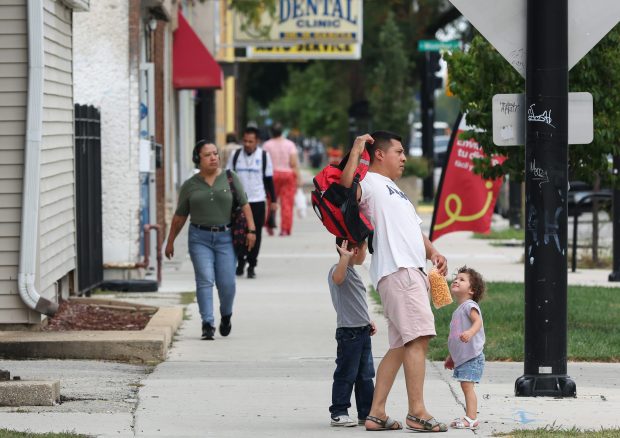
Little Village has long been a cultural hub for Latino residents in Chicago, prominently on display during the annual Mexican Independence Parade. However, a recent study reveals a shift in Chicago’s Latino demographics. Belmont Cragin, located roughly eight miles north on the Northwest Side, now boasts the largest Latino population in the city.
According to the University of Illinois Chicago’s Great Cities Institute, Belmont Cragin houses over 57,000 Latino residents. This figure represents about 80% of the neighborhood’s population. Across Chicago, nearly 802,000 individuals identify as Latino, accounting for nearly 30% of the city’s population.
Transforming Latino Demographics
Oswaldo Alvarez, executive director of the Illinois Legislative Latino Caucus Foundation, emphasizes a detailed examination of the community. He notes the importance of understanding Latino Chicago beyond traditional neighborhood boundaries. Alvarez highlights the contribution of Latino communities in elevating Chicago despite challenges.
Belmont Cragin’s changing demographics are visible with multilingual storefront signs and flags from Mexico, Argentina, and Colombia. Fullerton Avenue emerges as Chicago’s busiest commercial corridor, with approximately $181 million in taxable sales, surpassing the famed 26th Street’s “Mexican Magnificent Mile.”
Diverse Latino Groups
The study identifies significant Puerto Rican, Central American, and South American populations within Belmont Cragin. Residents hail from countries such as Guatemala, Ecuador, and the Dominican Republic. Luisa Rodriguez, a local business owner, witnesses the diversity daily, providing services like remittance transfers to customers with roots in various Latin American nations.
The Southwest and Southeast sides remain largely Mexican, while other areas host diverse Latino populations. The report also highlights significant demographic changes in neighborhoods like Austin and challenges longstanding demographic associations in Chicago.
Impact of Housing
Gentrification, influenced by rising rents and housing scarcity, is pushing Latinos from the city center. Housing costs are a critical factor, with about half of Latino renters deemed “cost-burdened,” spending substantial portions of their income on rent and utilities.
Alvarez points out affordability issues in areas like Logan Square and Humboldt Park, impacting Latino communities significantly. Despite housing challenges, some families find opportunities to purchase homes and build wealth. Latino homeownership is notably high in Ashburn and Garfield Ridge.
Economic and Educational Advancements
The report outlines a growing Latino middle class in Chicago. Nearly a third of Latino households earn $100,000 or more annually, rising from 20.7% a decade ago. Education and employment statistics also indicate improvements, with an increasing number of Latino adults holding higher degrees and securing roles in management and business.
However, the study cautions against viewing these successes as diminishing the working class. Nearly 60% of Latino employment remains in lower-paying industries. Alvarez hopes the report challenges perceptions and encourages a nuanced understanding of the community’s dynamics.