
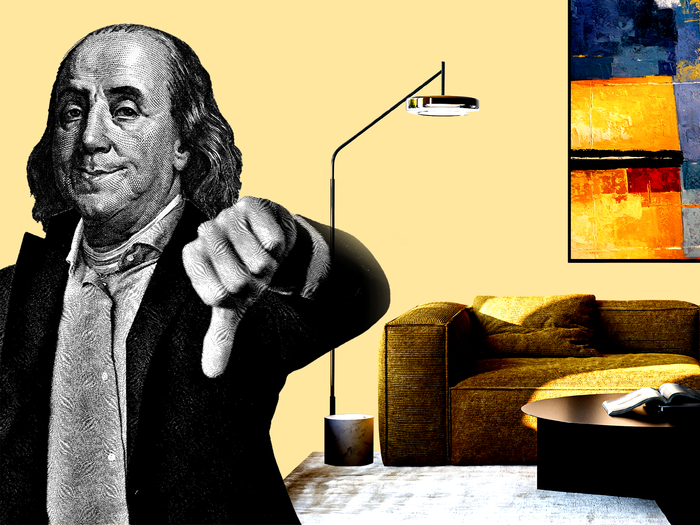
As an interior designer with over a decade of experience working with high-profile clients, I have observed that a luxurious living room is more about thoughtful design and personal curation than the expenditure involved. Here are some common design choices that wealthy clients generally avoid in their living spaces.
Matching Furniture Sets
I never recommend purchasing a complete set of matching furniture for a high-end living room. Different silhouettes, materials, and eras should be mixed to give the room a special, collected feel. A sofa, accent chair, and loveseat made from the same fabric can make the room appear generic, like a showroom display.
Undersized Rugs
Selecting the right size for a rug is crucial. A rug that’s too small can make even the most expensive furniture appear cheap. My clients often opt for oversized rugs that anchor the seating area. Ideally, the front legs of major seating pieces rest on the rug to create a cohesive and well-designed feel.
Generic Artwork
Artwork provides an opportunity to add personality to a space. Wealthy clients tend to avoid generic, mass-produced prints. Investing in original paintings, limited-edition prints, or vintage pieces adds uniqueness. Luxurious art isn’t always costly, but it usually connects personally with the homeowner.
Television as a Focal Point
In many high-end living rooms, the television is not the centerpiece. Instead, standout architectural features are highlighted, such as fireplaces or built-in bookcases. If a television is essential, it is integrated into the design, possibly hidden within cabinetry or designed to display artwork when not in use.
Furniture Against Walls
A misconception is that pushing all furniture against walls makes a room feel larger. This often results in a less intimate atmosphere and unused space. Floating furniture away from the walls creates distinct seating arrangements for hosting and conversation, fostering a more inviting environment.
Single Overhead Lighting
High-end living rooms rarely rely on a single light fixture. Multiple light sources such as table lamps, floor lamps, and wall sconces add depth and luxury. Warm-toned, dimmable lights enhance inviting feelings at any time of day.
Poor Curtain Fitting
The impact of curtain length in a room is significant. Curtains in luxury spaces are often mounted as high as possible to give the illusion of taller ceilings. Even affordable curtains look expensive when properly sized and installed, while wealthier clients may favor fuller, more substantial fabrics and custom treatments.
New Furniture Exclusivity
Rooms filled entirely with new furniture can feel sterile. Incorporating antique and vintage pieces gives a one-of-a-kind, luxurious look. Mixing a new sofa with antique chairs or a vintage coffee table creates a room that appears assembled over decades.
Cluttered Surfaces
In high-end design, less is more. My clients prefer investing in fewer, meaningful pieces over covering surfaces with trinkets. Leaving breathing room for decorative items allows each to stand out, enhancing the room’s overall aesthetics.
Prioritizing Aesthetics Over Comfort
A misconception is that luxury living rooms should be pristine and untouchable. Comfort remains crucial. For seating, attention to detail such as seat depth and cushion materials ensures both beauty and comfort, making the space inviting and functional.