
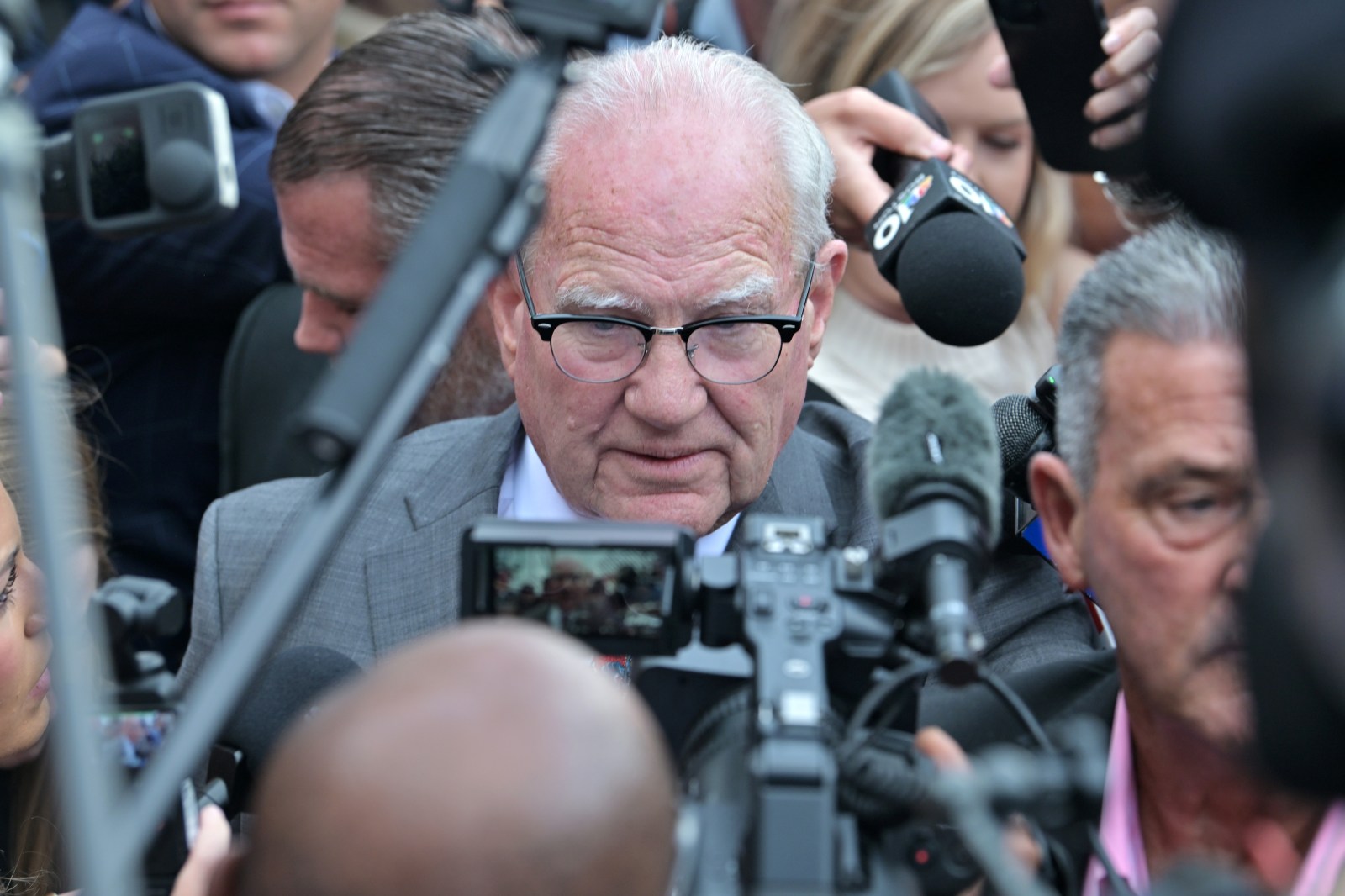
In a surprising twist, Lindsay Clancy’s attorney made a public appeal to former President Donald Trump for a pardon, days after a mistrial in her murder trial. The request surfaced during an interview on ABC’s Good Morning America. Defense attorney Kevin Reddington implored the president to consider pardoning Clancy, emphasizing her personal circumstances.
“Mr. President, I would hope that you would consider this young lady, the type of person she is, what she’s been through, and consider a pardon,” Reddington stated.
Clancy faces serious charges in Massachusetts for the deaths of her three children: Cora, 5, Dawson, 3, and Callan, 8 months. The tragic incident occurred at their home in Duxbury in January 2023. Her case has grabbed national attention, largely due to claims that Clancy was dealing with postpartum psychosis during the incident.
Despite the request, Trump’s power to issue pardons does not extend to state charges, limiting his ability to intervene. Presidential pardons apply to federal offenses, not those prosecuted under state law. Clancy would require clemency from the Massachusetts governor, subject to the process and approval of the Governor’s Council.
Although Trump cannot intervene, Reddington’s appeal may draw renewed focus on the case, possibly influencing the prosecution’s approach following the mistrial. Reddington hopes for a resolution with Plymouth County District Attorney Timothy Cruz instead of a retrial.
Kevin Reddington’s Role
Reddington has been a steadfast figure in Clancy’s legal team. A seasoned criminal defense attorney from Massachusetts, he has consistently argued that postpartum psychosis impacted Clancy’s actions, asserting she was unable to understand or control them.
The prosecution, on the other hand, contends Clancy was aware and deliberate in her actions. Following the deadlock, Reddington expressed confidence in undermining the prosecution, although he later labeled his tone as bravado after such an intense trial.
He also criticized the lone juror responsible for preventing a unanimous decision, claiming the juror ignored legal standards. Nonetheless, he respects the juror’s right to an opposing view.
Can Lindsay Clancy Receive a Pardon?
While a pardon remains on the table, it must come from Massachusetts, not the presidential office. The governor of Massachusetts, currently Maura Healey, holds the power to grant pardons for state offenses, pending approval from the Governor’s Council.
Newsweek has reached out to Governor Healey’s office for further comment on the case.
Clancy’s situation remains unresolved; following the mistrial, Massachusetts prosecutors must decide whether to retry her or explore other legal options.
Jonathan Turley, a constitutional law expert, critiqued Reddington’s appeal to Trump, noting the impossibility of presidential clemency for state charges. Turley questioned the strategic reasoning, likening it to an unlikely personal scenario: coaching the Chicago Bears.
Despite this critique, Turley acknowledged Reddington’s competence during the trial, although he voiced concerns about Reddington’s closing remarks and comments regarding the juror.
Turley believes a retrial is probable, citing limited prospects for plea agreements due to the entrenched stances of both parties. Yet he cautioned about the difficulties in finding an unbiased jury given the extensive publicity surrounding the case.
Pardon Possibilities without Convictions
A pardon can precede conviction. In history, federal pardons have occurred without criminal proceedings or verdicts. One notable instance is President Gerald Ford’s pardon of Richard Nixon in 1974, covering uncharged offenses.
Trump’s Reaction to the Case
Trump commented on the Clancy case following the mistrial. He noted the difficulty in avoiding media coverage and described the situation as tragic. Trump’s statements recognized the likelihood of another trial.
His remarks highlighted the gravity of the situation and the potential outcomes, speculating on Clancy’s future, whether in imprisonment or a mental institution.
Why the Trial Resulted in a Mistrial
The mistrial arose after jurors deliberated for 38 hours without a unanimous verdict. Central to the decision was Clancy’s criminal responsibility, contested by her defense citing postpartum psychosis. Prosecutors maintained Clancy’s awareness and premeditation.
Reddington believes the majority of jurors supported Clancy’s lack of criminal responsibility. However, the holdout juror proved contentious, resulting in an unfulfilled request for removal, rejected by the judge.
This case now faces an unpredictable turn as Massachusetts assesses future proceedings.